Dinkinesh: one flyby reveals a family
A camera rehearsal for Lucy unexpectedly revealed a two-lobed moon. Sometimes a passing glance brings the biggest surprises.
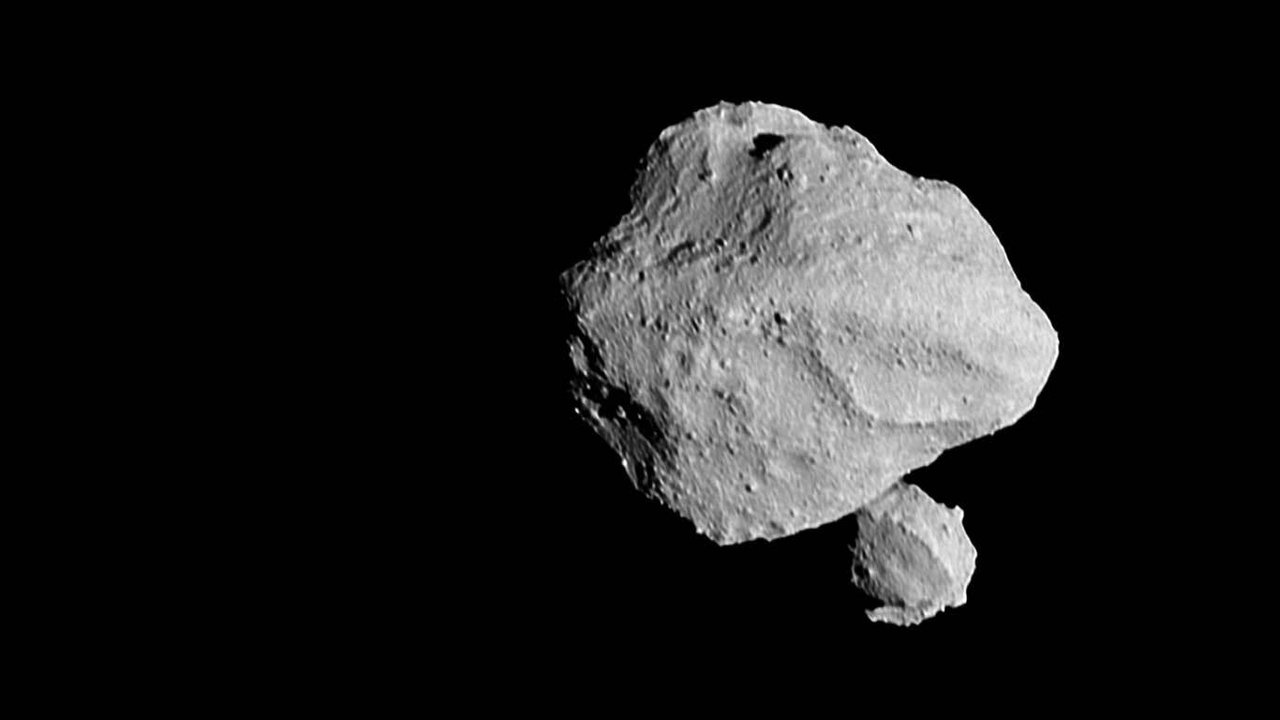
Dinkinesh lies in the main belt between Mars and Jupiter. Too small for detailed distant images, it happened to be near Lucy’s route. The team added it to rehearse autonomous target tracking during a fast flyby.
A rehearsal becomes a surprise
November 2023 images revealed a moon. Changing viewing angles then showed that the moon itself had two joined lobes, making this more complex than a simple large-and-small pair.

The primary has its own story
Ridges and troughs may connect sunlight, long-term spin evolution, and moving rubble. Material could migrate or even enter orbit as rotation changes. Shape and orbital measurements test such models; the entire history has not been directly observed.
Why visit a rock only hundreds of meters wide?
Many previously visited main-belt asteroids were larger, while near-Earth sample targets have comparable small sizes. Dinkinesh bridges these populations, allowing comparisons of deformation, collisions, and moon formation in different environments.
A shared name
Dinkinesh is the Ethiopian name for the famous Lucy fossil. A spacecraft and asteroid connected to the same fossil bring two studies of origins together. An engineering rehearsal became a scientific story of its own.