The Sun: what keeps it shining?
The solar system’s central star is a G-type main-sequence star about 1.39 million km across, powered by hydrogen fusion for 4.6 billion years. Sunspots, flares, and coronal mass ejections shape interplanetary space and produce auroras and space weather.
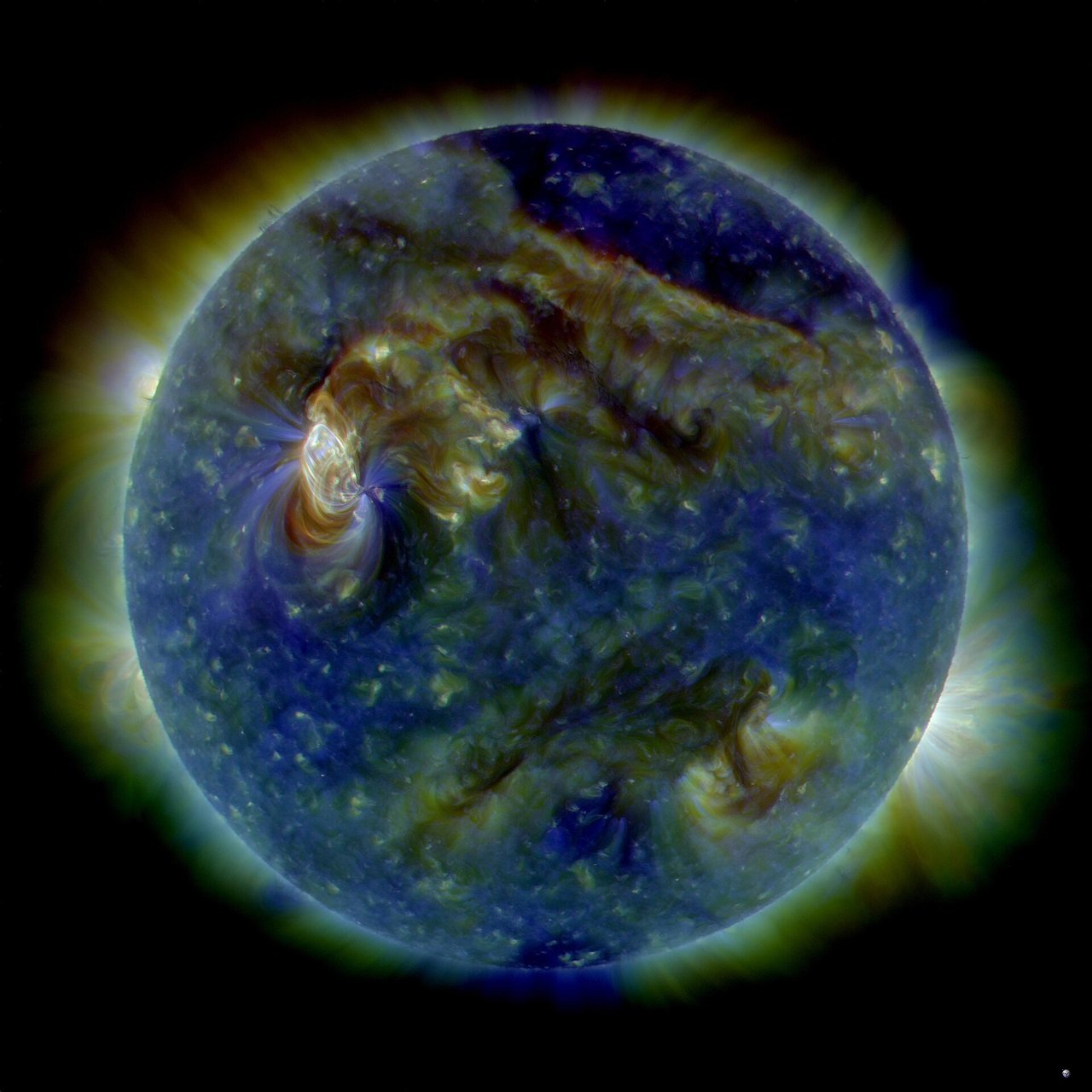
The sunlight you see left the Sun a little over eight minutes ago. This G-type main-sequence star is about 1.39 million km across, contains 99.86% of the solar system’s mass, and lies roughly 150 million km from Earth. Its light warms our world, while its gravity organizes planets, comets, and smaller bodies.
From cloud to star
About 4.6 billion years ago, a molecular cloud collapsed under gravity, perhaps disturbed by a nearby supernova. Material gathered into a spinning protoplanetary disk. As the center reached roughly ten million degrees, hydrogen fusion began. Remaining gas and dust formed planets, including Earth. The Sun is now in its stable main-sequence phase, expected to last about another five billion years.
A layered interior
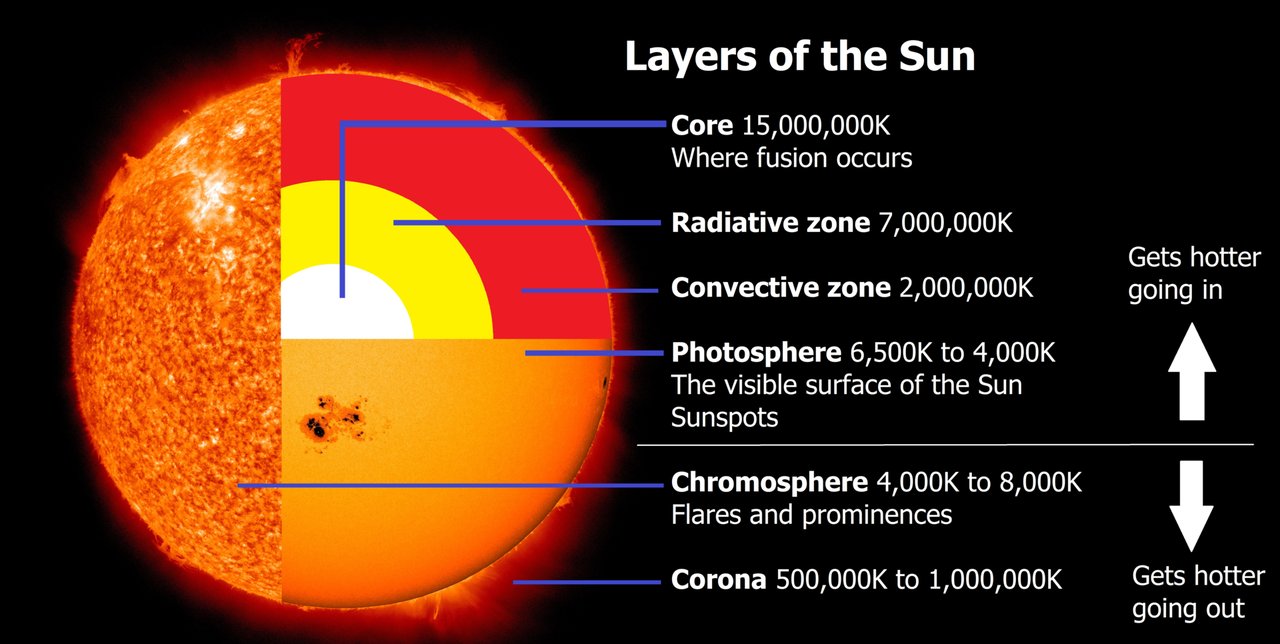
The Sun is a structured ball of plasma, not a uniform flame. Its core, at about 15 million°C and immense pressure, produces fusion energy. In the radiative zone, photons are repeatedly absorbed and reemitted; energy can take hundreds of thousands of years to work outward. In the convective zone, rising and sinking plasma transports heat toward the surface.
The visible photosphere is around 5,500°C and emits most sunlight. Above it, the chromosphere can appear as a reddish rim during a total eclipse. The outer corona extends millions of kilometers and reaches millions of degrees. Explaining its much higher temperature remains a major solar-physics problem.
Is the Sun burning like a fire?
No. Wood burns through chemical reactions requiring oxygen. Solar fusion combines hydrogen nuclei into helium and converts a little mass into enormous energy. There is no solid surface to stand on; the photosphere is simply where light escapes readily.
Water would not extinguish the Sun. It would dissociate into hydrogen and oxygen and become plasma. Fusion’s efficiency is what allows billions of years of steady light.
The proton–proton chain
In the dominant proton–proton chain, roughly 600 million metric tons of hydrogen fuse each second. Over four million tons of mass become energy according to E=mc². Enormous as that sounds, it is a small fraction of the Sun’s fuel, providing a long window for life’s evolution.
Sunspots, flares, and coronal mass ejections
Sunspots are regions of strong magnetic fields, roughly 1,500 degrees cooler than their surroundings. Their numbers rise and fall over an approximately 11-year cycle.
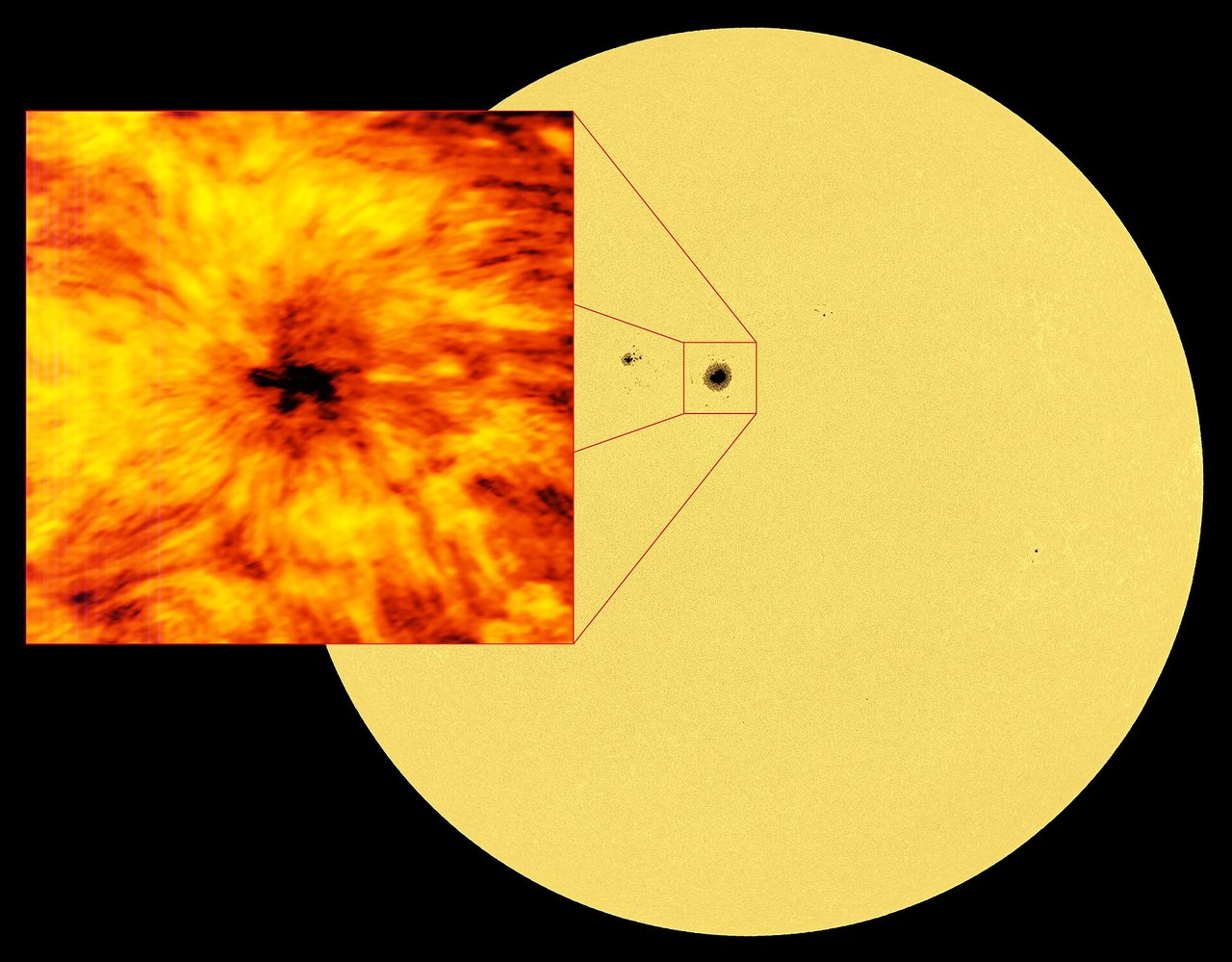
Magnetic reconnection near active regions can release solar flares, enormous bursts of energy within minutes. Coronal mass ejections (CMEs) can propel billions of tons of plasma into interplanetary space at thousands of kilometers per second.
On December 24, 2024, Parker Solar Probe passed only about 6.1 million km above the Sun’s surface, setting a spacecraft close-approach record.
Auroras and space weather
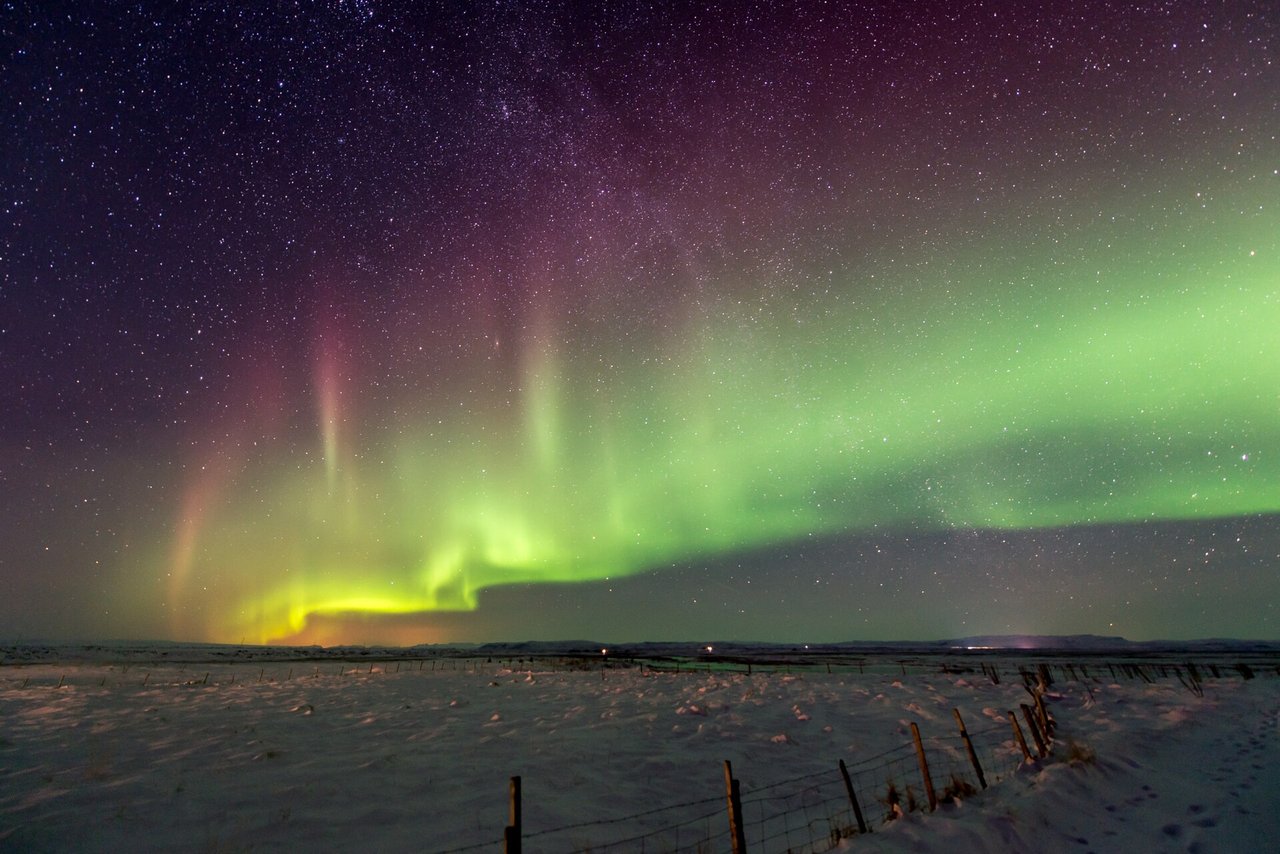
The solar wind continually carries charged particles toward Earth. Our magnetic field deflects much of it, but some particles follow field lines into the upper atmosphere near the poles. Collisions with oxygen and nitrogen produce auroras, which can reach middle latitudes during strong geomagnetic storms.
Solar activity can disrupt shortwave radio, damage satellites, and disturb power grids. The 1859 Carrington event sparked telegraph equipment. Space-weather monitoring now watches our nearest star to help protect modern technology.