Mercury: ice on the planet closest to the Sun
The smallest planet orbits the Sun in only 88 days. It has a huge iron core extending to about 85% of its radius, a cratered surface, and day–night temperature swings exceeding 600°C, yet water ice survives in polar shadows.
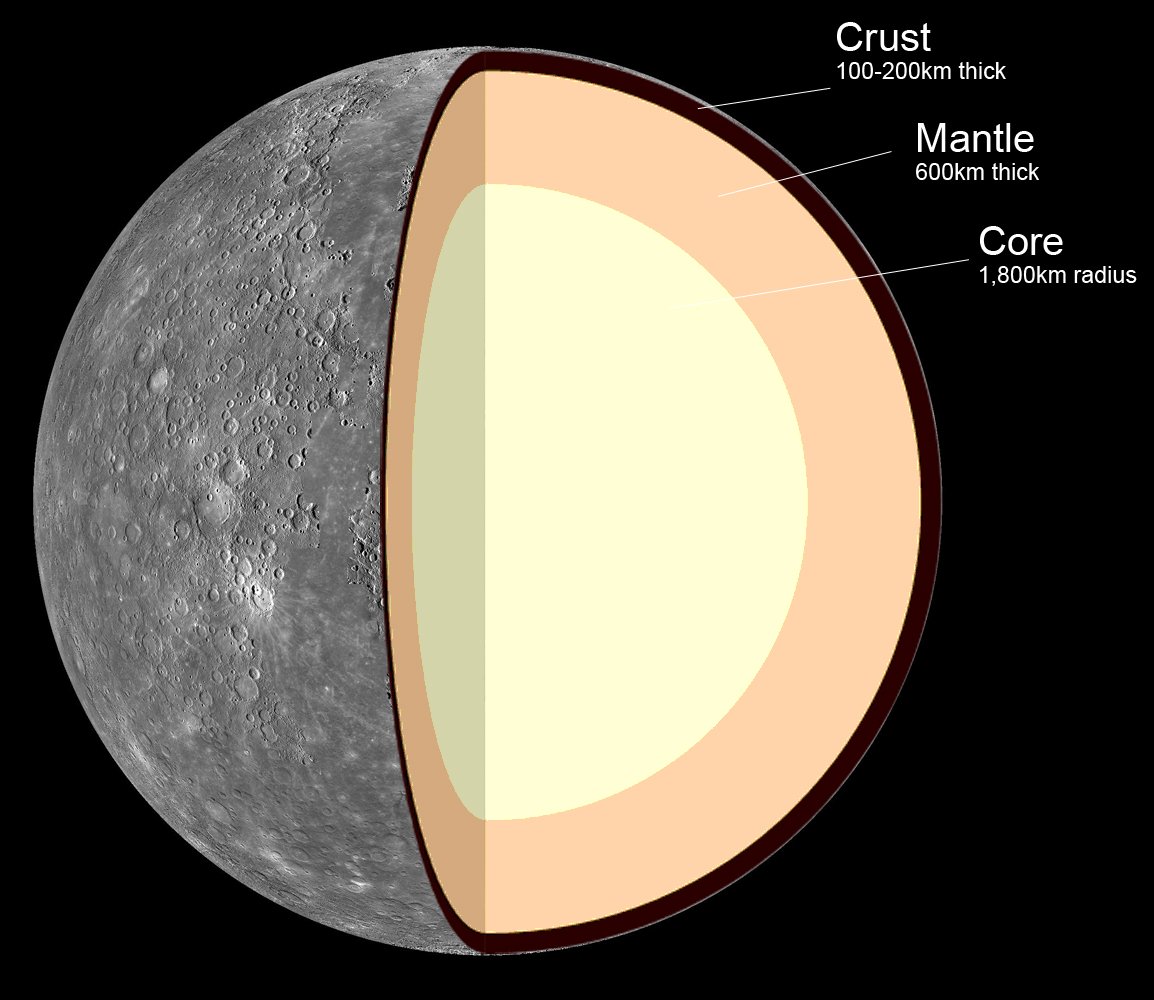
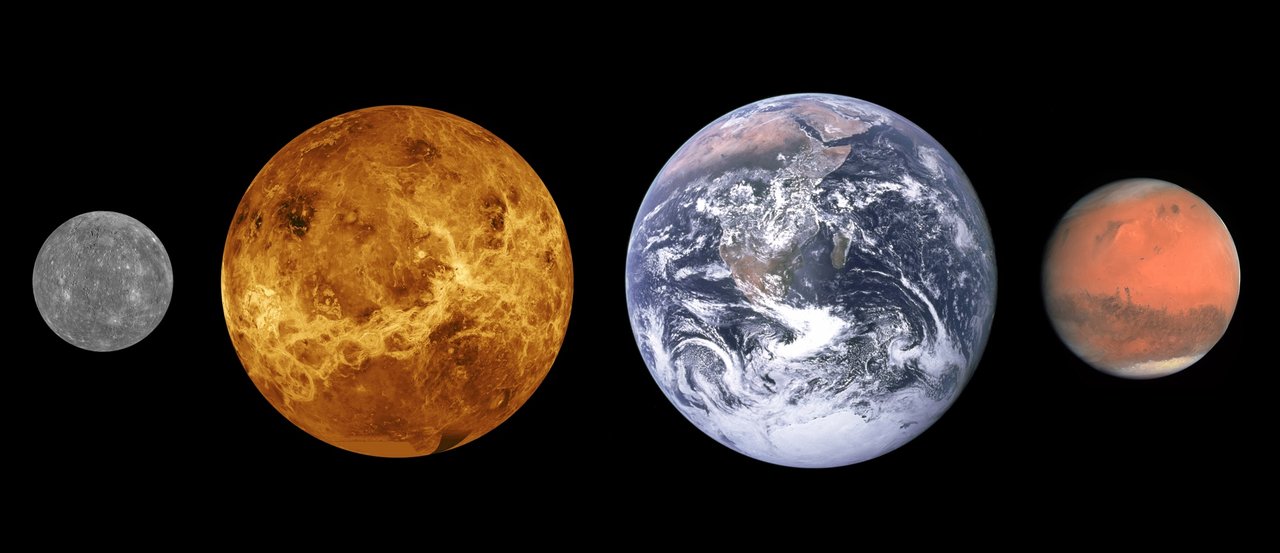
On Mercury’s dayside, the Sun would look two or three times larger than from Earth. During its long night, the ground can cool to around −180°C. Only 4,880 km across, the smallest and innermost planet contains an unexpectedly large iron core.
Closest to the Sun
Mercury’s average solar distance is about 57.9 million km, or 0.39 AU. Its eccentric orbit ranges from roughly 46 to 70 million km. A year lasts just 88 Earth days.
It rotates three times for every two orbits, a 3:2 spin–orbit resonance. Sunrise to sunrise takes 176 Earth days: a solar day longer than its year.
An enormous iron core
Mercury’s unusually high density points to a core occupying roughly 85% of its radius, with a comparatively thin mantle and crust. Earth’s core occupies only a little over half its radius.
One explanation is a giant impact stripping much of an earlier rocky mantle. Another invokes the hot environment close to the young Sun removing lighter material. MESSENGER found evidence for a liquid outer core and a weak magnetic field, about 1% of Earth’s strength—surprising for such a small planet.
Craters, extreme temperatures, and polar ice
Mercury’s gray-brown cratered surface resembles the Moon and records over four billion years of impacts. Caloris Basin, about 1,550 km wide, is among the solar system’s largest impact structures. Long lobate scarps show that the planet has slowly contracted.
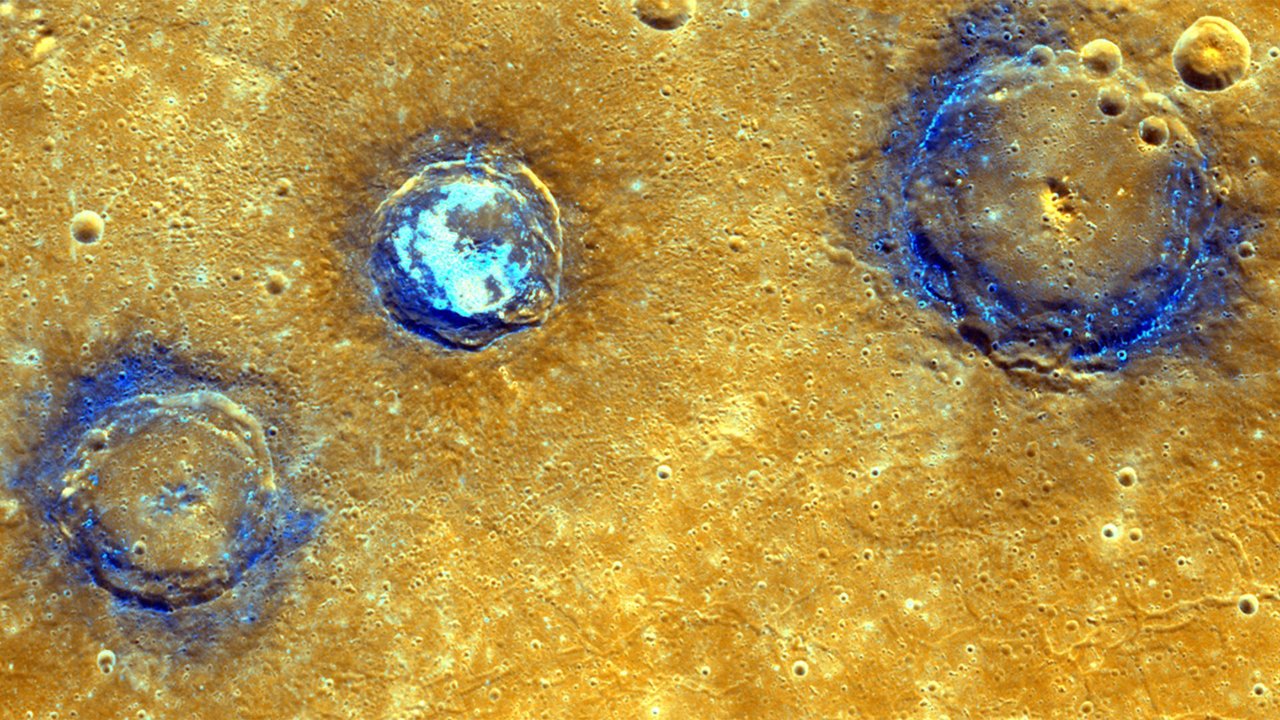
With almost no atmosphere to redistribute heat, surface temperatures can reach 430°C by day and fall to about −180°C at night, a swing exceeding 600°C. Yet MESSENGER confirmed water ice in permanently shadowed polar craters.
Is the closest planet also the hottest?
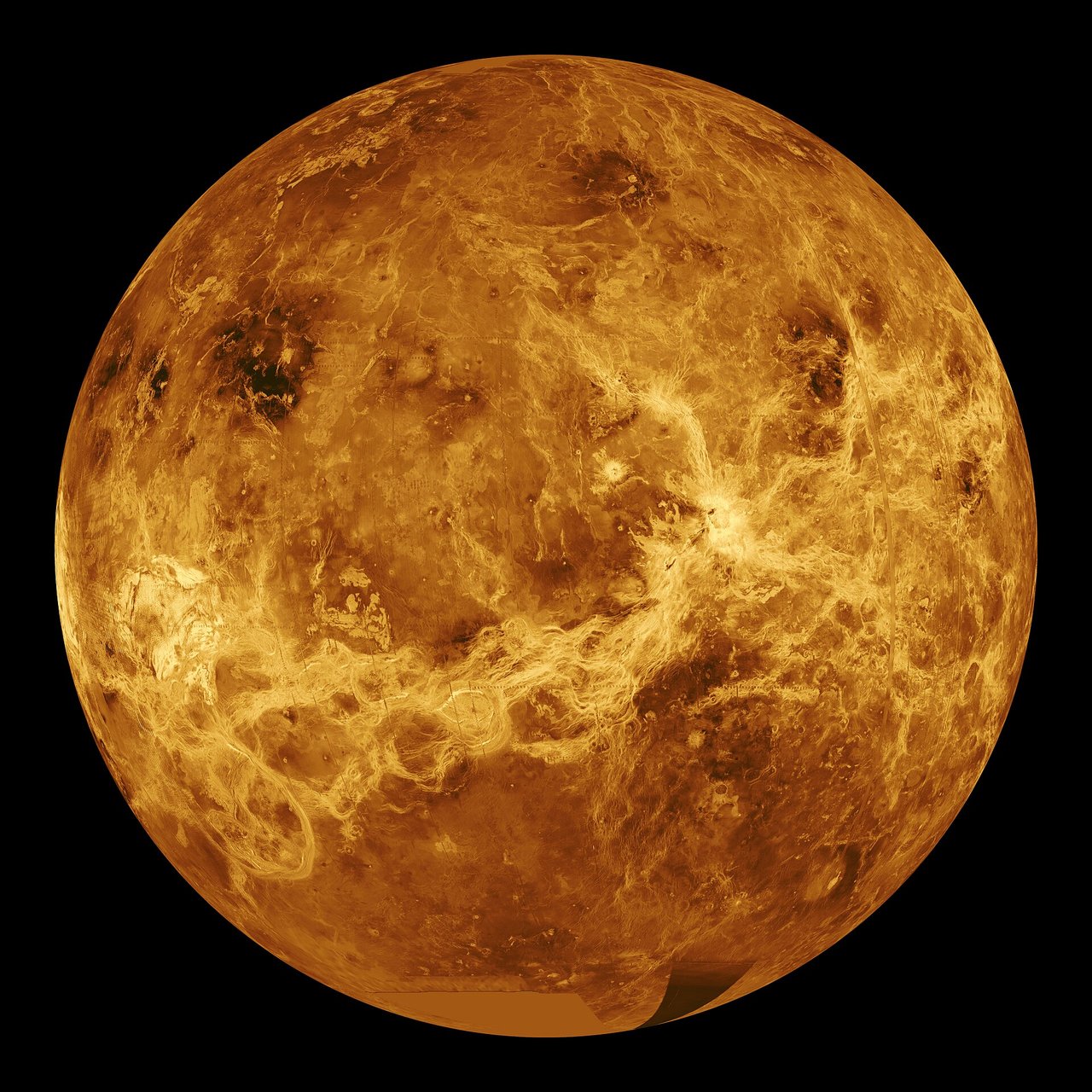
No: Venus is hotter. Mercury rapidly loses heat at night, while Venus’s thick carbon-dioxide atmosphere traps heat through a powerful greenhouse effect. Distance alone does not determine planetary temperature; atmospheric heat absorption, retention, and transport also matter.
Why is Mercury difficult to reach?
Solar gravity accelerates incoming spacecraft, so entering orbit requires substantial braking, often through repeated gravity assists. Humanity has sent only three dedicated Mercury missions.
Mariner 10, launched in 1973, made three flybys in 1974–1975 and imaged about 45% of the surface. MESSENGER, launched in 2004, became the first orbiter in March 2011, mapped the globe, and confirmed polar ice before its planned impact on April 30, 2015.
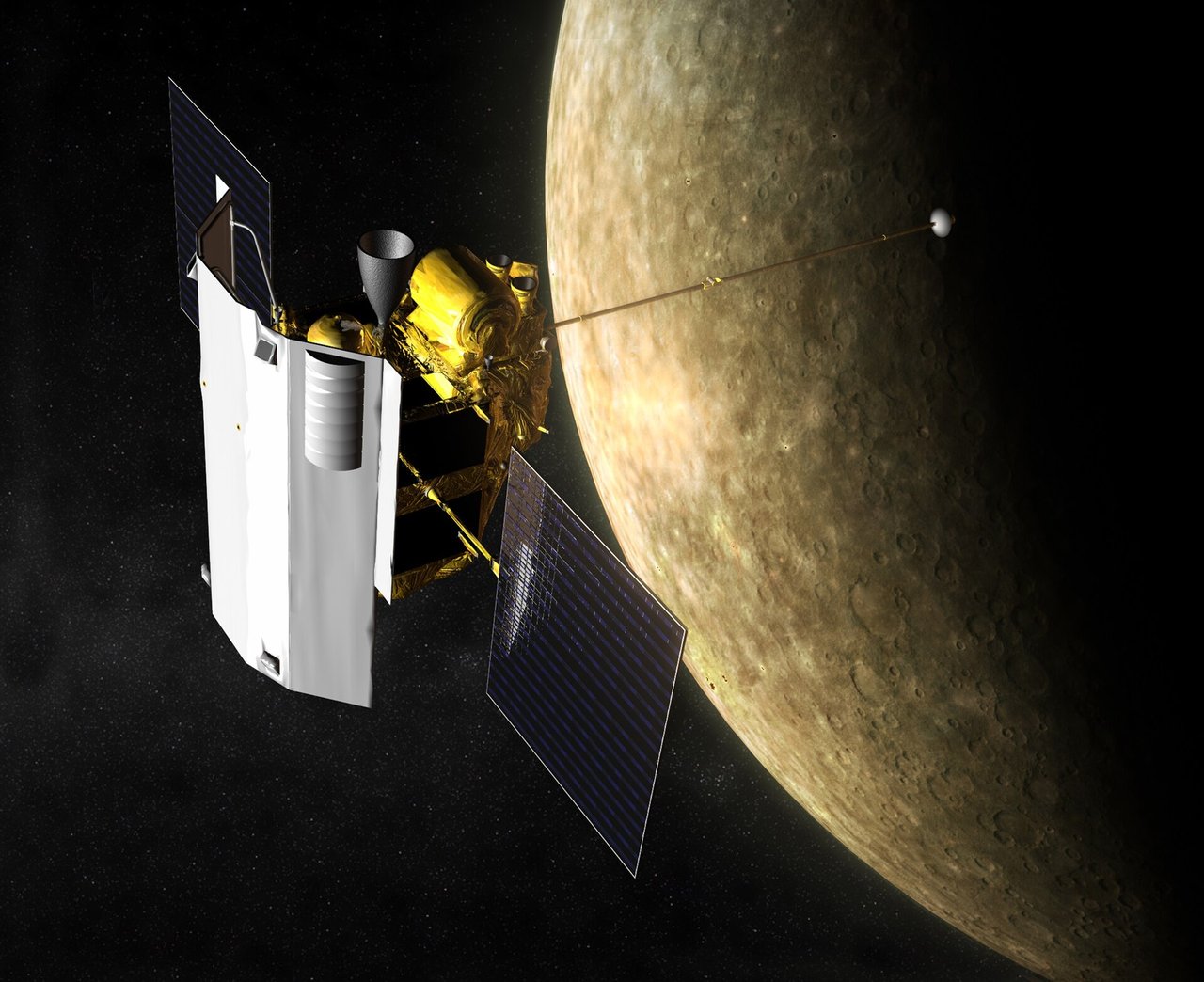
The European–Japanese BepiColombo launched in October 2018, using repeated Earth, Venus, and Mercury flybys. As of September 2026, it is in its arrival phase, with orbital insertion planned for November and two orbiters to study the planet.