Venus: Earth-sized, but unimaginably hot
The brightest planet in the night sky is 12,104 km across, similar to Earth. Its thick carbon-dioxide atmosphere creates a runaway greenhouse effect: 465°C temperatures, 92 times Earth’s air pressure, and sulfuric-acid rain. It rotates slowly backward, with a day longer than a year. Soviet Venera landers reached its surface, and Magellan mapped 98% by radar.
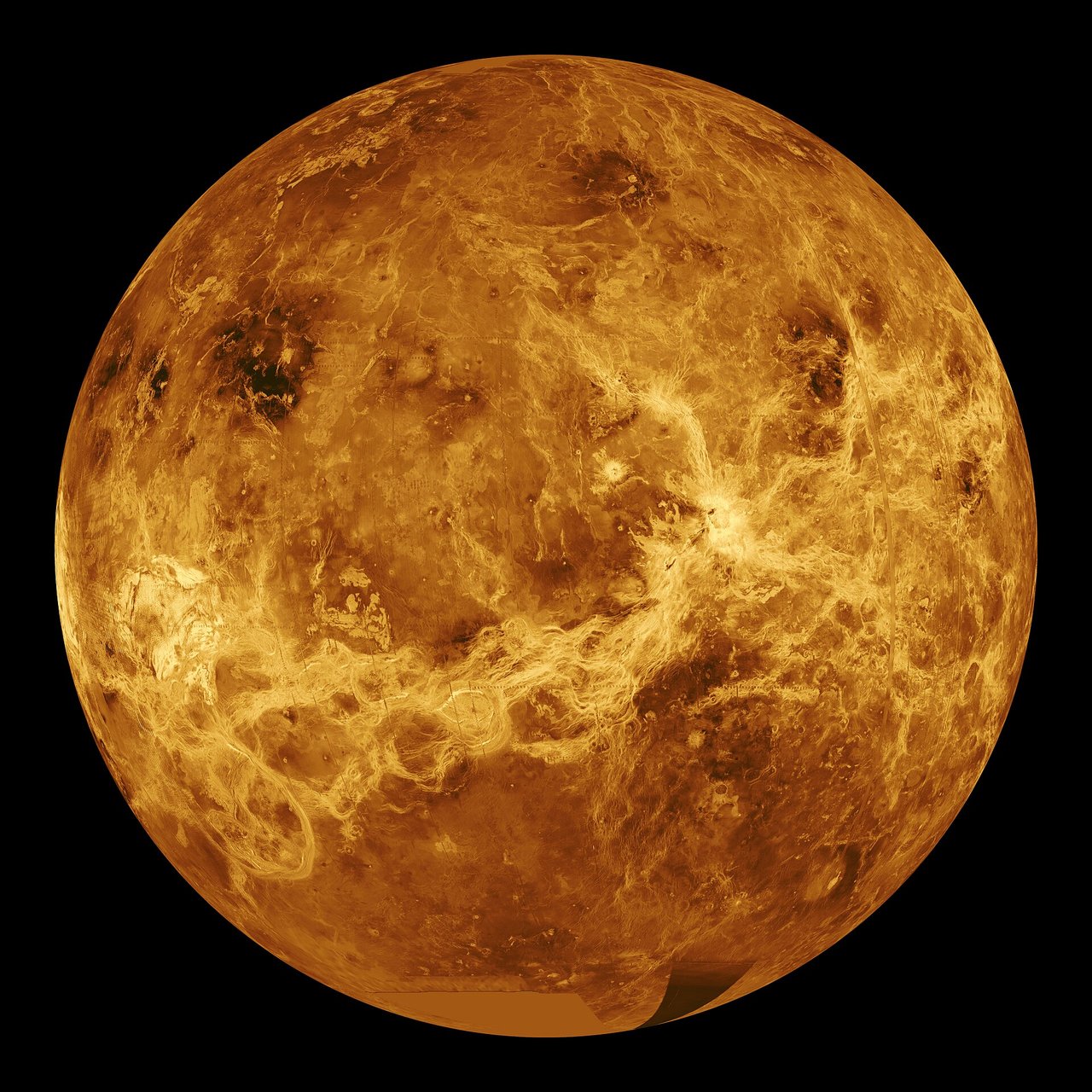
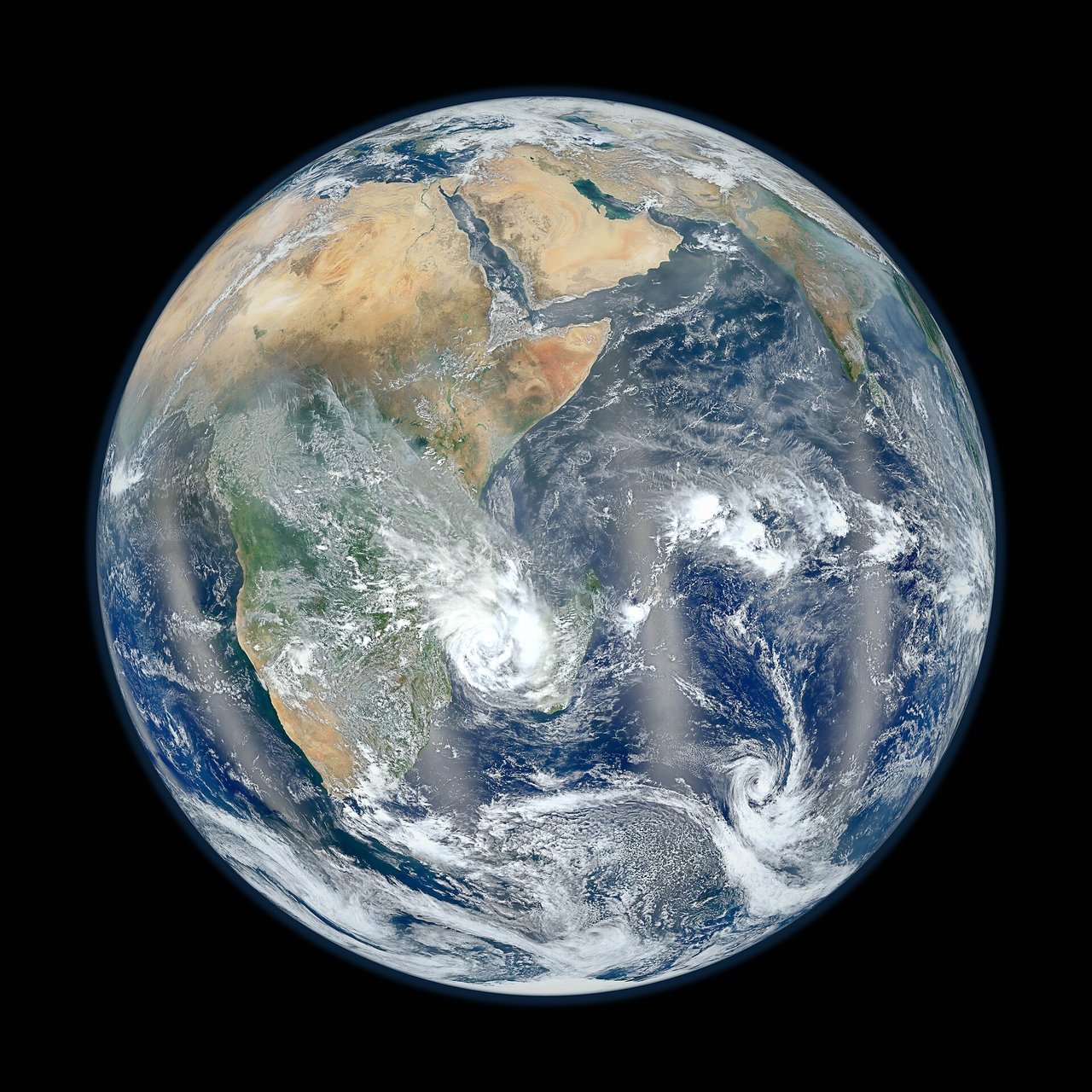
Venus is often the brightest natural object in the sky after the Sun and Moon. Known as the morning or evening star, it is about 12,104 km across, only roughly 5% smaller than Earth. Beneath that similarity lies a world of dense air, sulfuric-acid clouds, and extreme heat.
Why is Venus hotter than Mercury?
Its average surface temperature is about 465°C, hot enough to melt lead. Thick carbon dioxide traps outgoing heat. Temperatures vary much less with day, night, and latitude than on Mercury, though mountains are cooler. Models suggest early liquid water may have existed, but its duration and disappearance remain under study.
Carbon dioxide and sulfuric-acid clouds
Carbon dioxide makes up 96.5% of the atmosphere. Surface pressure is about 92 times Earth’s, comparable to nearly a kilometer underwater. Sulfuric-acid clouds at roughly 50–70 km hide the ground from visible-light telescopes. Winds around 360 km/h circle the planet in about four Earth days, an atmospheric superrotation still being investigated.
Slow backward rotation
Venus rotates opposite its orbital direction, so the Sun rises in the west. A rotation takes 243 Earth days, longer than its year; sunrise to sunrise takes about 117 days. Early impacts and the long-term effects of atmospheric and solar tides are possible contributors.
Earth’s twin inside?
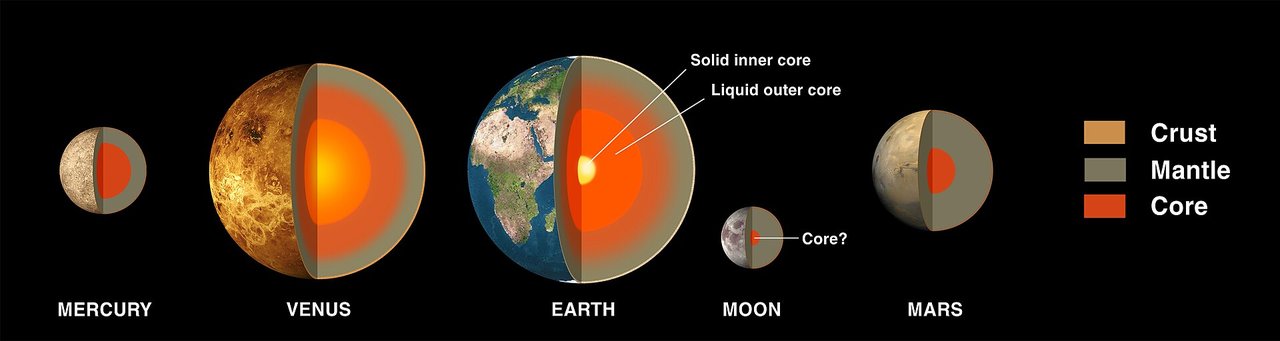
Its similar mass, density, and gravity suggest an iron–nickel core around 3,000 km in radius, a silicate mantle, and a thin basaltic crust. Unlike Earth, Venus lacks a strong global magnetic field and Earth-style plate tectonics. Heat may escape through episodes of extensive volcanism instead.
How long can a lander survive?
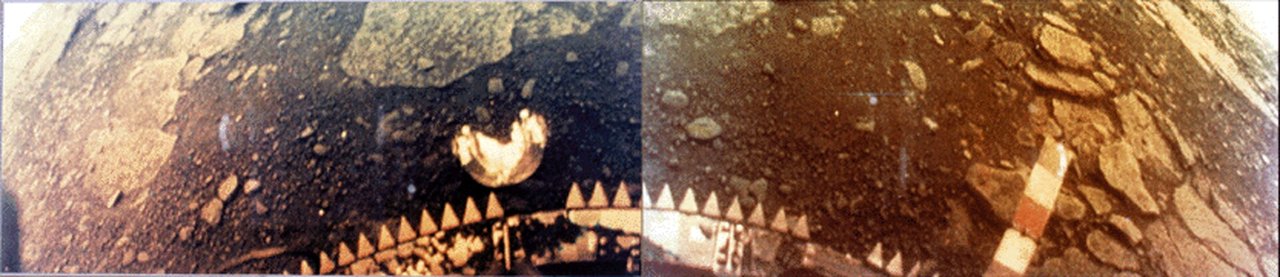
The Soviet Venera program began in 1961. Venera 7 made the first soft landing and surface transmission from another planet in 1970; Venera 9 returned surface photographs in 1975. On March 1, 1982, Venera 13 operated for 127 minutes, taking color images and analyzing soil—an impressive achievement under extreme heat and pressure.
Magellan revealed the hidden surface
Launched by Atlantis in May 1989, Magellan entered Venus orbit in August 1990. Synthetic aperture radar mapped 98% of the surface at roughly hundred-meter resolution, revealing volcanoes, fractures, lava channels, and coronae. Its mission ended in the atmosphere in October 1994. Venus remains one of the less-understood rocky planets, with new exploration missions being prepared.