Donaldjohanson: a tumbling cosmic peanut
Lucy’s second rehearsal revealed a narrow waist, two lobes, and complex rotation. Even a modest asteroid can carry a history of reassembly.
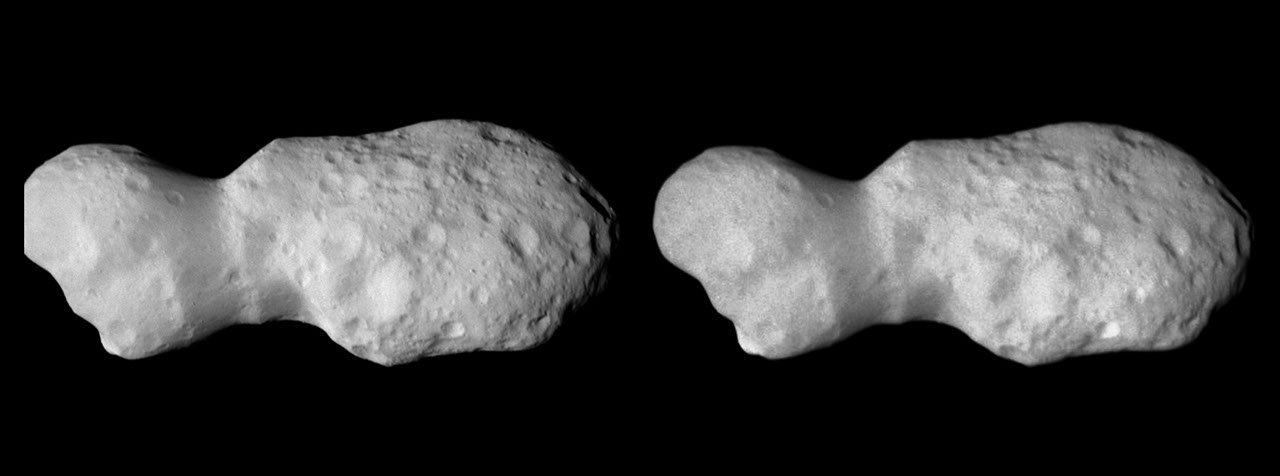
Named for fossil discoverer Donald Johanson, this asteroid has a scholarly name and a familiar shape: Lucy’s 2025 flyby revealed two peanut-like lobes joined by a narrow waist.
From a point to a detailed world
Ground observations estimate size from brightness and other information, but a flyby reveals the actual outline. This elongated body cannot be described by one diameter alone: maximum length and equivalent diameter are different, compatible measurements.
Why doesn’t it spin like a tidy top?
Research published in 2026 examined complex tumbling. An irregular object need not rotate neatly about one fixed axis. Shape, spin, and mass distribution interact; sequential images reconstruct the motion better than a single photograph.
Reassembled worlds in the main belt
Impacts can fragment a parent body, after which gravity gathers pieces again. Family associations, lobes, and surface features provide evidence, but a peanut outline alone does not uniquely establish the formation history.
A gift from a rehearsal
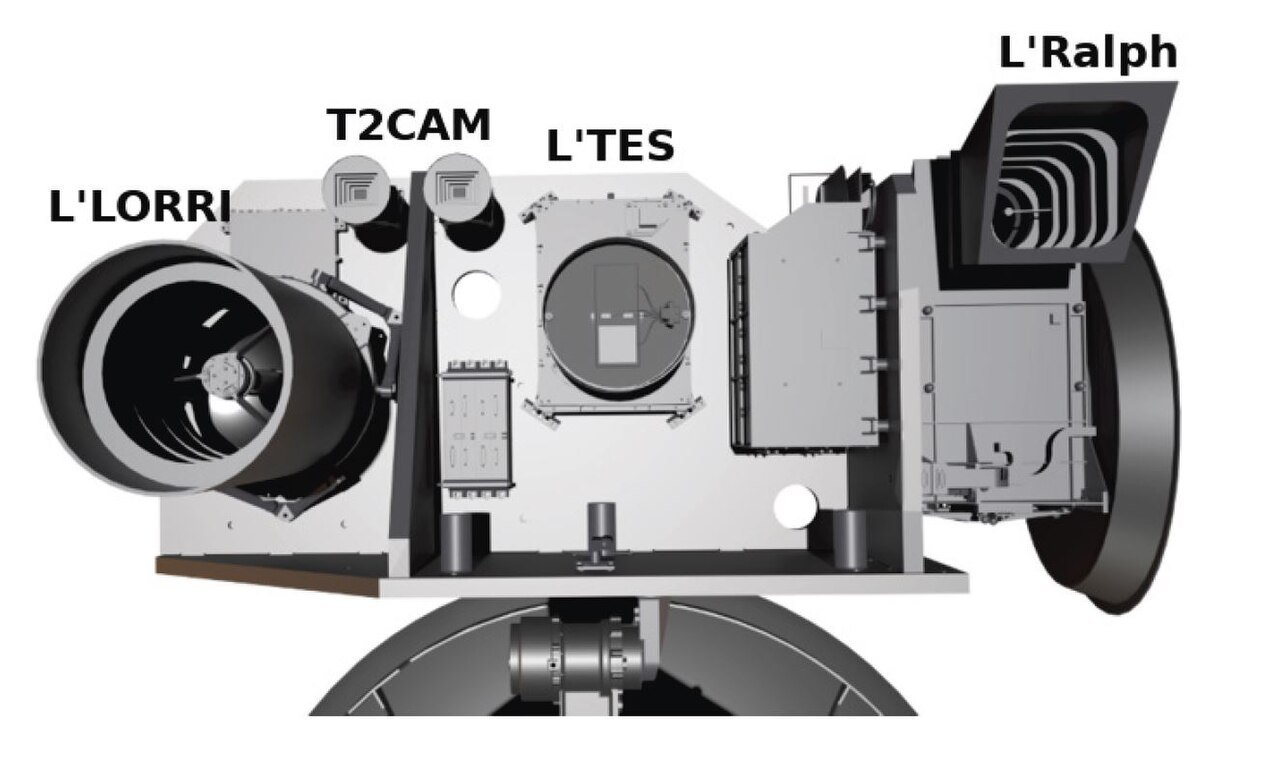
This encounter tested tracking and instrument coordination before the Trojans, while revealing an independently fascinating target. Planned questions and unexpected images both advance our understanding.