Earth: what makes this blue planet special?
The third planet from the Sun is the only world known to support life. Its mean diameter is about 12,742 km, and it orbits about 149.6 million km from the Sun. Oceans cover 71% of its surface; liquid water, an oxygen-rich atmosphere, and a global magnetic field help make it our Blue Marble.
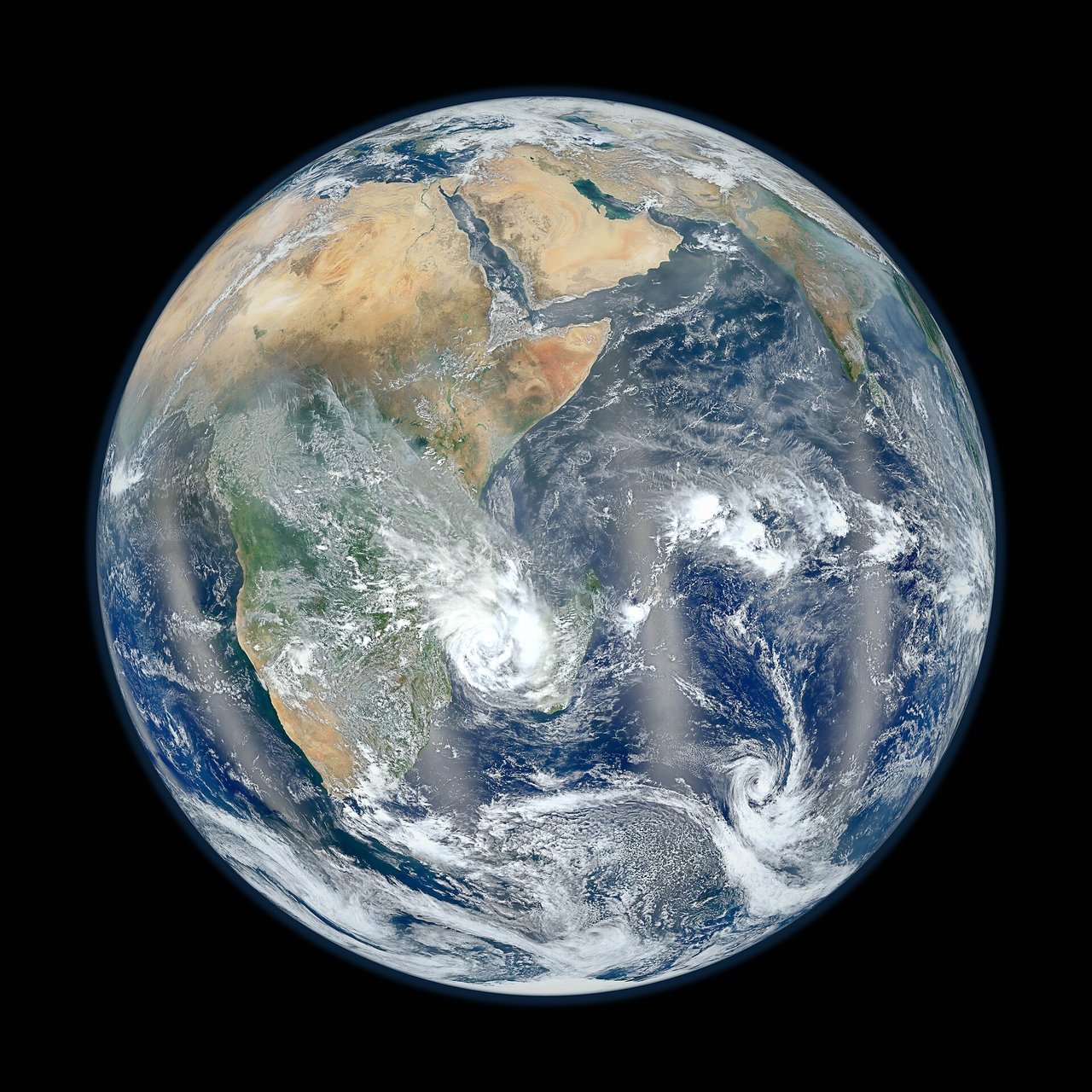
From beyond the Moon, every city, forest, whale, and person you know fits inside a small Blue Marble. Earth is the third planet, about 12,742 km in mean diameter, and the only confirmed inhabited world. It orbits at an average 149.6 million km, or 1 AU, in about 365.25 days.
Formation and layers
Earth assembled from solar-nebula dust and rock about 4.54 billion years ago. In its hot, molten youth, iron and nickel sank while lighter silicates rose.
The crust averages about 17 km thick, with continental crust around 30–50 km and oceanic crust about 5–10 km. Beneath lies a roughly 2,900 km mantle, whose solid rock flows slowly over geological time. The core includes a liquid outer region and a solid inner core about 1,220 km in radius, at roughly 5,000–6,000°C.
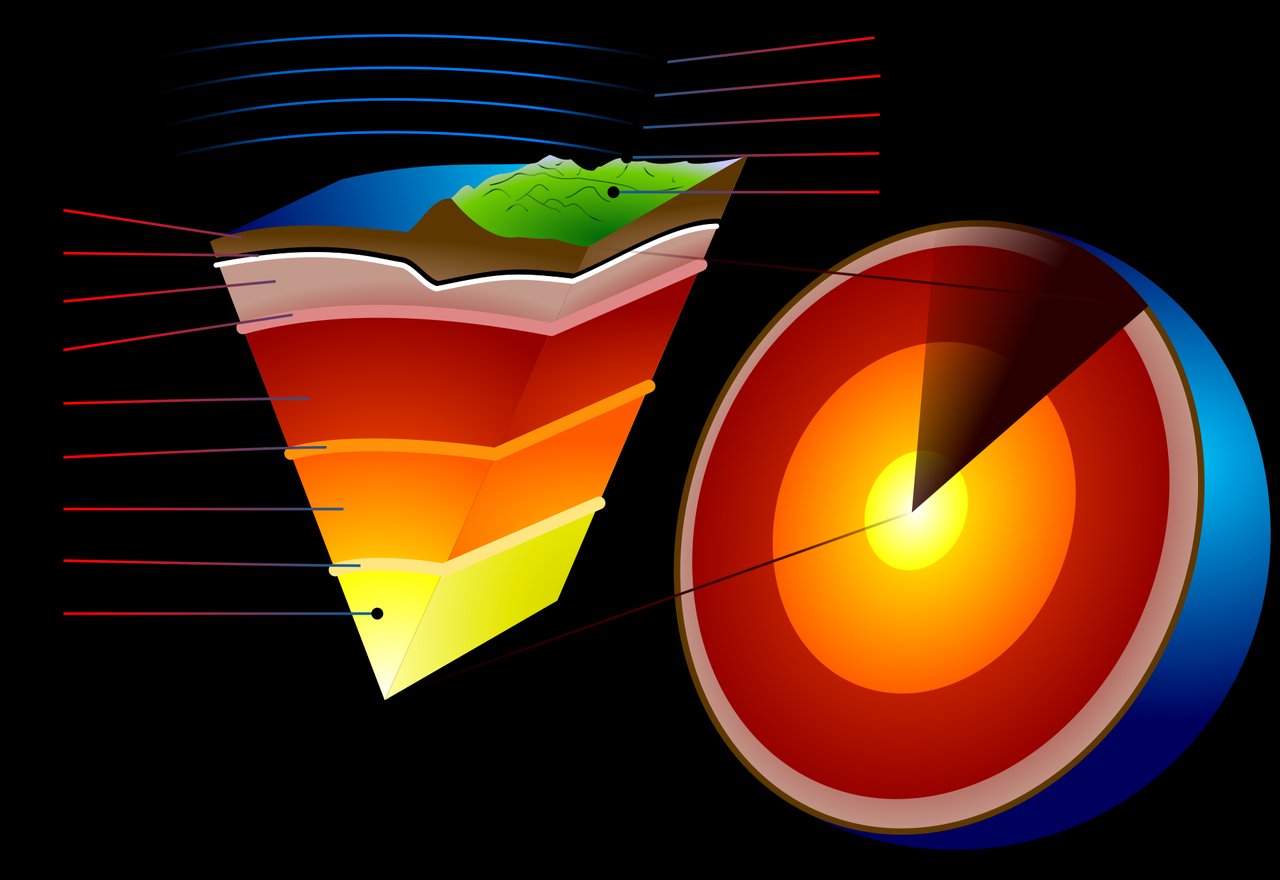
Plate tectonics and magnetic field
Earth is the only planet with confirmed plate tectonics. More than a dozen major lithospheric plates move centimeters per year, raising mountains, opening oceans, and producing earthquakes and volcanoes. This geological engine reshapes the surface and influences climate.
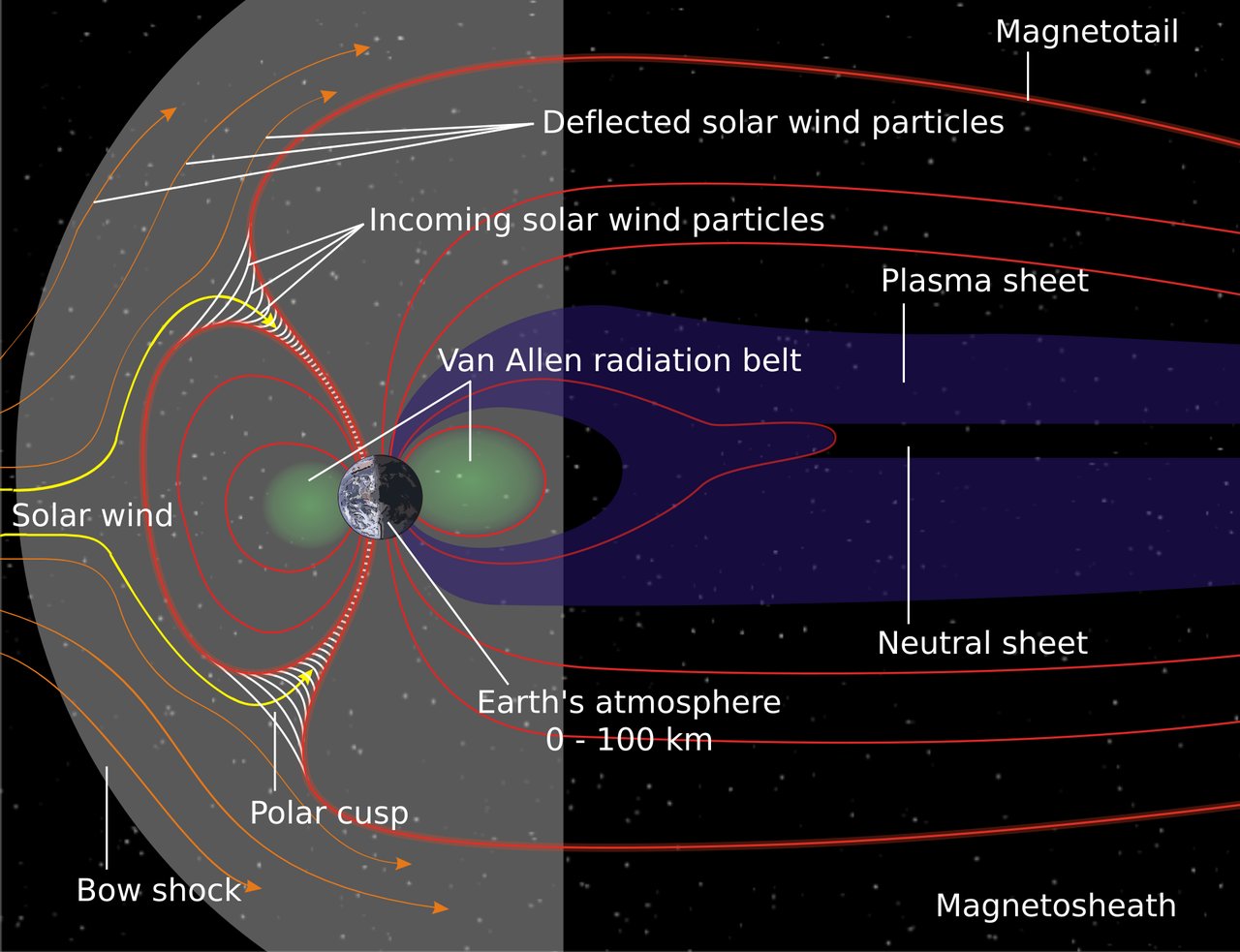
Moving liquid iron and nickel in the outer core generate the geomagnetic field. Its magnetosphere deflects solar-wind particles, helping protect the atmosphere and channeling some particles toward auroras.
Water and atmosphere
Earth’s position and climate allow stable surface liquid water, with an average temperature around 15°C. Oceans cover about 71% of the surface and drive a cycle of evaporation and precipitation.
The atmosphere is about 78% nitrogen and 21% oxygen. Ozone absorbs harmful ultraviolet radiation, while air and oceans redistribute heat.
Why is the sky blue?
Sunlight contains many colors. Air molecules scatter shorter-wavelength blue light more strongly than red, sending blue light toward us from across the sky. At sunrise and sunset, light travels through more atmosphere; much of the blue has scattered away, leaving orange and red.
The Moon has too little atmosphere for this effect, so its daytime sky remains black.
A cradle for life
Life existed at least 3.8 billion years ago. It not only adapted to Earth but changed it: ancient photosynthetic microbes enriched the atmosphere with oxygen. Water, suitable temperatures, air, and magnetic protection together support our known oasis of life.
Seeing the Blue Marble
On December 24, 1968, Apollo 8 astronaut William Anders photographed Earthrise over the lunar horizon. Apollo 17’s crew took the classic Blue Marble image on December 7, 1972. From space, borders disappear and a precious, vulnerable world remains.