Enceladus: spraying an ocean into space
This icy moon is only 504 km across. Plumes erupt from south-polar tiger-stripe fractures above a global salty ocean with hydrothermal activity, making it one of the most promising places to search for extraterrestrial life.
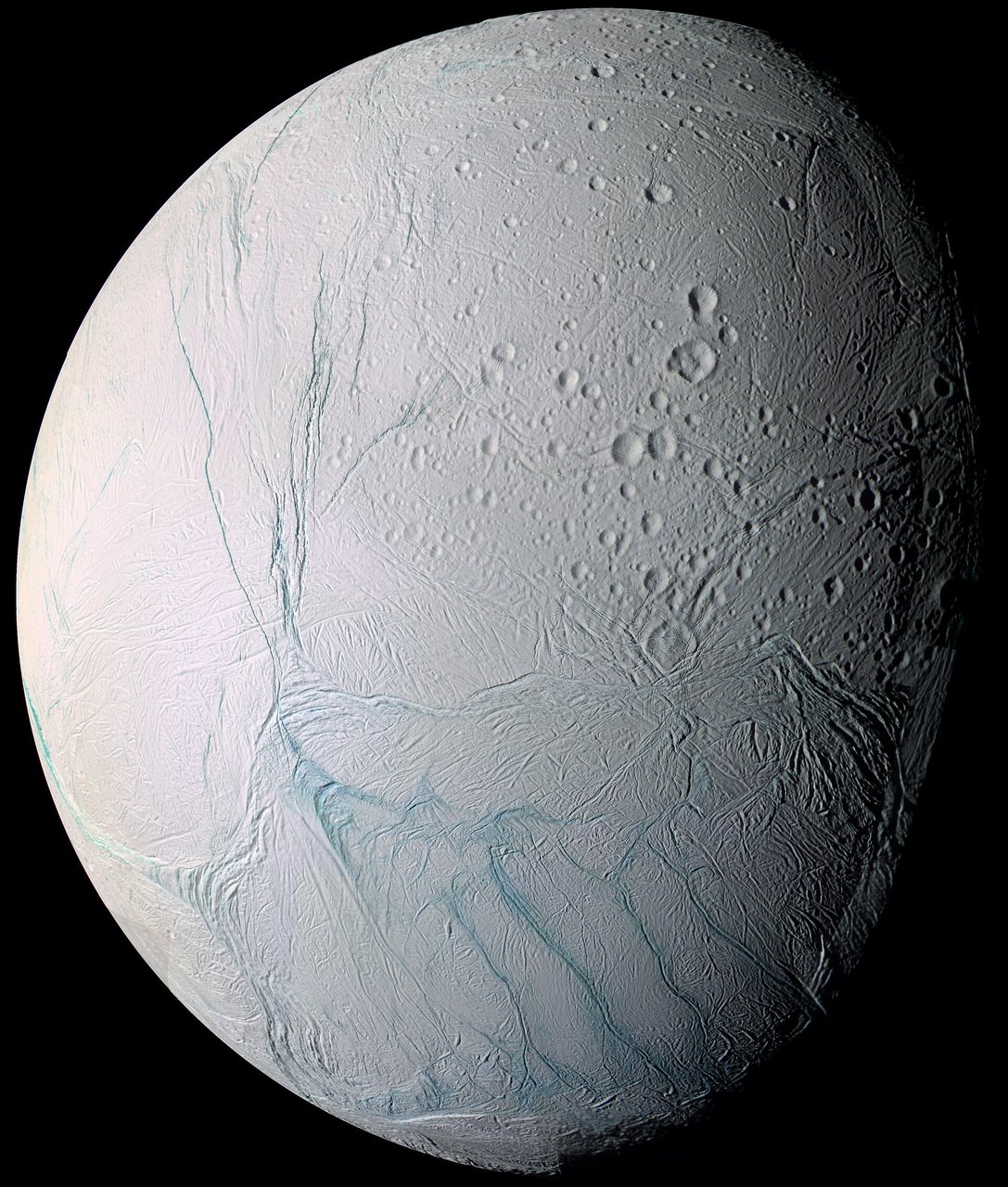
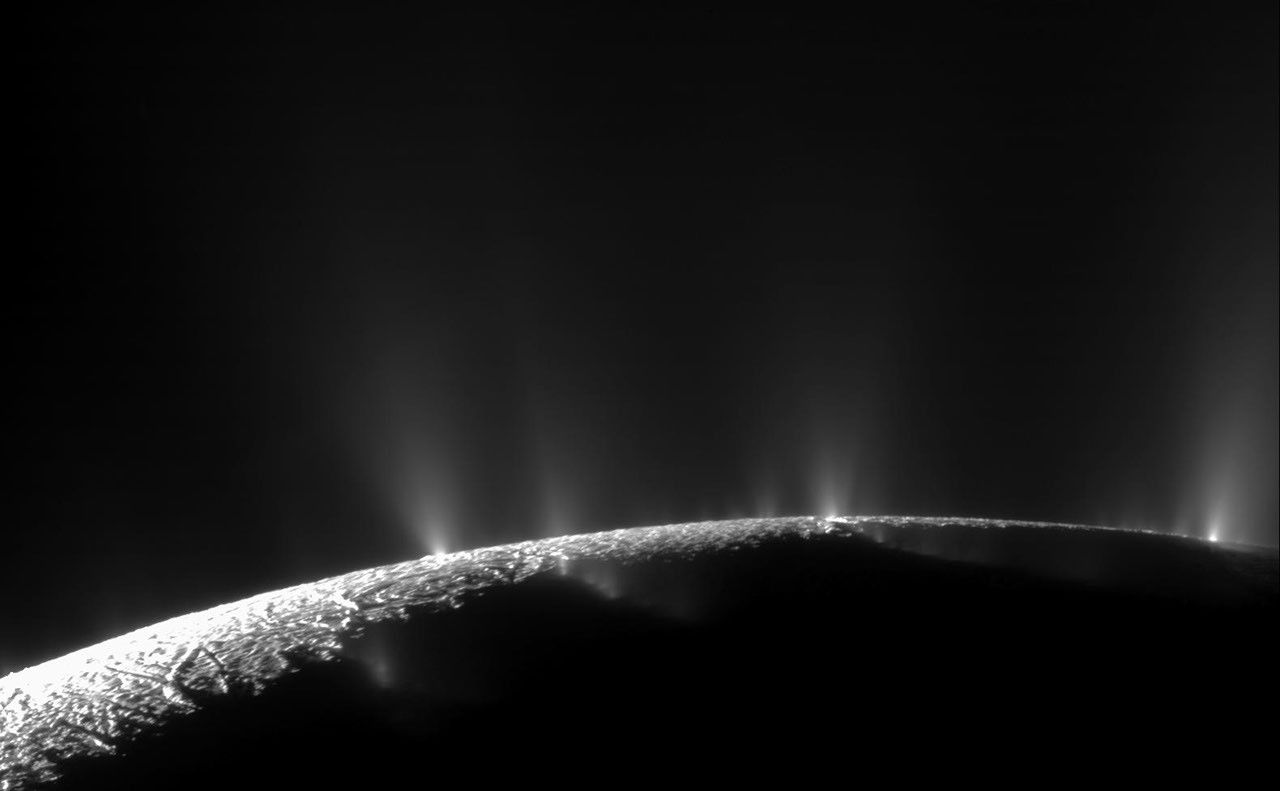
Enceladus’s south pole sprays water vapor and ice into dark space. Only 504 km across, this bright icy moon hides a global ocean. Its reflective surface averages around −198°C.
Tiger stripes and plumes
In 2005, Cassini discovered four roughly parallel south-polar fractures, each around 130 km long. Named Alexandria, Cairo, Baghdad, and Damascus Sulci, they release plumes extending hundreds of kilometers. Imaging identified 101 geysers. Strong heat flow and fresh larger ice grains give parts of the fractures a blue-green appearance.
Feeding Saturn’s E ring
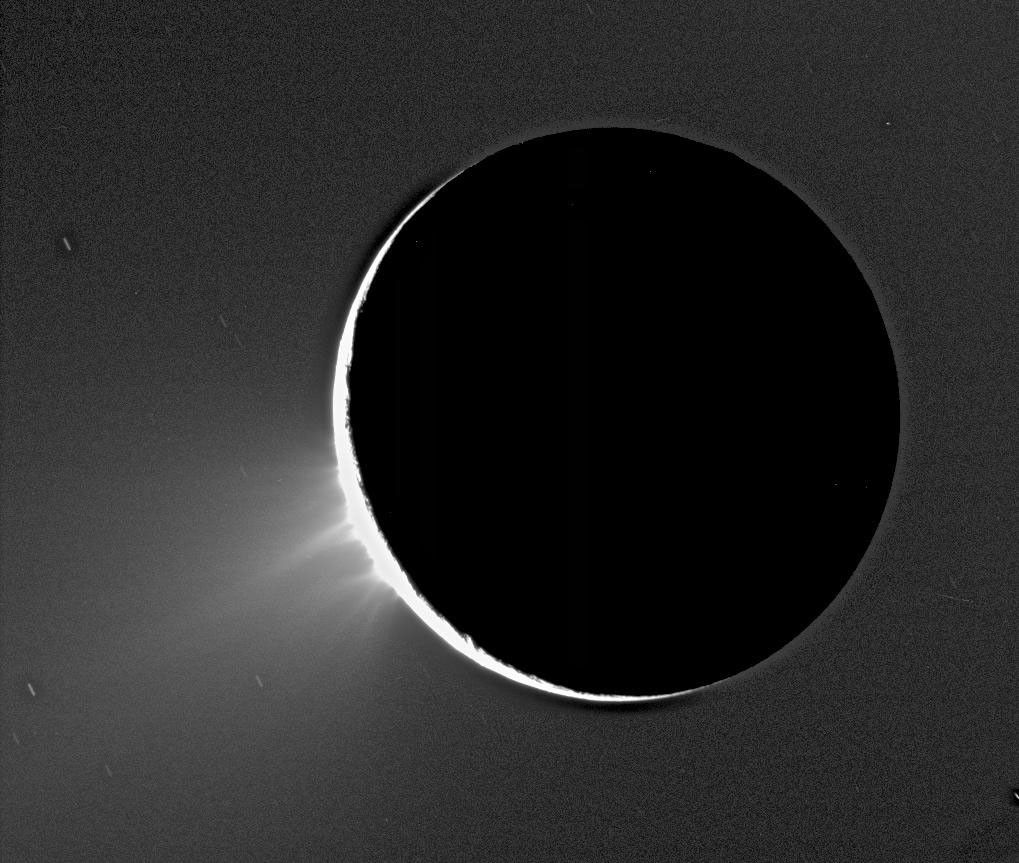
Escape speed is only around 240 m/s. Fast ice grains leave the moon and enter Saturn orbit, supplying the broad, diffuse E ring. Other grains fall back like fresh snow, keeping Enceladus bright.
Ocean beneath the shell
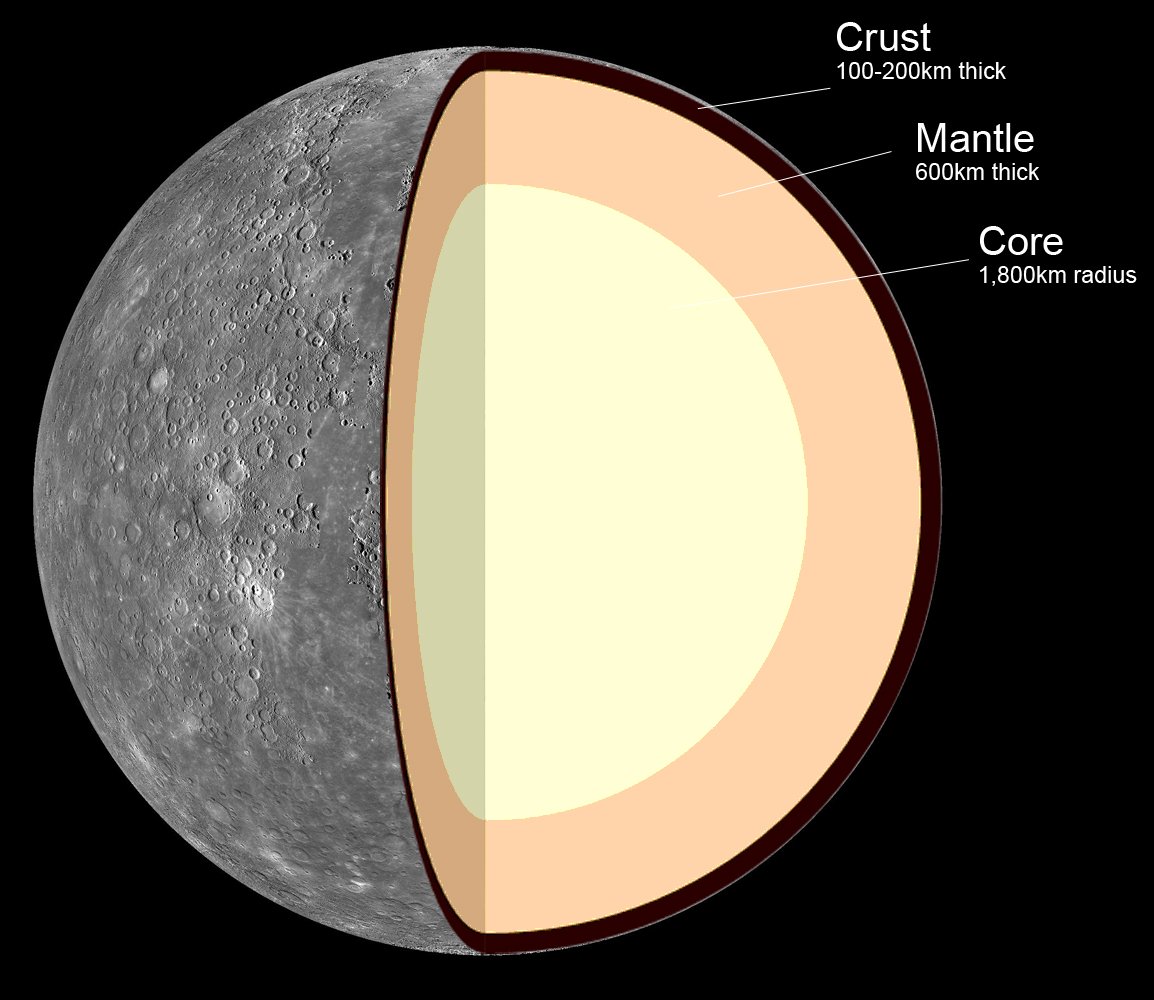
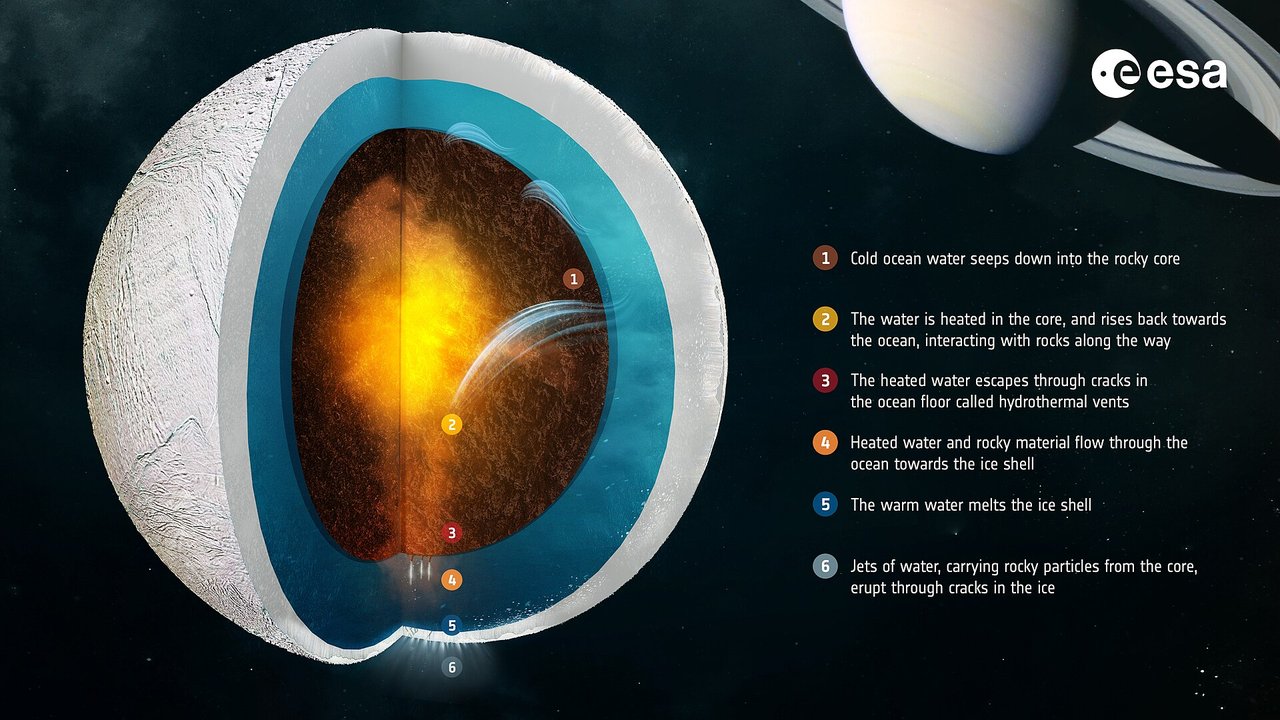
A density around 1.61 g/cm³ indicates rock and ice. Gravity and rotational wobble measurements support a layered interior: an ice shell averaging 20–25 km thick, perhaps under 5 km near parts of the south pole, a global salty ocean tens of kilometers deep, and a porous rocky core. A 2:1 orbital resonance with Dione sustains eccentricity and tidal heating.
Evidence for hydrothermal activity
Tiny silica grains identified in E-ring particles in 2015 imply prolonged interaction between rock and water above roughly 90°C. Water circulating through a porous core could dissolve minerals and return them to the ocean, supplying chemical energy analogous to Earth’s hydrothermal systems.
Does the ocean contain life?
We cannot yet say. Liquid water, carbon compounds, salts, and chemical energy are promising, but ingredients alone do not prove life. Plumes make future sampling possible without drilling through many kilometers of ice.
What did Cassini sample?
Cassini first directly detected plume water vapor during a 168 km flyby on July 14, 2005. On October 28, 2015, it crossed at about 49 km and detected abundant molecular hydrogen, evidence for water–rock reactions that can support microbes on Earth. Complex carbon compounds were found in ice grains; archive analysis reported phosphates in 2023. These are important ingredients, not evidence of organisms. Cassini ended in 2017, but its data continues yielding discoveries.