Heliopause: where does the Sun’s bubble end?
It is neither a wall nor the end of the Sun’s gravity. Invisible particles told scientists when the Voyager spacecraft crossed it.
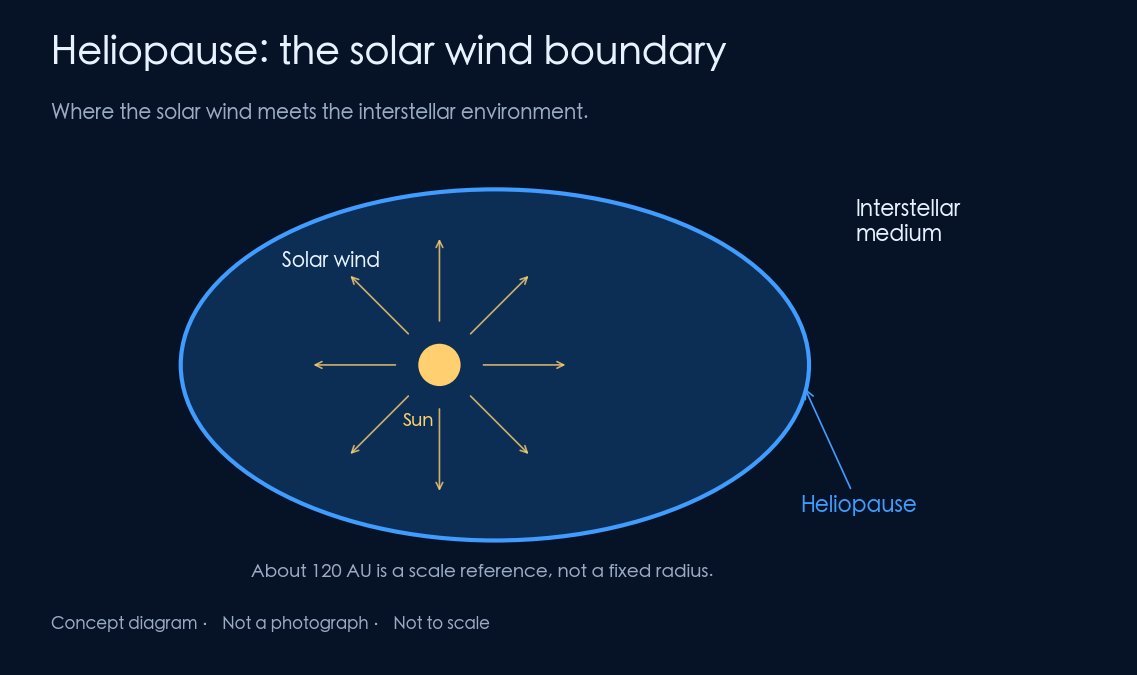
The Sun continually emits charged particles as the solar wind, inflating the heliosphere within the interstellar environment. The heliopause is the boundary where this solar-wind region interacts with surrounding interstellar material.
Space outside is not empty
Interstellar space contains thin gas, particles, and magnetic fields. The heliosphere is not a glass dome with a clean photographic outline. Scientists combine local spacecraft measurements and distant observations to infer its properties.
How did Voyager know it crossed?
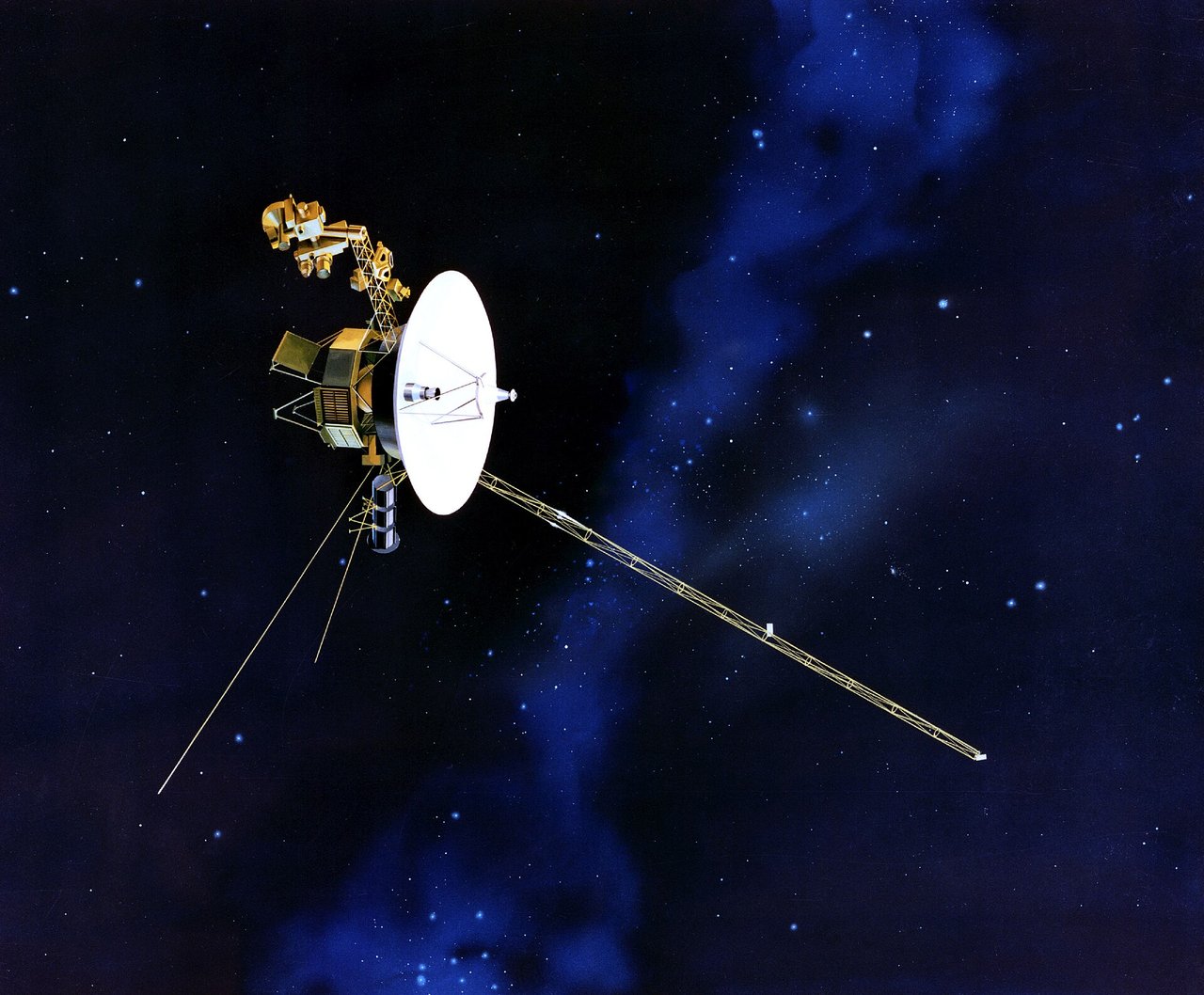
Voyager 1 crossed in 2012 and Voyager 2 in 2018. Changes in particles, plasma, and magnetic conditions identified the boundary, not a visible signpost. Measurements along two different routes are particularly valuable.
Is 120 AU an exact radius?
No. One AU is approximately Earth’s average solar distance; 120 AU indicates an order of magnitude. The real boundary varies with direction and solar activity rather than forming a perfect sphere. The app’s ring is a scale reference, not a live measured shell.
Does crossing mean leaving the Sun behind completely?
It means leaving the solar-wind-dominated region, not escaping solar gravity. The much more distant Oort Cloud defines another possible sense of the solar system’s extent. Entering interstellar space and passing every solar-system body are different milestones.