Iapetus: two colors and an equatorial ridge
Why does one moon look painted in two colors? And what created the mountains around its equator, like an enormous seam?
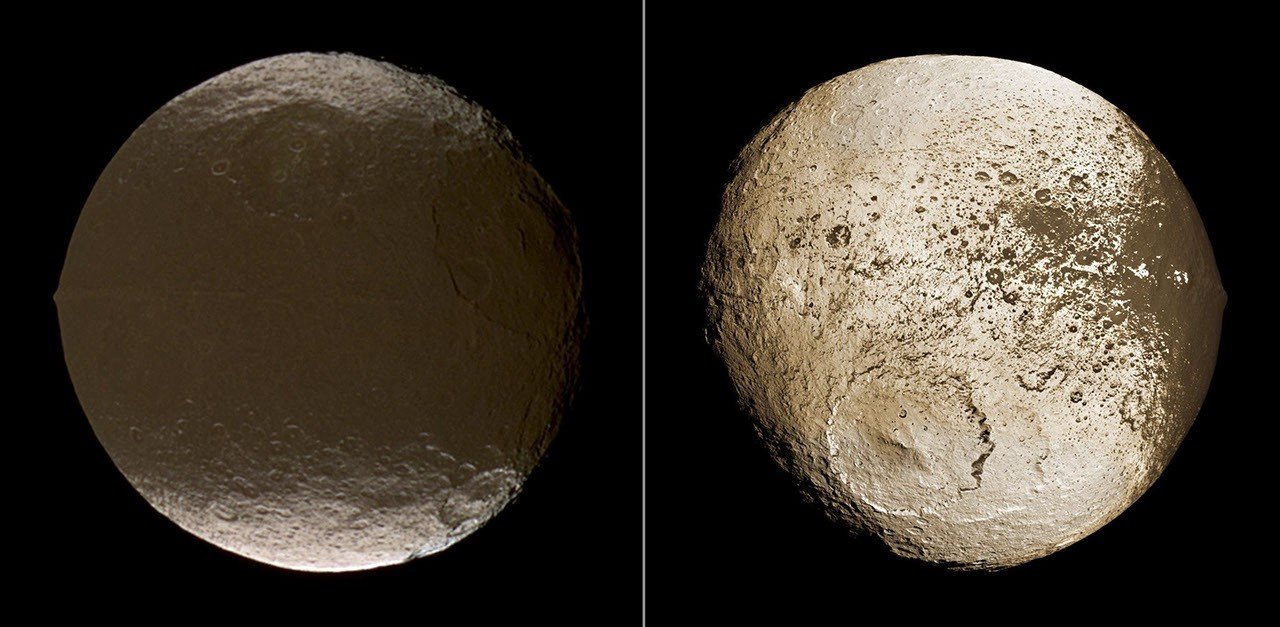
Iapetus’s defining feature is its brightness contrast. The leading hemisphere has a large dark region, while other terrain is much brighter. This is a difference in reflectivity, not simply day and night.
A changing brightness
When Cassini discovered it in 1671, visibility varied strongly with orbital position. Astronomers suspected contrasting hemispheres centuries before the Cassini spacecraft saw them closely.
Dust and sunlight work together
External dark dust may first darken the leading side. Darker ground warms more, causing ice to sublime and settle in colder regions, leaving additional dark material behind. This feedback amplifies an initially smaller difference.
Who made the equatorial seam?
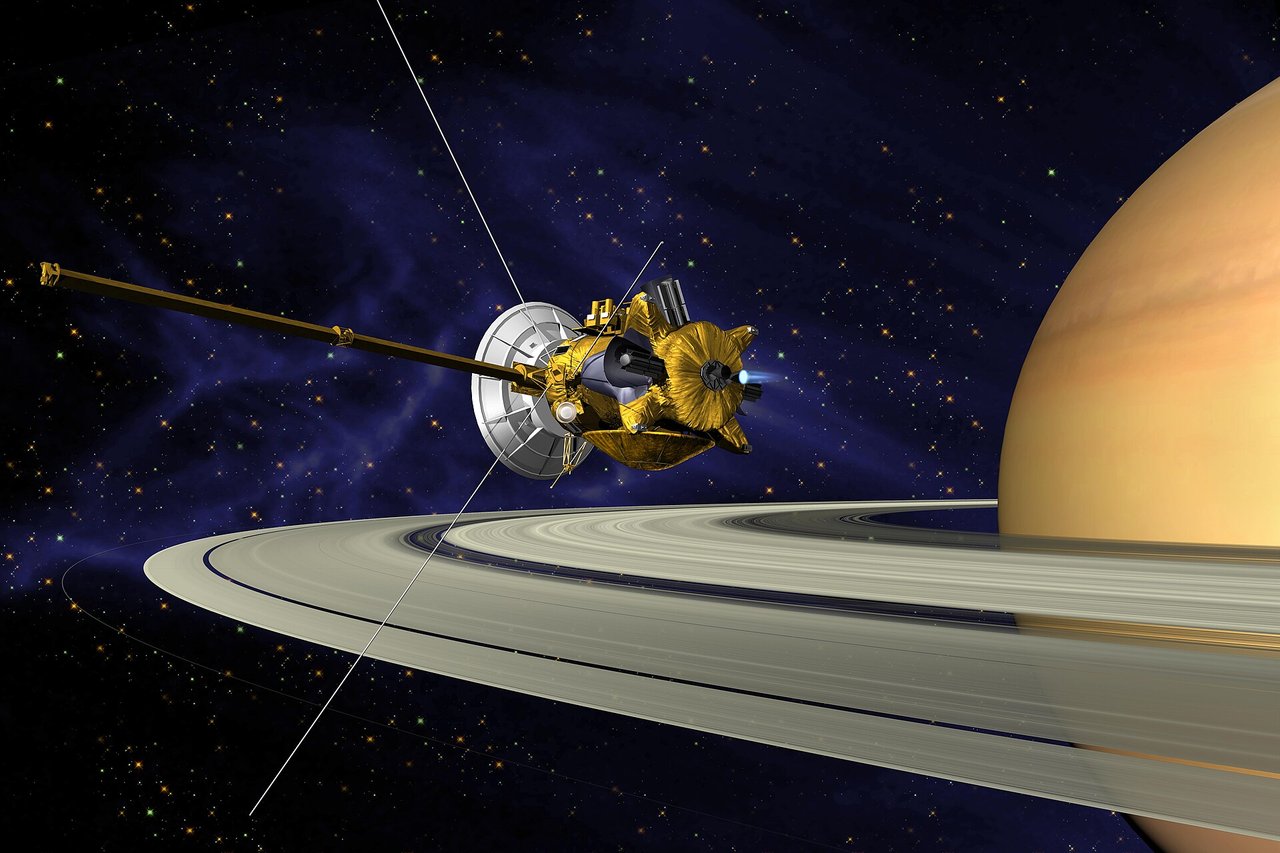
A mountain ridge follows the equator, giving a walnut-like appearance. Proposed origins include ancient rapid rotation or material falling from a former ring. Seeing the landform does not settle how it formed.
Why remember Iapetus?
External dust, solar heating, migrating ice, and ancient terrain all appear on one face. Even far from the Sun, small energy inputs can reshape a world over enough time.