Io: volcanoes powered by gravity
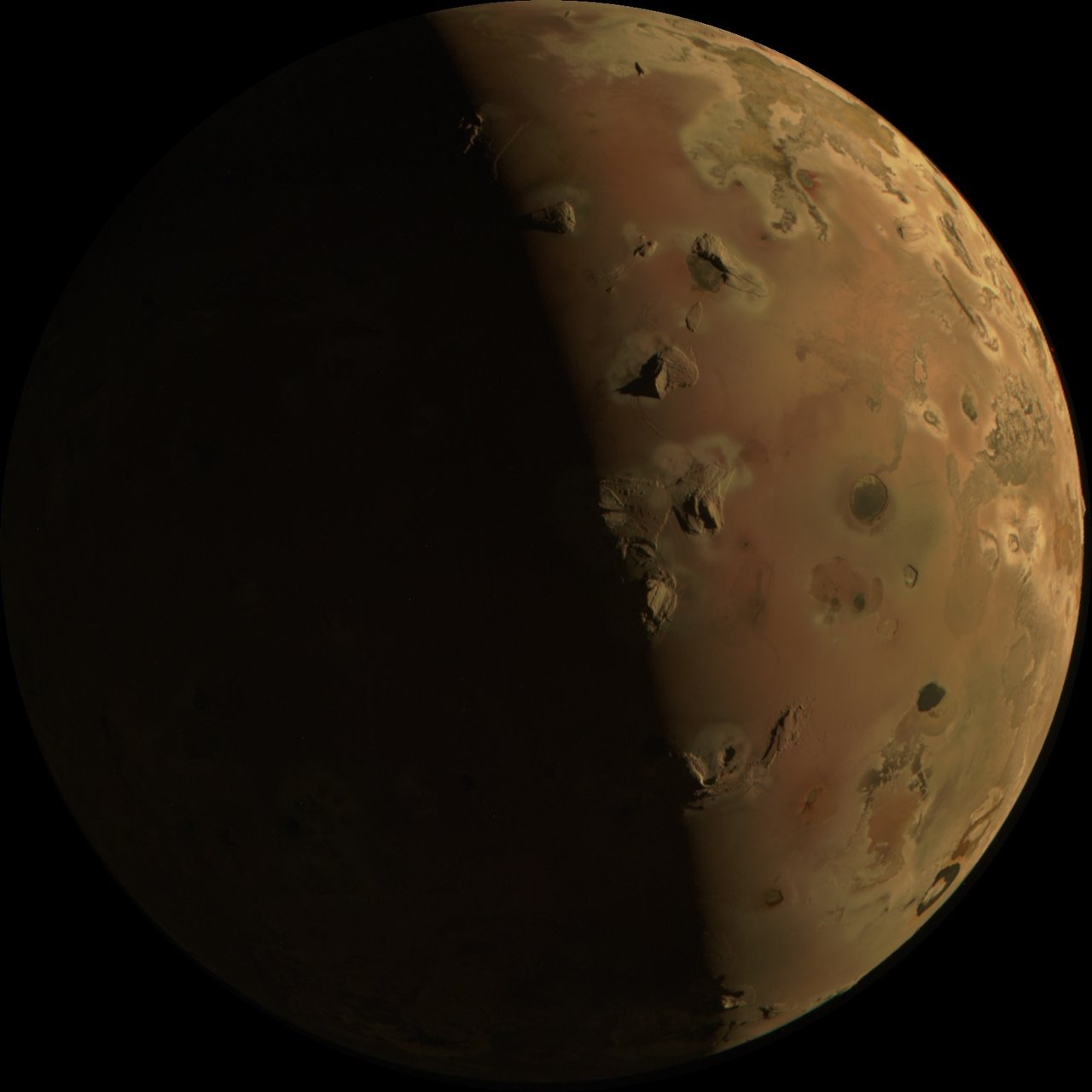
Jupiter’s innermost Galilean moon is the solar system’s most volcanically active world. Tidal heating powers more than 400 active volcanoes; sulfur colors its surface, where impact craters are almost absent.
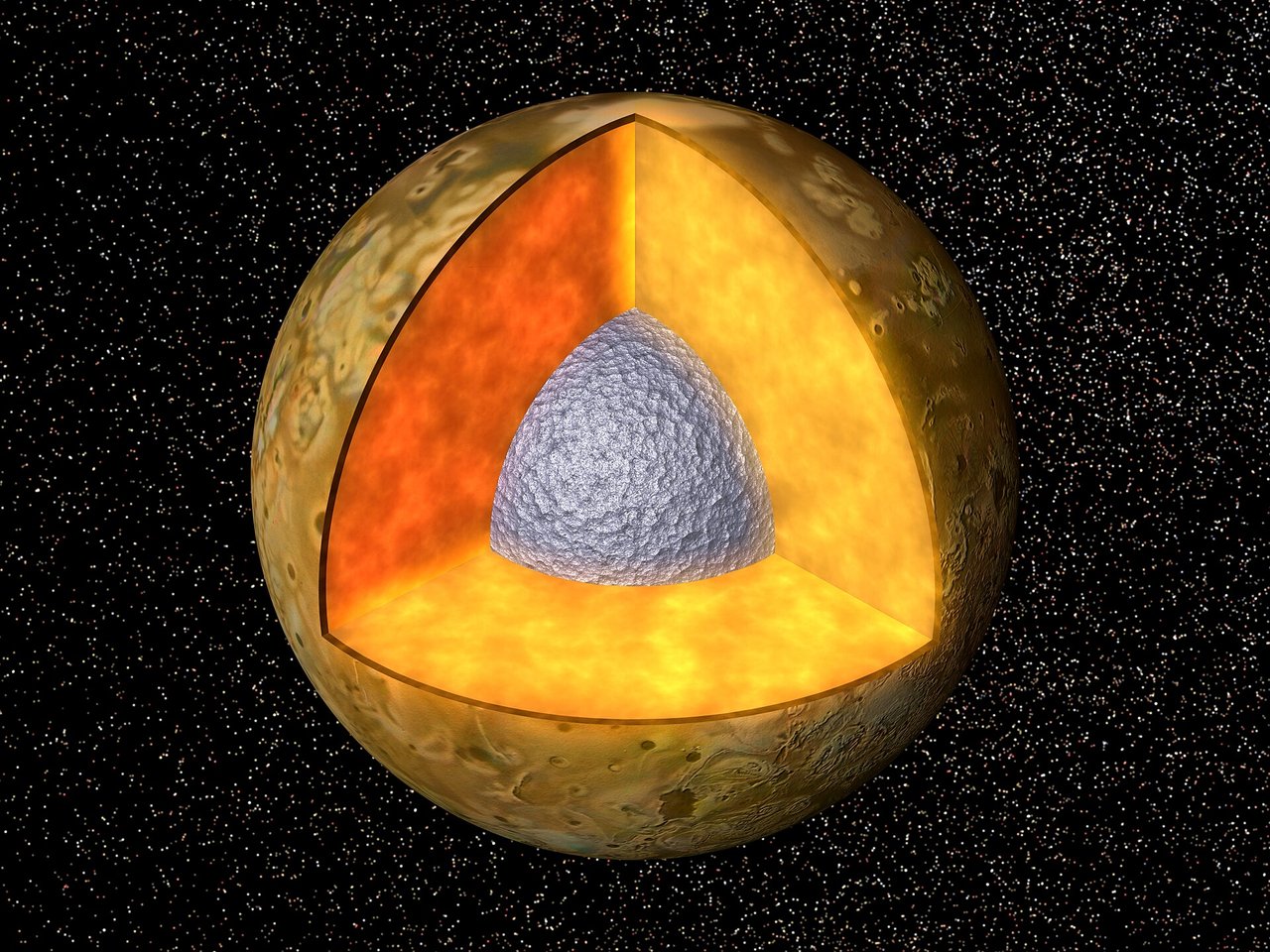
Hovering safely above Io, you might see several volcanoes erupting into space at once. About 3,643 km across, it is slightly larger than our Moon, the innermost Galilean moon, and the solar system’s most volcanically active world.
Heated by gravitational kneading
Io orbits about 422,000 km from Jupiter in 1.77 days. Its 1:2:4 resonance with Europa and Ganymede keeps its orbit slightly eccentric, allowing Jupiter’s changing tides to stretch and compress it repeatedly. Surface deformation can reach hundreds of meters, and heat flow is around 2 W/m², over twenty times Earth’s average. Voyager confirmed eruptions shortly after tidal heating was predicted in 1979.
Core, mantle, and magma pathways
Its density around 3.53 g/cm³ indicates a rocky moon. An iron and iron-sulfide core lies beneath a partly molten silicate mantle. Magma rises through a thin outer shell. Water and ice are scarce beside such hot volcanism.
An extraordinary volcanic world
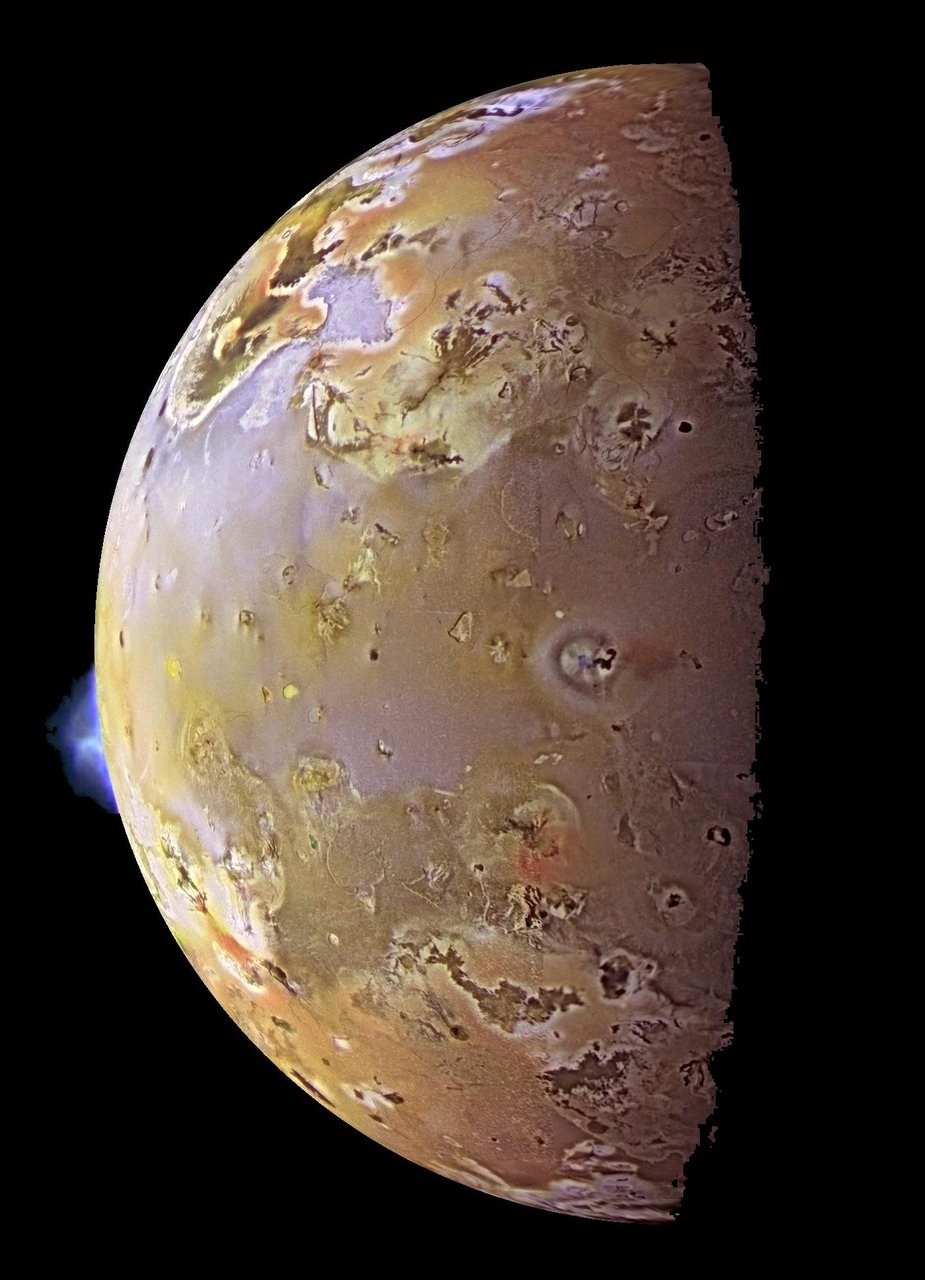
More than 400 active volcanoes produce plumes up to 300 km high. Weak gravity and very thin air allow umbrella-shaped plumes and huge deposits. Some lavas exceed 1,200°C. Loki Patera spans around 200 km, dwarfing terrestrial lava lakes.
A sulfur palette
Sulfur dioxide freezes into white frost on surfaces averaging around −140°C. Sulfur compounds produce yellow, orange, red, and dark colors; fresh red deposits can fade toward yellow. Constant resurfacing erases most impact craters.
Could a person watch from beside a volcano?
Io has no breathable air, intense Jovian radiation, hot vents, and extremely cold surrounding ground. Low gravity sends ejecta farther rather than making it safe. Fast flybys by radiation-resistant spacecraft are a more practical way to monitor eruptions.
How were the volcanoes found?
On March 8, 1979, navigation engineer Linda Morabito noticed a plume in Voyager 1 images, the first observed active eruption beyond Earth. Galileo made repeated flybys from 1995–2003. Juno passed within about 1,500 km on December 30, 2023 and February 3, 2024, returning close views of lava lakes and eruptions.