Mimas: a Death Star face, perhaps an ocean within
A giant crater made it famous. Subtle changes in its orbit have made scientists rethink what might lie inside.
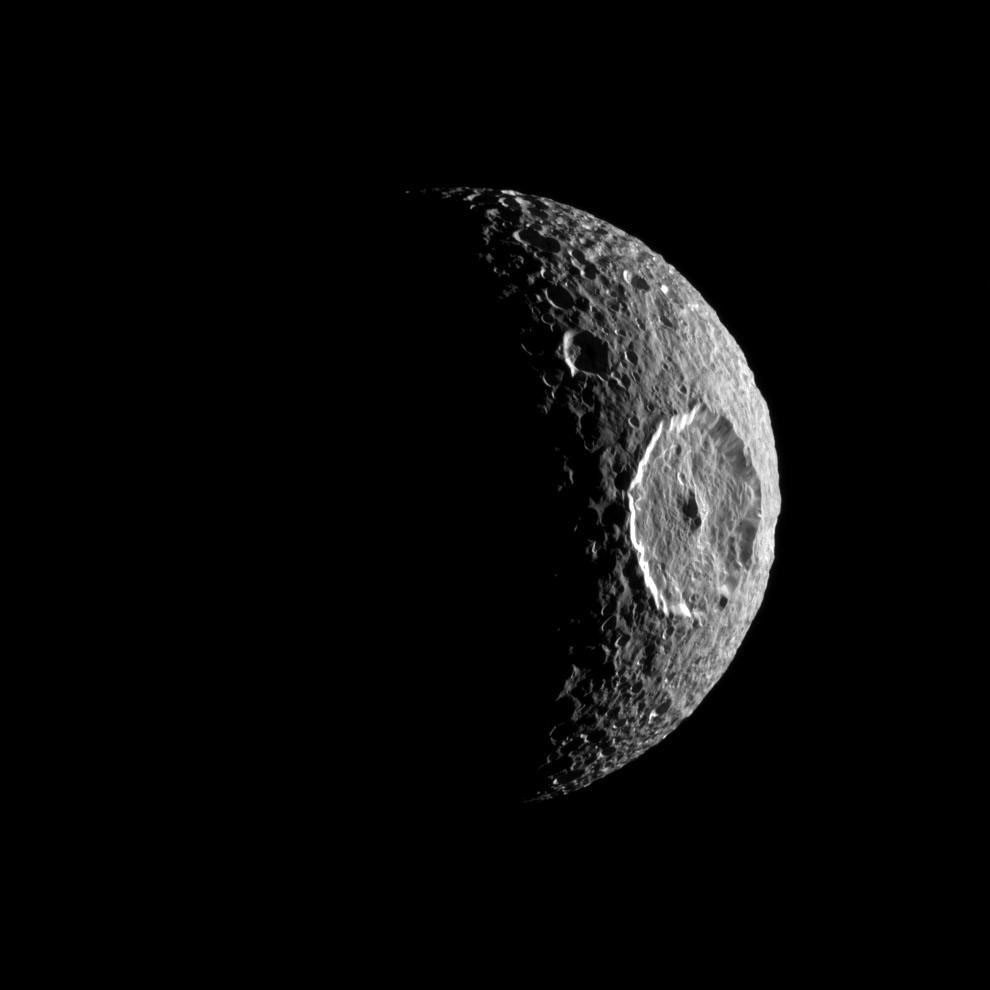
Mimas immediately recalls the Death Star, but its huge circular feature is natural: Herschel Crater, about 130 km wide, roughly a third of the moon’s diameter.
How did it survive?
The impact was violent for such a small icy world. A central peak and surrounding terrain preserve the scar, reminding us that apparently quiet moons have turbulent histories.
An old surface, perhaps a young ocean
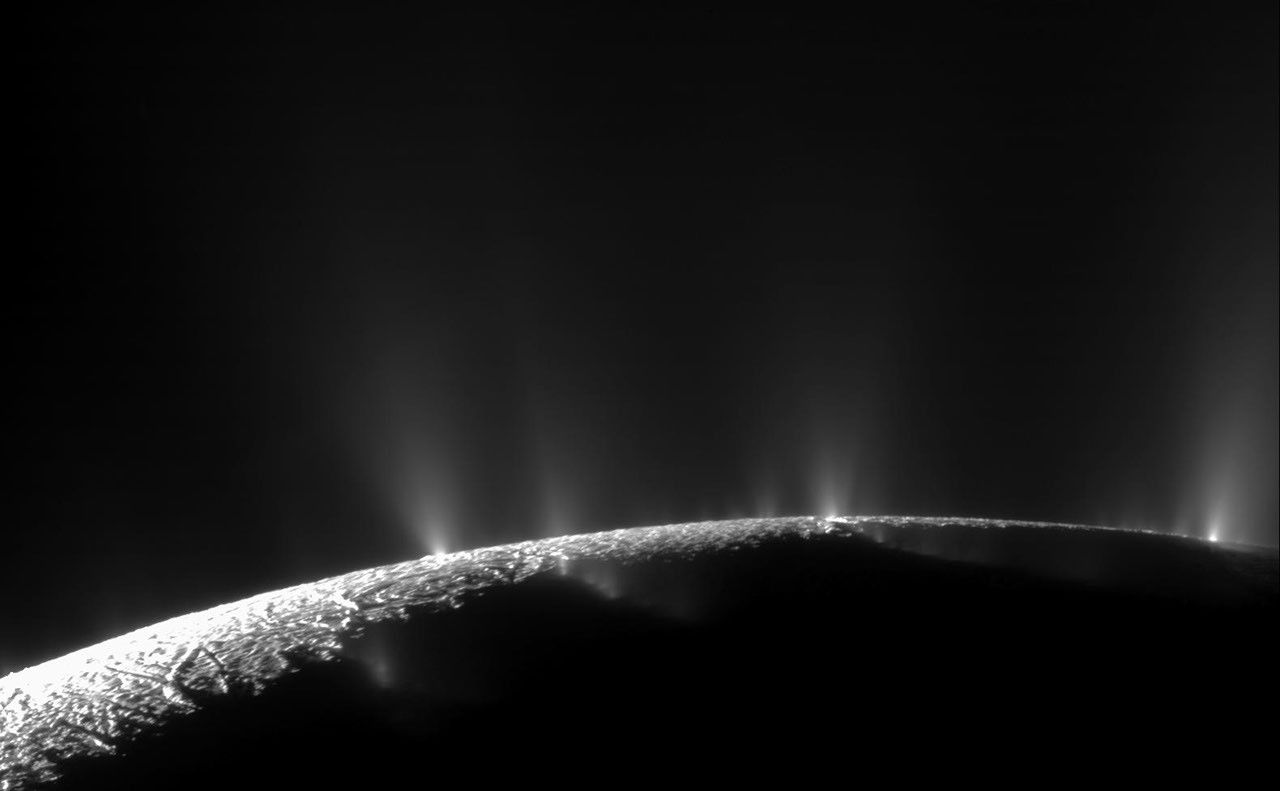
Unlike Enceladus, Mimas has no obvious confirmed fountains. A 2024 study of Cassini orbital measurements nevertheless proposed a young subsurface ocean. The evidence comes from motion and models—not a camera sent through the ice.
How can we infer water without digging?
Internal mass distribution and movement between shell and interior affect rotation and orbit. A bottle containing loose ice and one frozen solid respond differently. Scientists compare models against long-term observations, retaining uncertainty.
Does an ocean imply fish?
There is no such evidence. Water is only one habitability factor; energy, chemistry, and duration matter. Mimas is fascinating because its frozen-looking face may conceal internal changes we are only beginning to understand.