The Moon: why do we always see the same face?
The Moon is tidally locked to Earth: it rotates once in the same time it takes to complete one orbit. That is why nearly the same side always faces us, from an average distance of about 384,400 km.
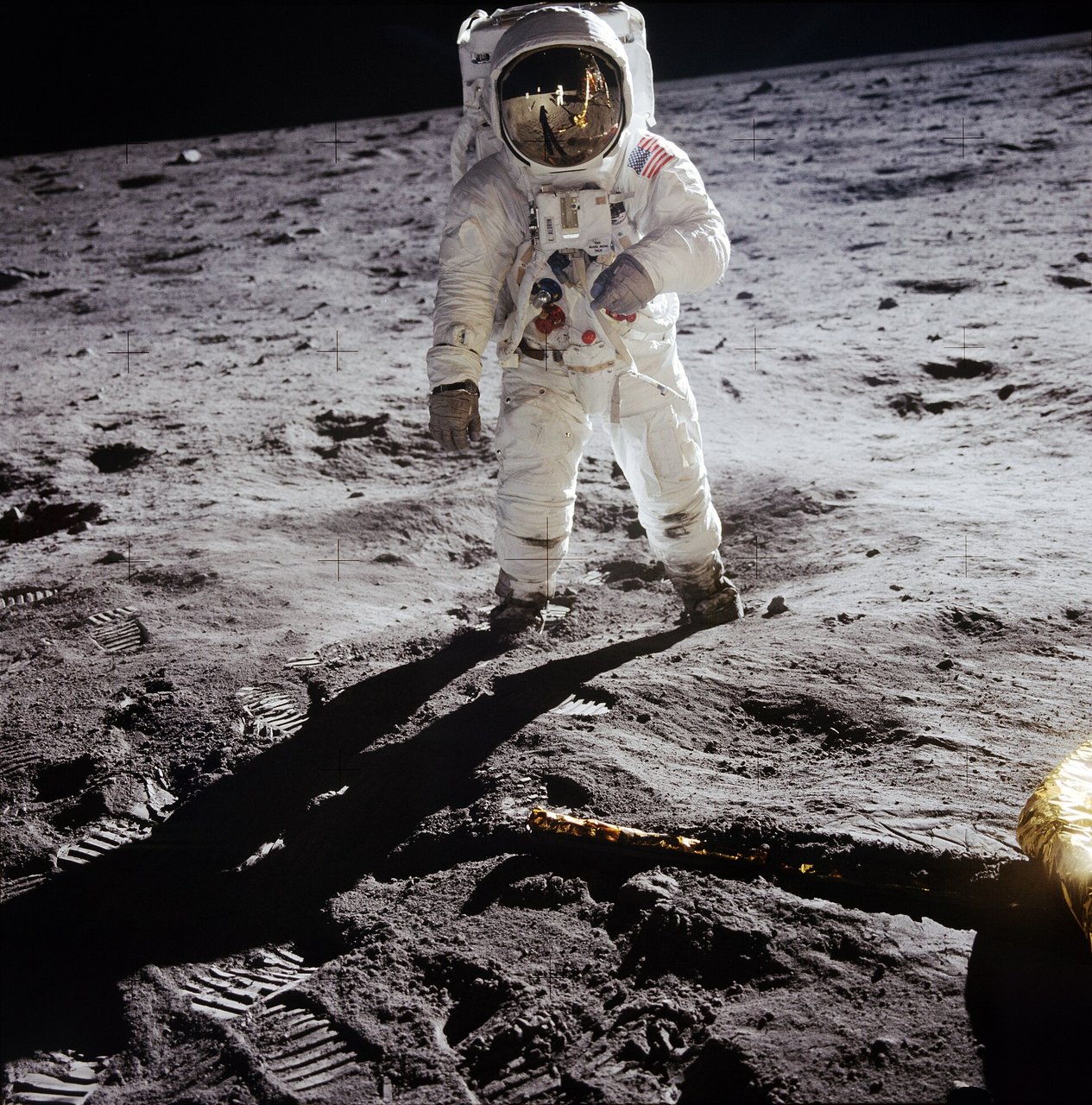
The Moon is the only world beyond Earth that humans have walked on. Its mean diameter is about 3,474.8 km, roughly a quarter of Earth’s, and its average distance is 384,400 km. Light crosses the gap in about 1.3 seconds; spacecraft take days.
Birth in a giant impact
The leading giant-impact hypothesis proposes that a Mars-sized protoplanet called Theia struck the young Earth about 4.5 billion years ago. Hot debris formed a disk and assembled into the Moon. This helps explain its low density, small iron core, and oxygen-isotope similarity to Earth.
Lunar seas and craters
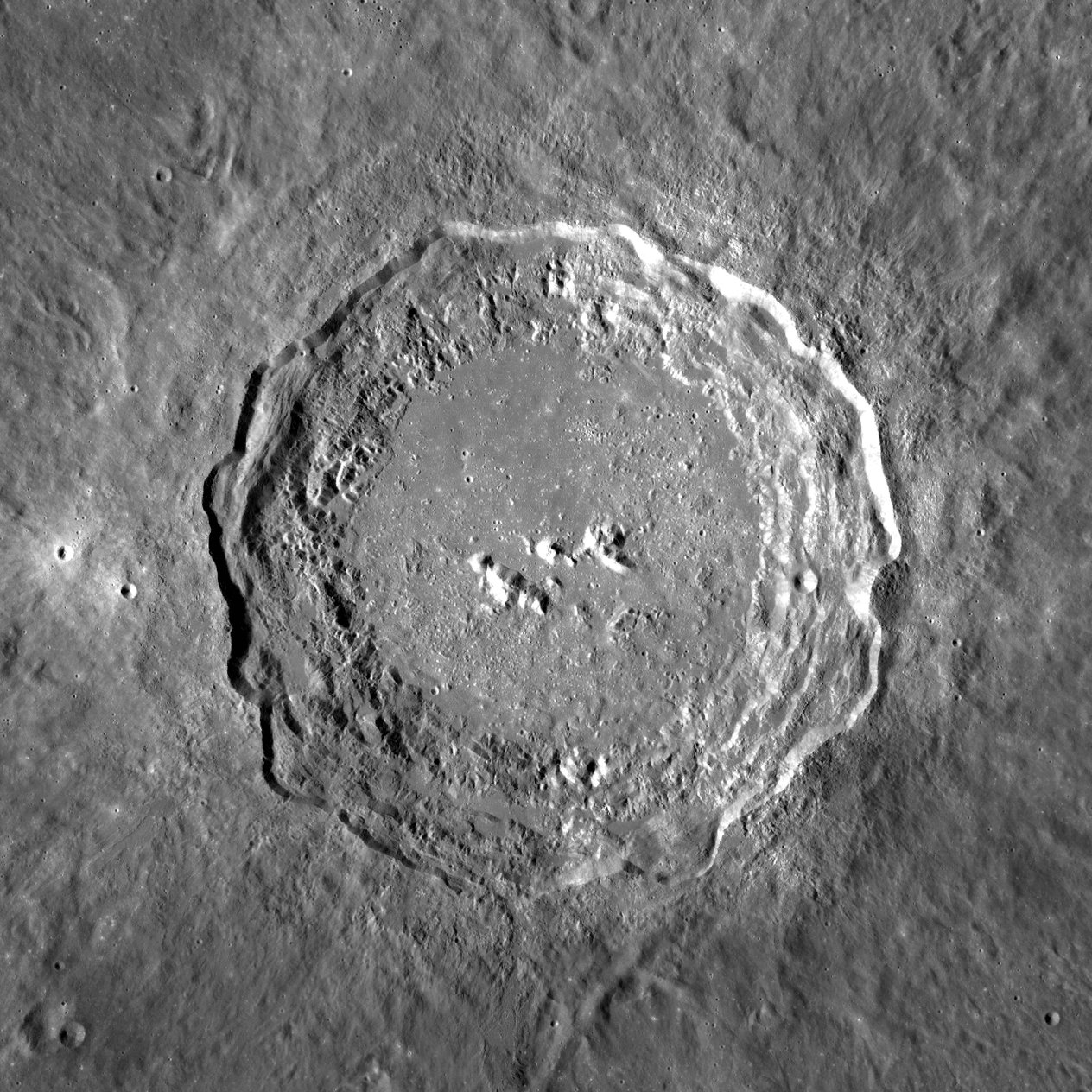
The dark maria are basalt plains, not water, formed when ancient lava filled impact basins, mostly 3.1–3.9 billion years ago. They lie mainly on the near side; the thicker far-side crust hindered lava from reaching the surface. Bright highlands are older and heavily cratered. Copernicus, about 93 km across, has central peaks and bright ejecta rays.
Inside the Moon
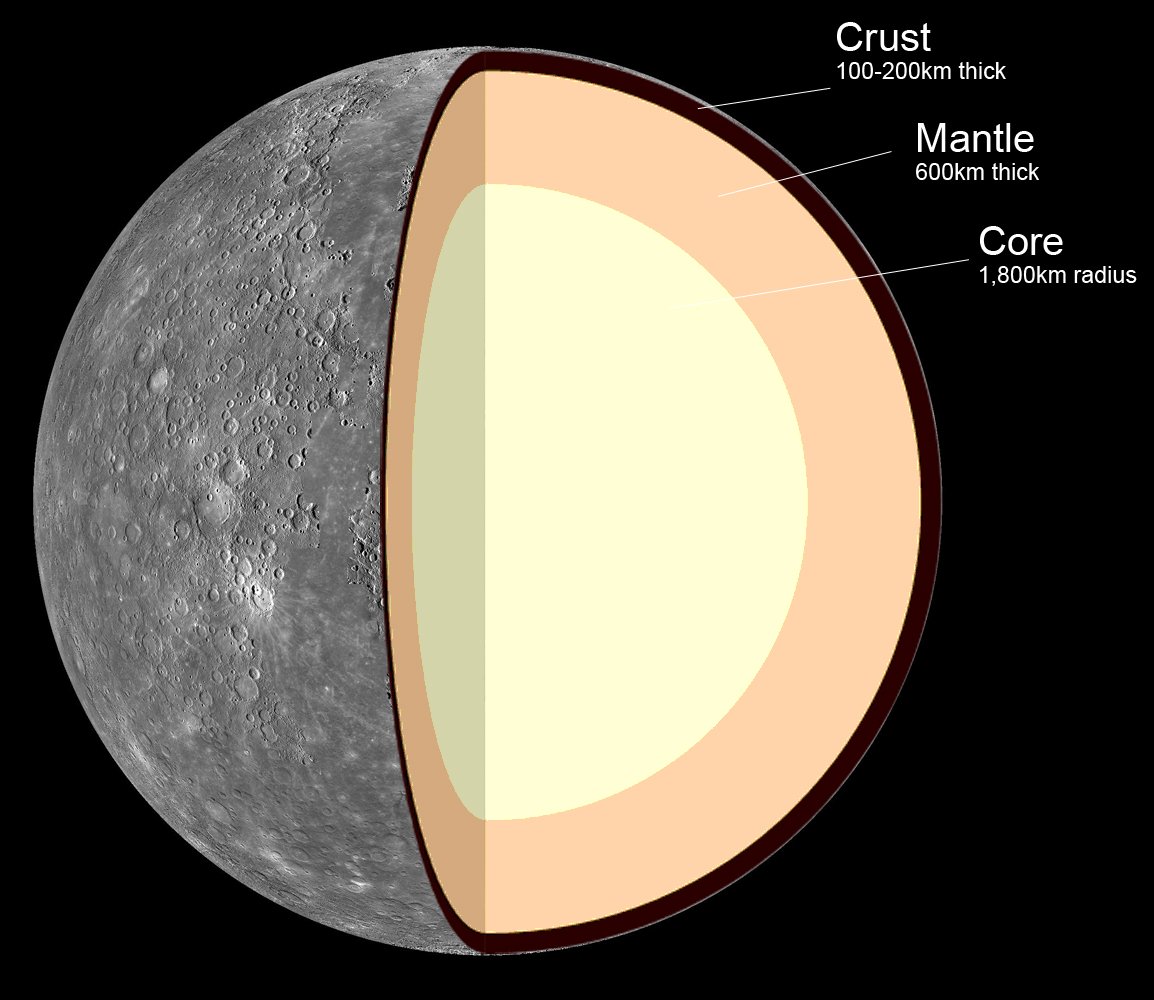
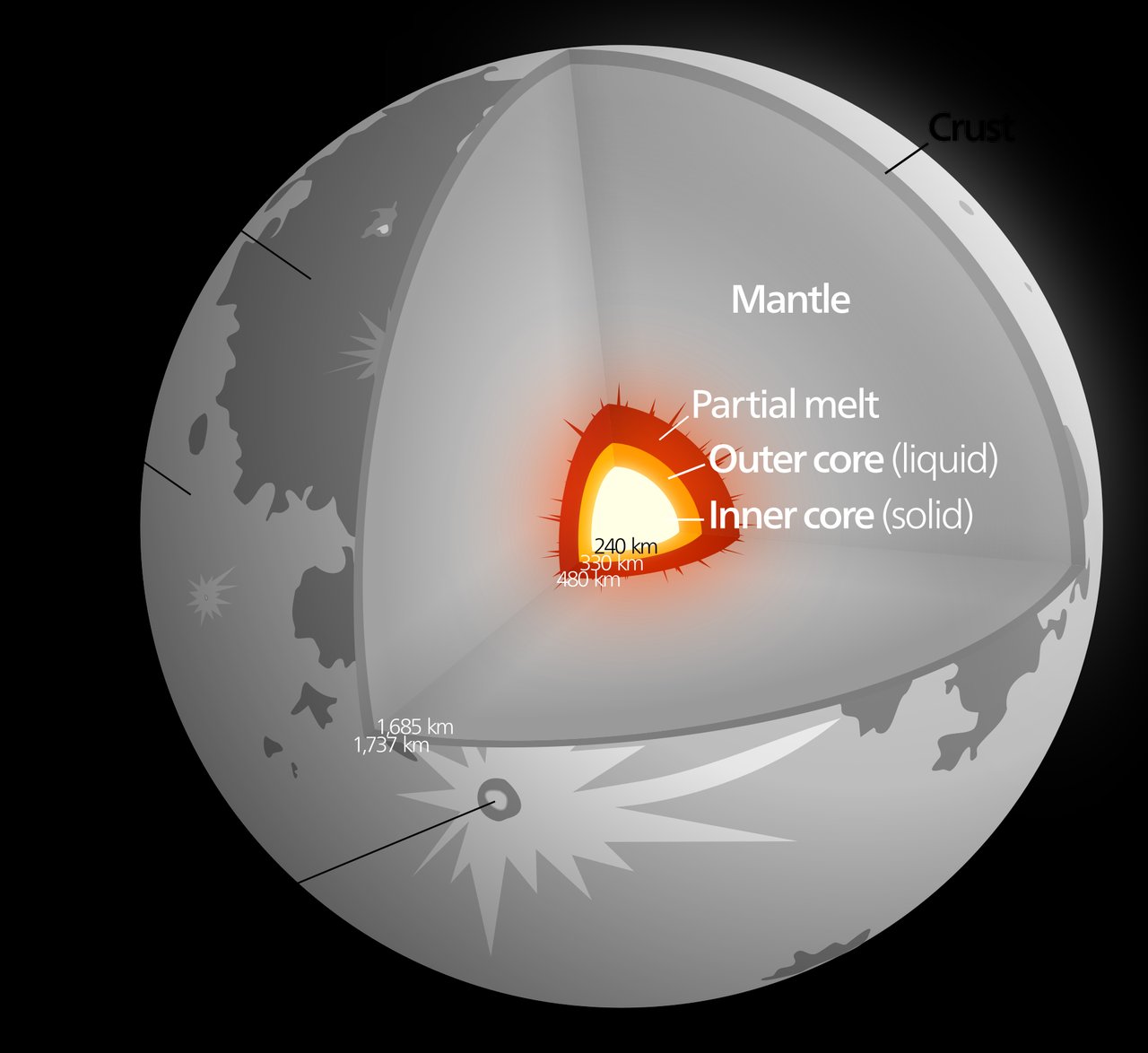
The crust is tens of kilometers thick and thicker on the far side. The mantle occupies most of the volume. A small metallic core includes solid and liquid regions, with a partly molten layer above. Apollo seismic observations suggest an inner-core radius around 240 km. The Moon has no global magnetic field, and most volcanism ended long ago.
Tidal locking and libration
The Moon’s orbital and rotation periods are both about 27.3 days. Billions of years of tides synchronized them, keeping the same hemisphere facing Earth. Its elliptical orbit and tilted axis cause apparent rocking, or libration, allowing us to see about 59% of its surface over time. It also recedes around 3.8 cm per year.
How long is a lunar day?
Sunrise to sunrise takes about 29.5 Earth days, so daylight and darkness each last nearly two weeks. Without thick air, equatorial surfaces can exceed 100°C by day and fall below −100°C at night.
The daytime sky remains black. Bright sunlit ground and deep shadows create strong contrasts requiring visors and lighting equipment.
Who has visited?
Luna 3 photographed the far side in 1959. Apollo 11 landed in the Sea of Tranquility on July 20, 1969; Armstrong and Aldrin became the first moonwalkers. Twelve people walked there through Apollo 17 in 1972. China’s Chang’e program achieved the first far-side landing with Chang’e 4 in January 2019, returned 1,731 g with Chang’e 5 in December 2020, and completed the first far-side sample return with Chang’e 6 in June 2024. Artemis I flew uncrewed around the Moon in 2022; Artemis II carried four astronauts around the Moon and safely home in April 2026, validating crewed deep-space procedures for later missions.