New Horizons: beyond Pluto, still traveling
A journey with no stop at its destination turned distant dots into worlds of icy plains and mountains. The next destination lies deeper in the dark.
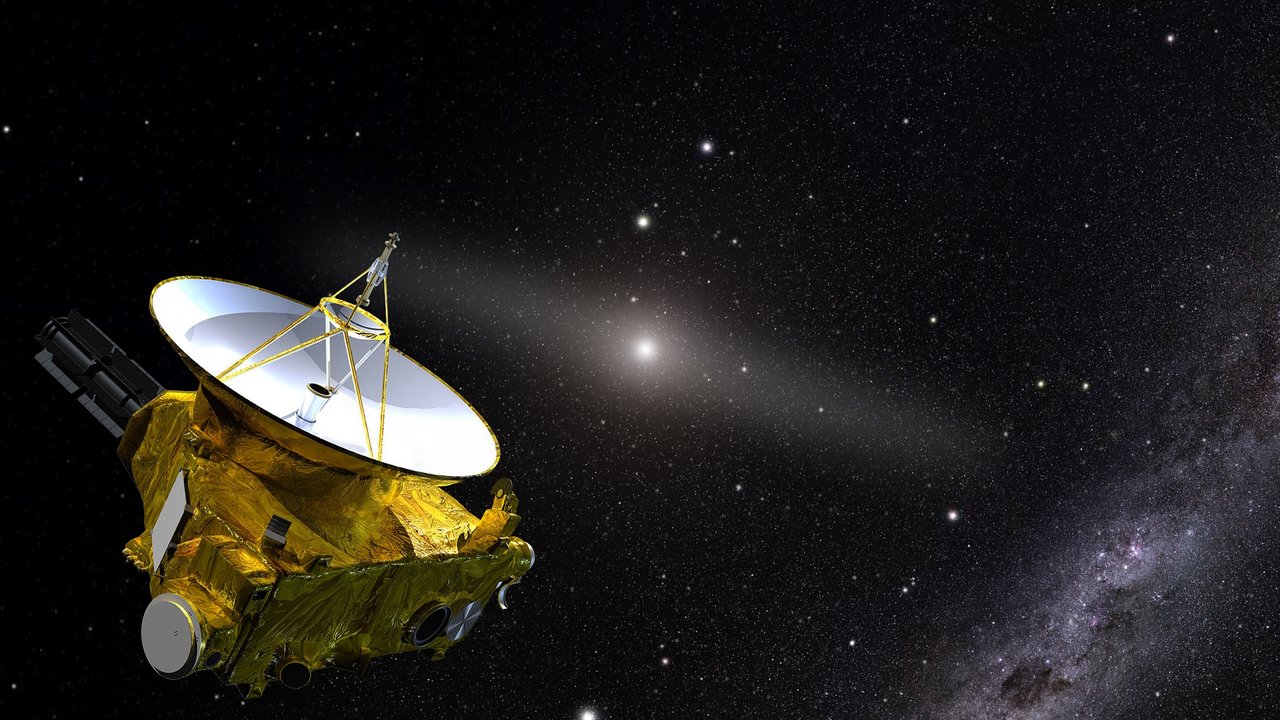
Before New Horizons, Pluto was a blurred telescope dot. Close images in 2015 revealed a bright heart, huge ice plains, and complex terrain: a dwarf planet could be remarkably active.
Nine years for a few hours
Launched in 2006, New Horizons used a Jupiter gravity assist to reach Pluto. Without enough fuel to stop and orbit, it concentrated observations into the flyby, stored them, and transmitted them afterward.
Another world beyond Pluto
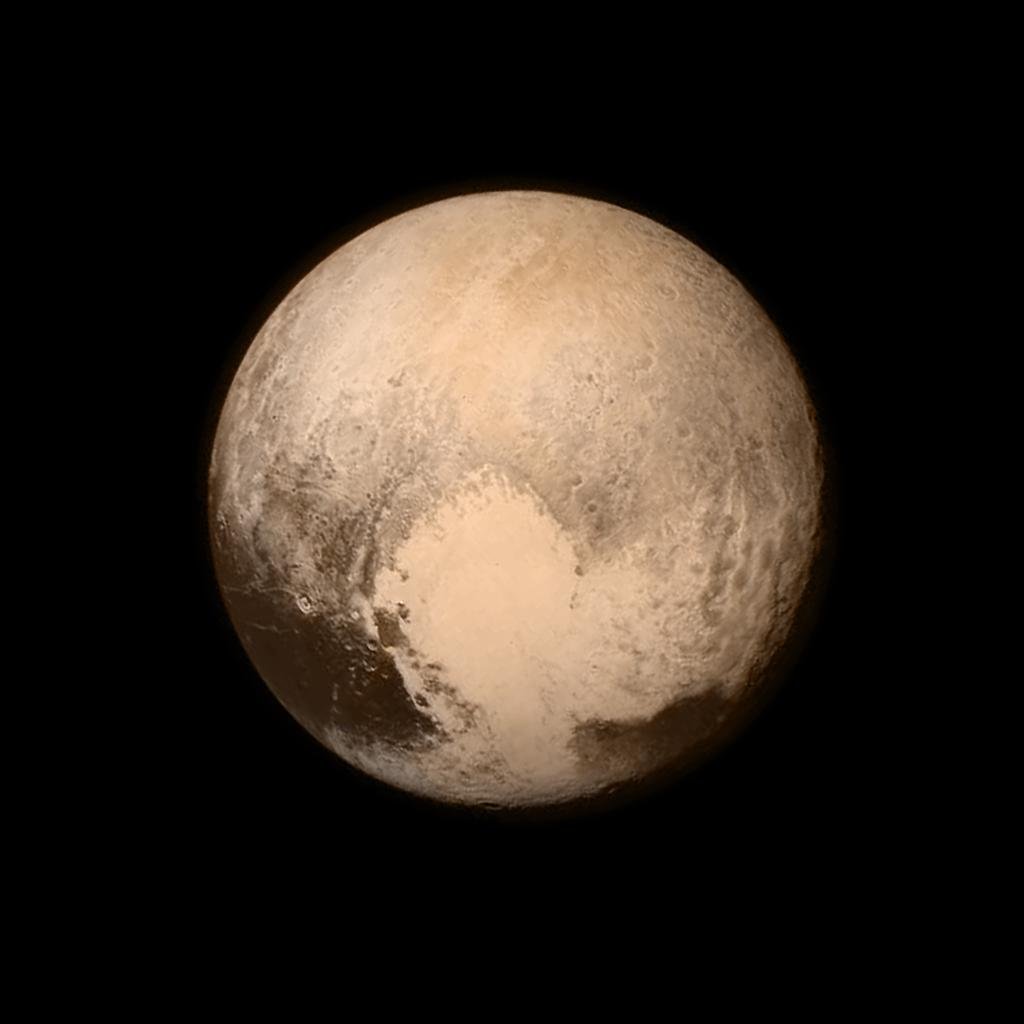
In 2019 it passed Arrokoth, revealing two gently joined lobes. This primitive assembly contrasts with Pluto’s complex geology: the same distant region contains both evolved worlds and preserved building blocks.

What supplies power so far away?
A radioisotope thermoelectric generator converts decay heat into electricity where sunlight is weak. Output declines over time, requiring careful budgeting. This is an uncrewed messenger carrying cameras, detectors, and radios, not a habitat.
Has it left the solar system?
Crossing Neptune’s orbit, the Kuiper Belt, and the heliopause are different milestones; the Sun’s gravity extends farther still. New Horizons studies distant bodies and the outer heliosphere, so these boundaries should not be treated as one finish line.
3D model source
The app adapts NASA’s New Horizons model by Visualization Technology Applications and Development (VTAD), under NASA media guidelines. Geometry is simplified, compressed, and adapted for display; scale and initial attitude are illustrative rather than telemetry-derived.