Orus: the origins of a dark red rock
Does a similar color imply a shared origin? Lucy will use Orus to compare subtle but significant differences among Trojan asteroids.
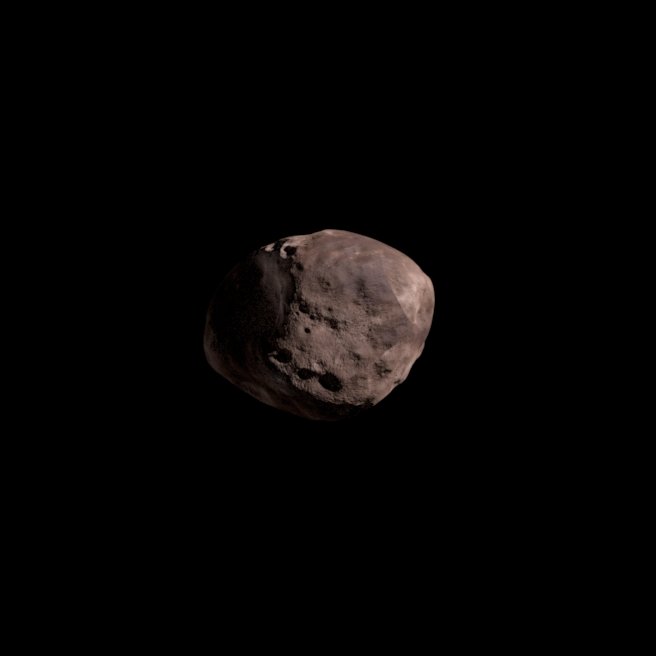
Orus orbits the Sun in the Trojan swarm ahead of Jupiter. Tens of kilometers across, it reflects a reddish spectrum rather than glowing red from heat.
Why classify a distant rock’s color?
Materials absorb different wavelengths. Orus belongs to the dark, reddish D-type class, but a spectrum alone cannot uniquely determine internal composition—just as a coat’s color cannot identify a person.
Why choose this asteroid?
Good experiments need comparisons. Orus can be compared with D-type Leucus or similarly sized but spectrally different Eurybates. Size, color, spin, and terrain together help separate original materials from later history.

Is it really a fossil?
The word is a metaphor: small bodies may preserve early materials useful for studying formation and migration, but radiation, impacts, and resurfacing still alter them. Scientists must distinguish ancient material from later changes.
What comes next?
Lucy’s planned 2028 flyby will record shape, craters, color, and temperature. We know why it is worth visiting, but cannot yet describe its individual mountains. That uncertainty is part of the journey’s appeal.