Parker Solar Probe: why doesn’t it melt?
Its destination is the corona, not the Sun’s surface. This gas is extremely hot but far more rarefied than the air in an Earthbound furnace.
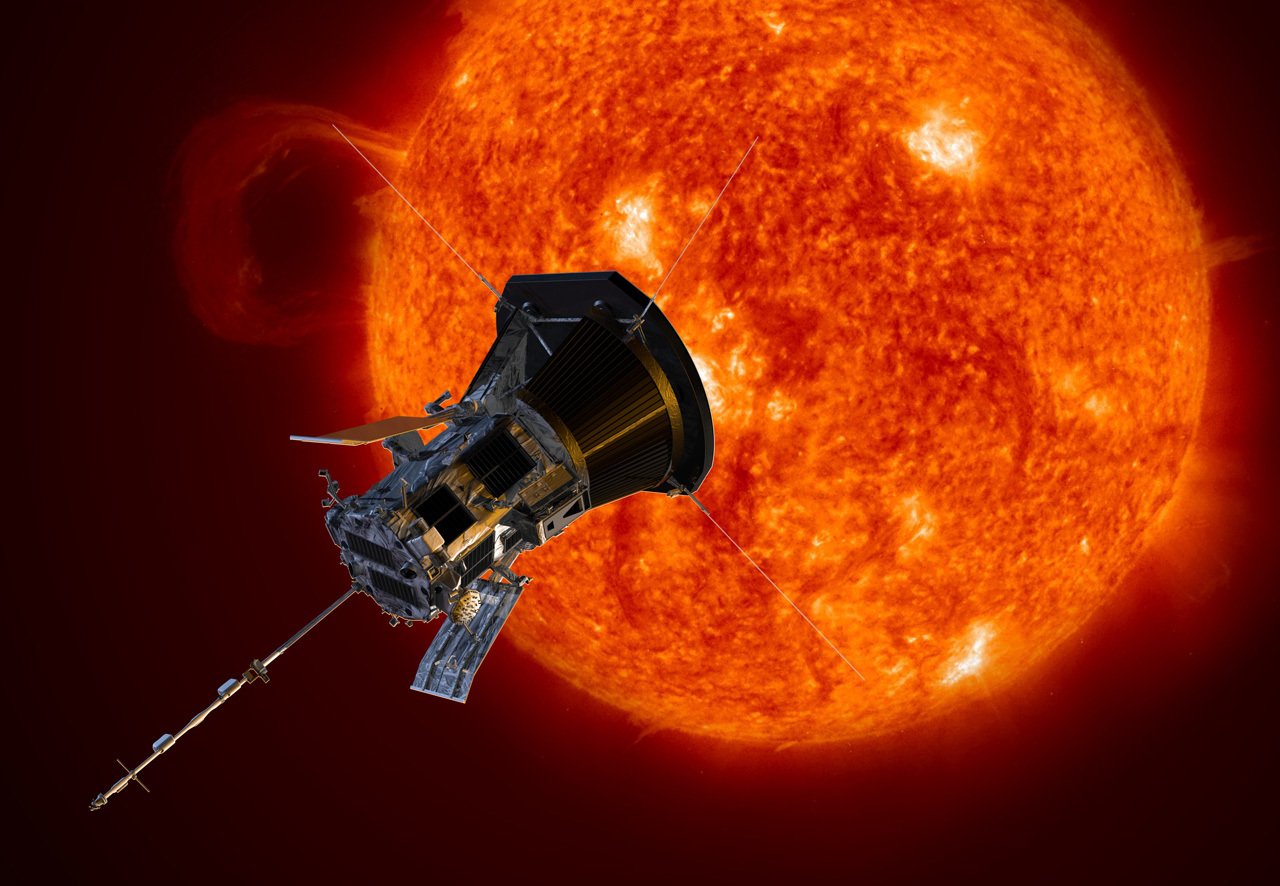
Parker Solar Probe carries field and particle instruments toward the solar furnace. Repeated passages through the corona study how the Sun releases matter and energy.
Temperature is not the same as heat transfer
Coronal particles have high energies but are sparse. Temperature describes their motion; actual heat transfer also depends on density. Intense sunlight remains dangerous, so Parker needs a heat shield kept precisely facing the Sun.
Two longstanding questions
Why is the corona much hotter than the visible surface, and how is the solar wind accelerated? Direct local measurements complement distant views. Touching the Sun means entering its outer atmosphere, not landing on a solid surface.
Why use Venus’s gravity?
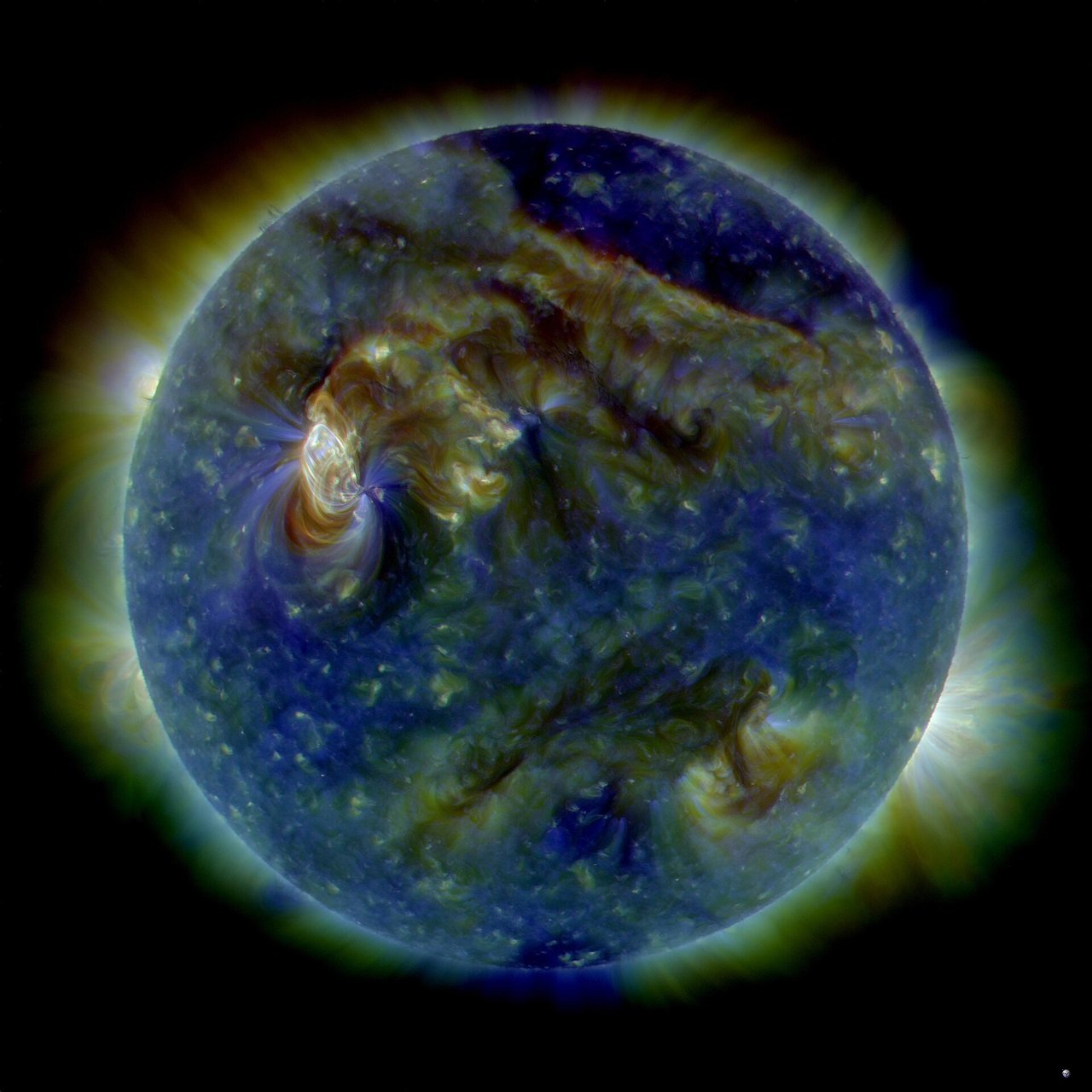
A spacecraft departing Earth already carries Earth’s orbital speed. Reaching closer solar orbits requires changing that motion, not simply pointing at the Sun. Repeated Venus assists progressively lower the closest approach.
Why does it matter to Earth?
Solar wind and eruptions affect auroras, satellites, and communications. Parker improves understanding but cannot guarantee a warning for every storm. Measuring closer to the source makes competing explanations testable.
3D model source
The app adapts NASA’s Parker Solar Probe model by Visualization Technology Applications and Development (VTAD), under NASA media guidelines. The model is simplified, compressed, and adapted for display; scale and initial attitude are illustrative rather than telemetry-derived.
Warm gold insulation and dark blue arrays distinguish components for display, not exact color reconstruction. The white heat shield is retained.