Polymele: a star’s blink reveals a secret
Before any close flyby, scientists found its flattened shape and a companion by watching a star behind it.
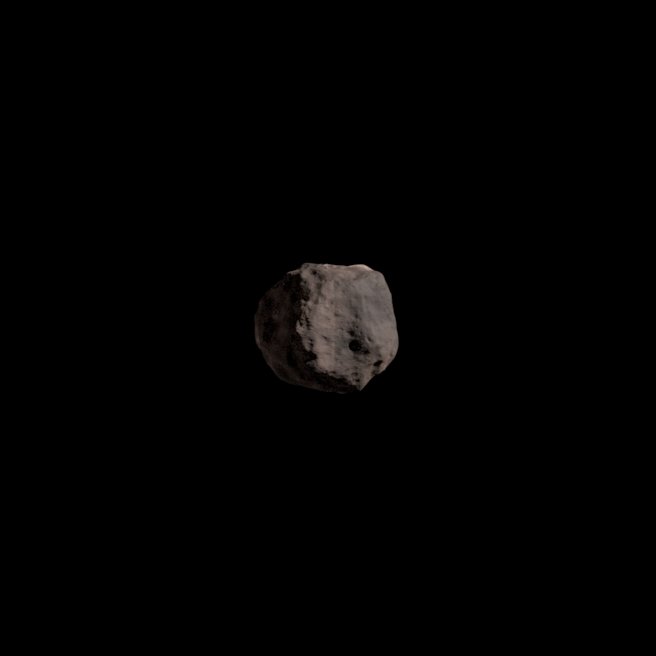
Polymele is a small, dark, reddish Trojan target on Lucy’s itinerary. Distant telescopes struggle to resolve its outline, but astronomers can study what it blocks.
Using a star as a backlight
During a stellar occultation, an asteroid briefly dims a background star. Observers at different locations time disappearance and reappearance, combining shadow chords into a cross-sectional outline.
An extra dip
A 2022 observation recorded a secondary occultation near the primary, evidence of a moon. The main silhouette also suggested a non-spherical body. Precise timing and distributed stations make the observing teams a giant ground-based instrument.
Does redness mean life?
No. Composition, grain size, and radiation history all affect reflected light. A P-type classification is a spectral comparison, not a full chemical recipe and certainly not a life detection.
What will close images add?
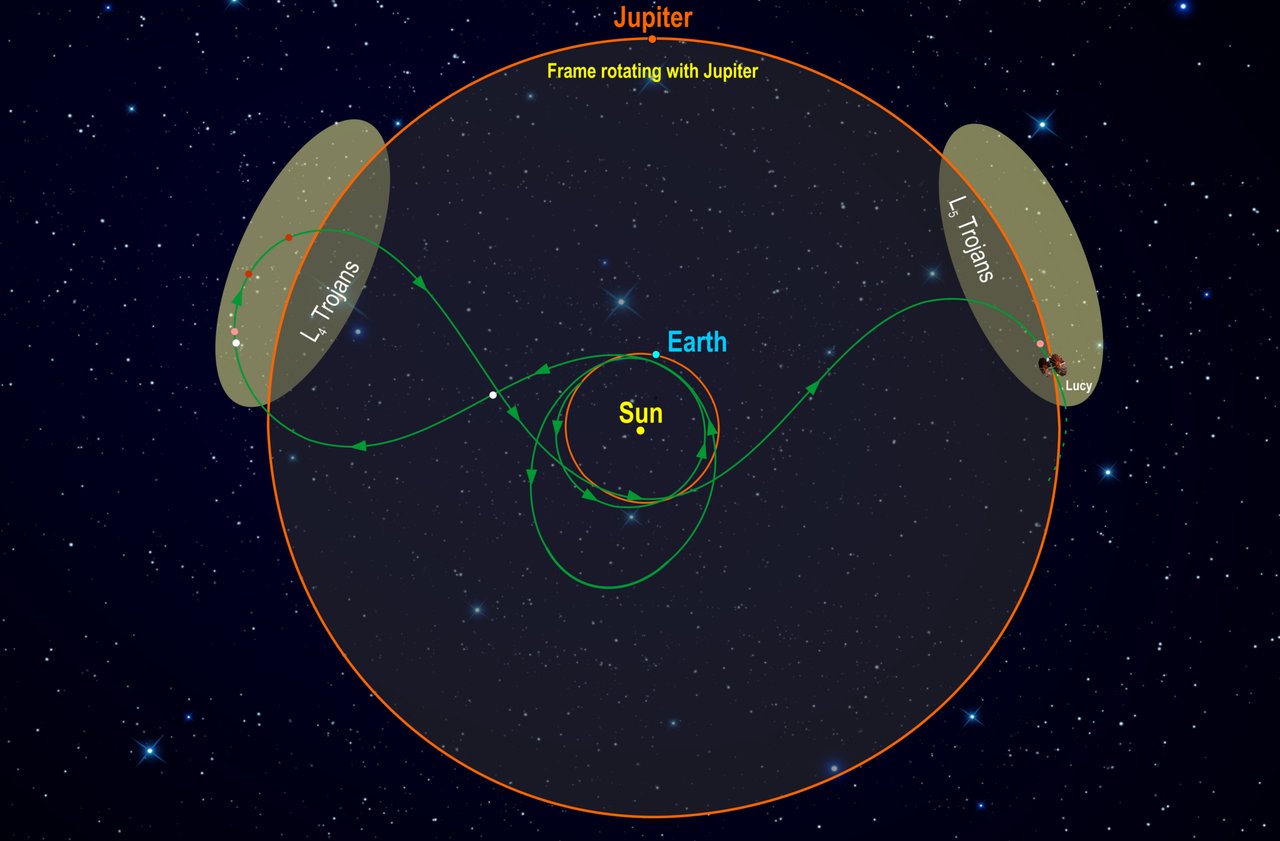
Lucy’s planned 2027 flyby will connect occultation outlines with three-dimensional terrain, color, and thermal measurements. Current artwork gives an impression; real craters, slopes, and boulders await closer eyes.