Psyche: a journey to a metal-rich asteroid
Could an asteroid be made almost entirely of metal? After a Mars gravity assist in 2026, Psyche is on its way to examine its namesake asteroid up close, with arrival expected in 2029.
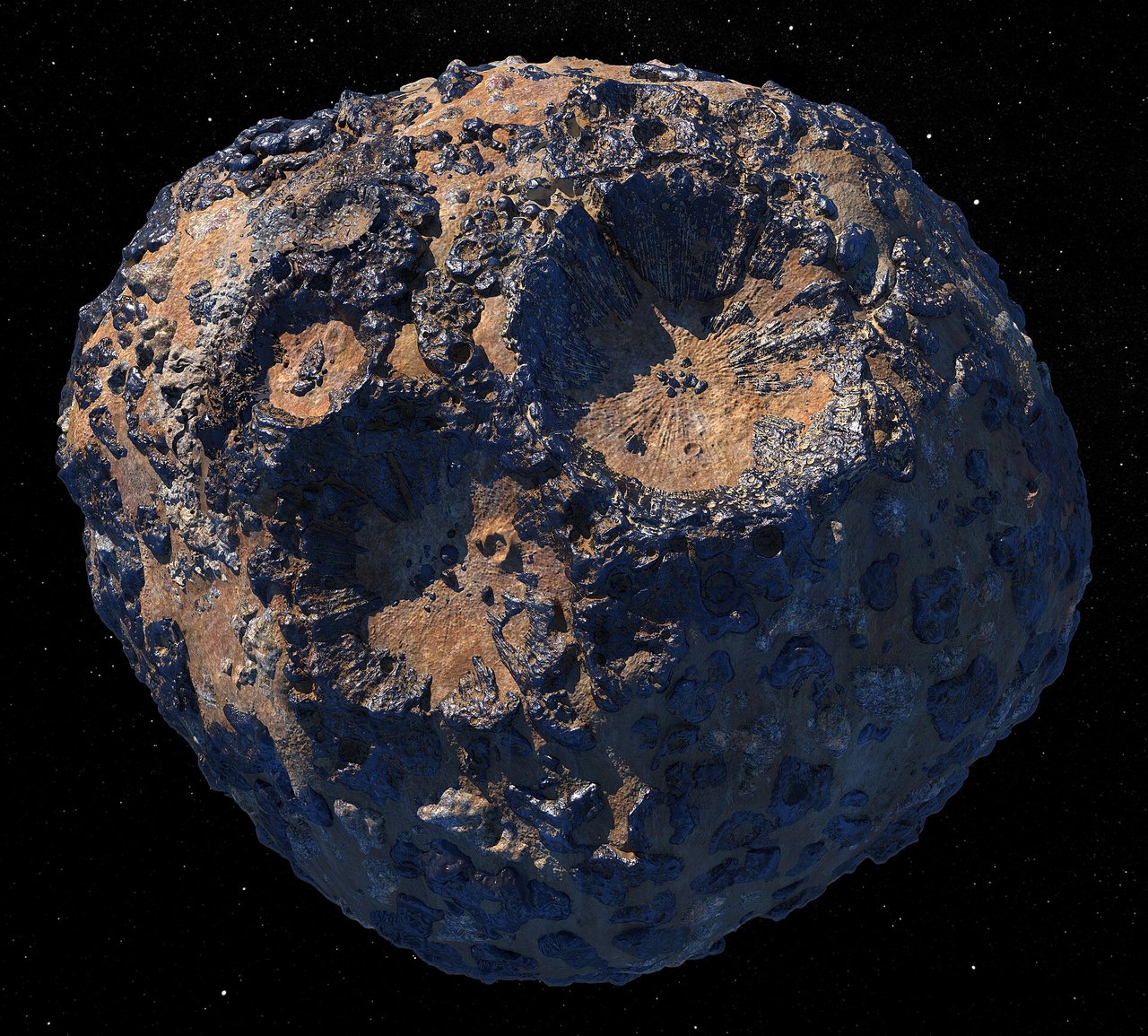
What lies beneath thousands of kilometers of Earth’s rock? The Psyche spacecraft is traveling to a natural comparison: metal-rich asteroid 16 Psyche. Launched on October 13, 2023, with arrival expected in August 2029, it will test whether the asteroid is an exposed planetary embryo’s core.
A possible fragment from a planet’s interior
Annibale de Gasparis discovered asteroid 16 in 1852, naming it after the Greek figure Psyche. It orbits in the main belt around three times Earth’s solar distance, taking roughly five years. Its mean diameter is about 222 km and it contains around 1% of the belt’s mass.
Radar and spectra indicate iron- and nickel-rich material characteristic of an M-type asteroid. It could be a metallic core exposed when impacts stripped a planetesimal’s rocky exterior.
What is inside?
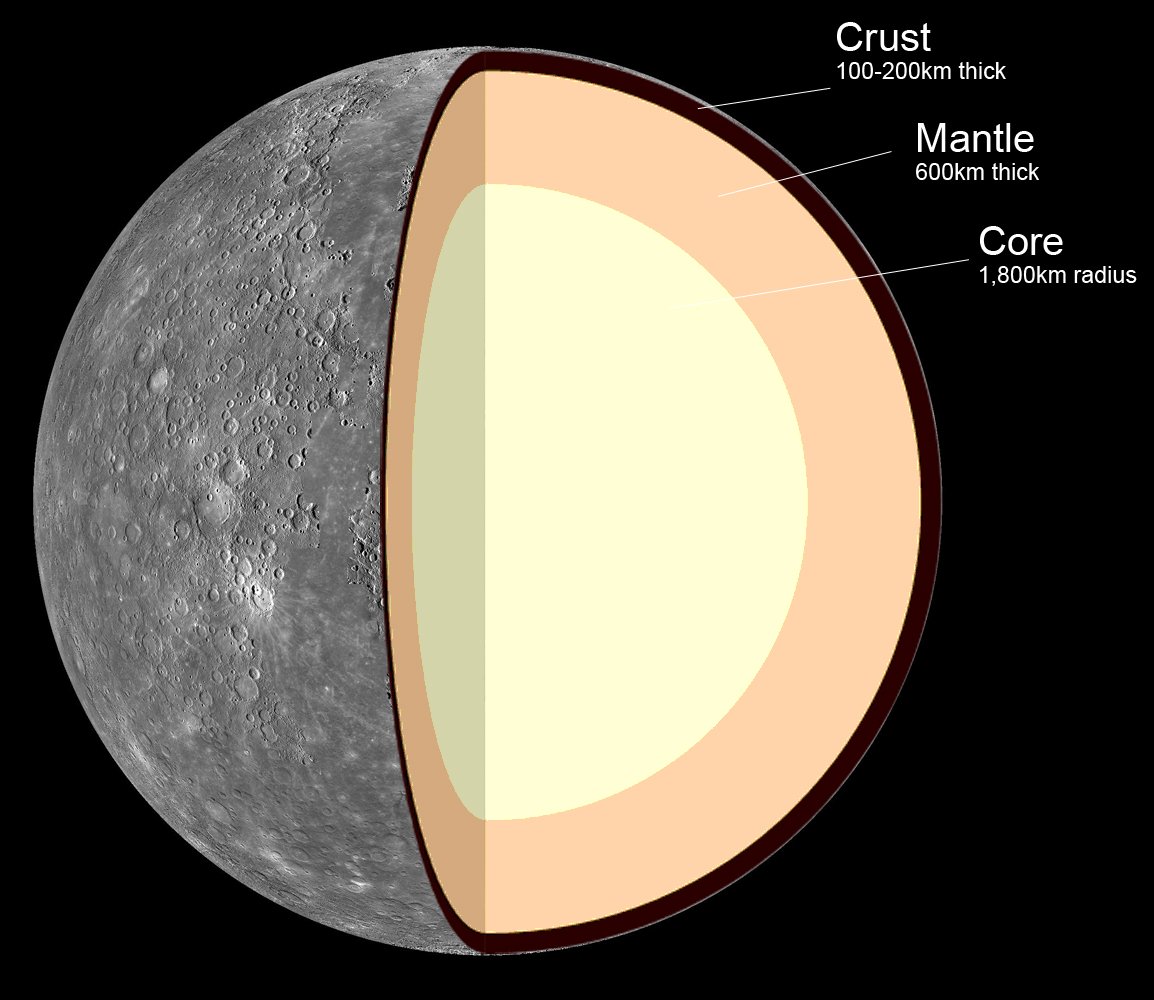
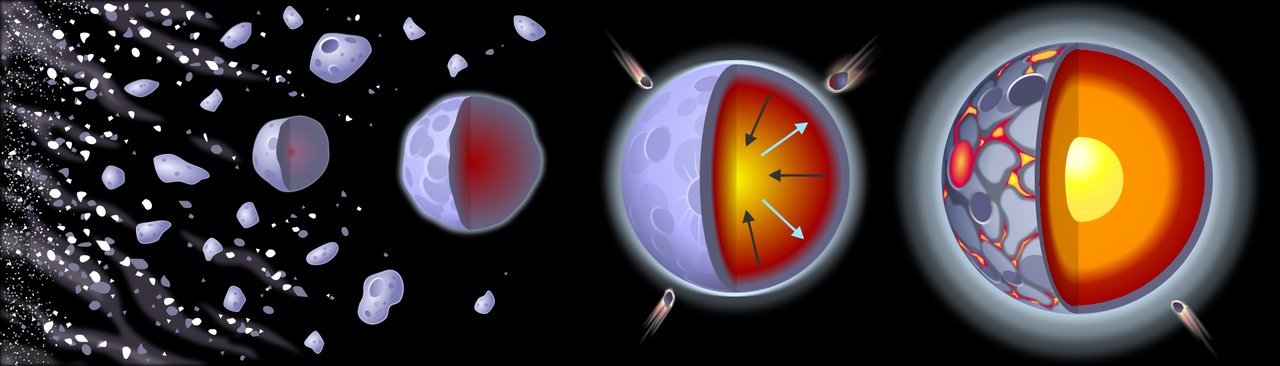
If it is an exposed core, an early molten body first separated into metal below and silicates above, then lost its outer layers. But density estimates around 3.4–4.1 g/cm³ are well below pure iron. Psyche may instead be a porous mixture of metal and rock. Distinguishing these possibilities is central to the mission.
A gravity assist at Mars
After its Falcon Heavy launch, Psyche passed about 4,600 km above Mars on May 15, 2026, changing speed and direction while imaging Mars and calibrating instruments. It is scheduled to arrive in summer 2029 and investigate from several orbital altitudes.

Quiet solar-electric propulsion
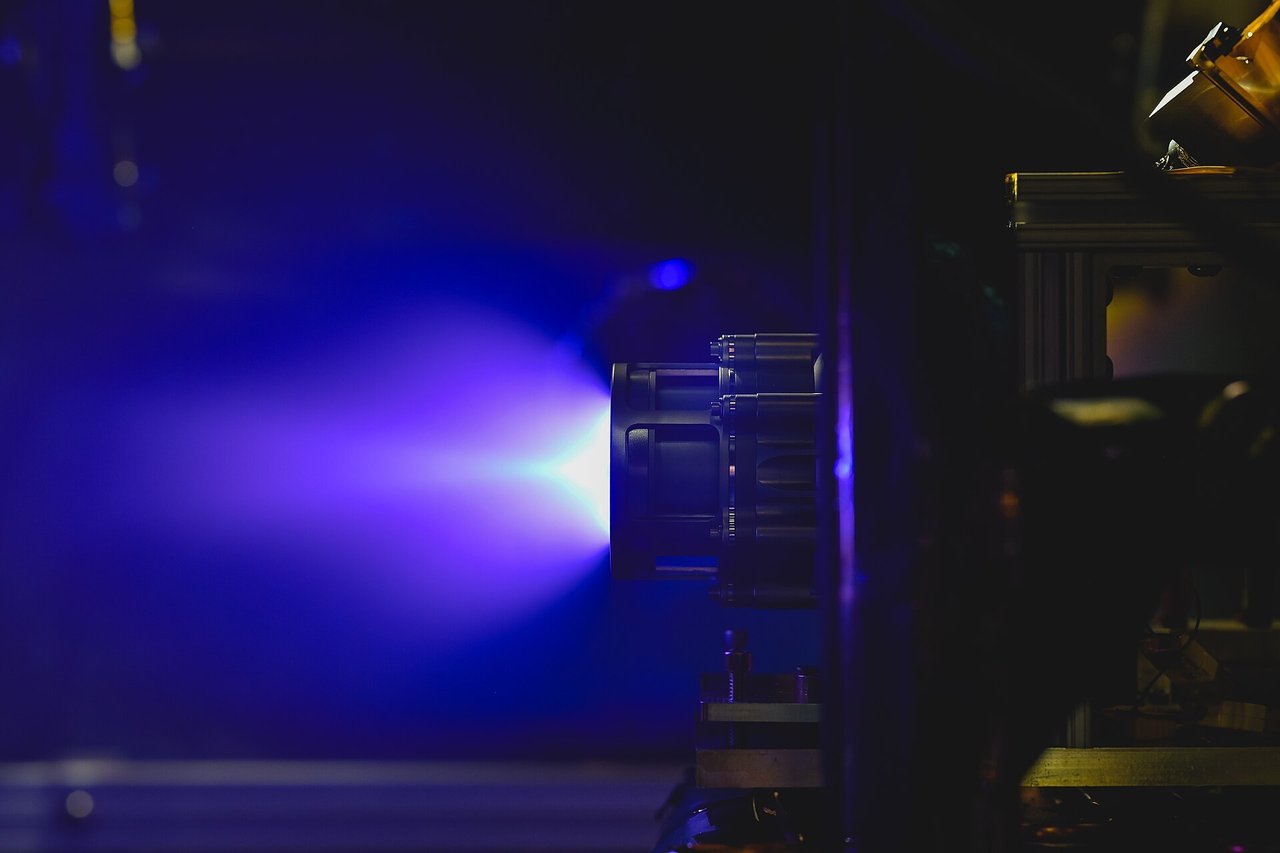
Its long cruise uses solar-electric propulsion. Arrays spanning around 25 m power four Hall-effect thrusters, which ionize xenon and accelerate it outward. Each produces only a small force, but sustained operation over months or years gradually changes the trajectory.
Scientific tools
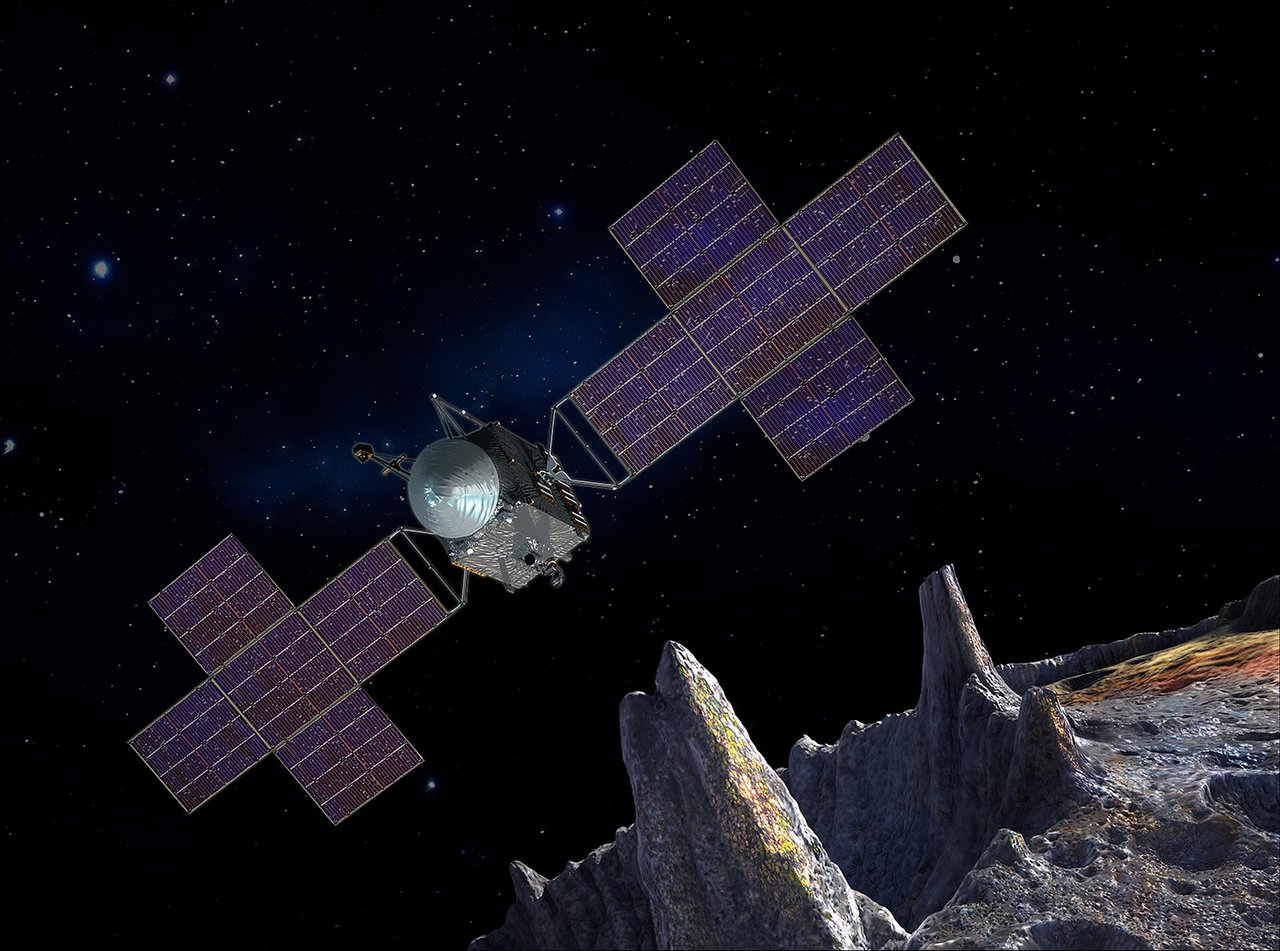
Arizona State University leads the mission, managed by NASA JPL. A multispectral imager maps surface materials; a gamma-ray and neutron spectrometer measures elements; a magnetometer searches for remanent magnetism. X-band radio tracks gravity. The Deep Space Optical Communications demonstration has also transmitted data by laser over hundreds of millions of kilometers.
Why study a metal-rich rock?
Earth’s core lies beneath roughly 2,900 km of mantle, beyond drilling. Whether Psyche is an exposed core or assembled metal-rich material, it offers a test of planetary formation and a way to understand our own planet’s deep interior.
3D model source
The app adapts Psyche by LTElkins, licensed CC BY 4.0. The mission website recommends this printable model and credits Zach Cosico-Probstfeld. The original STL has no materials; this project adds illustrative materials. It is not an engineering-precision model. Geometry is simplified and compressed for display; scale and initial attitude are illustrative rather than telemetry-derived.