Titan: rain that isn’t water
Saturn’s largest moon is the only moon with a thick atmosphere. Below its orange haze, methane forms clouds, rain, lakes, and seas; a global liquid-water ocean lies beneath the ice. Huygens landed in 2005, and the Dragonfly rotorcraft is expected in 2034.
Titan’s orange-brown sky overlooks channels and lakes shaped by methane rain. Saturn’s largest moon is about 5,150 km across, larger than Mercury, and the only moon with a thick atmosphere. Water ice behaves like rock; flowing liquids are mainly methane and ethane.
An orange atmospheric veil
The atmosphere is around 95% nitrogen, with methane making up much of the rest, and surface pressure about 1.5 times Earth’s. Ultraviolet light breaks down methane into complex hydrocarbon particles, creating persistent orange haze. Cassini radar and Huygens finally revealed the hidden surface, whose average temperature is around −179°C.
Inside Titan
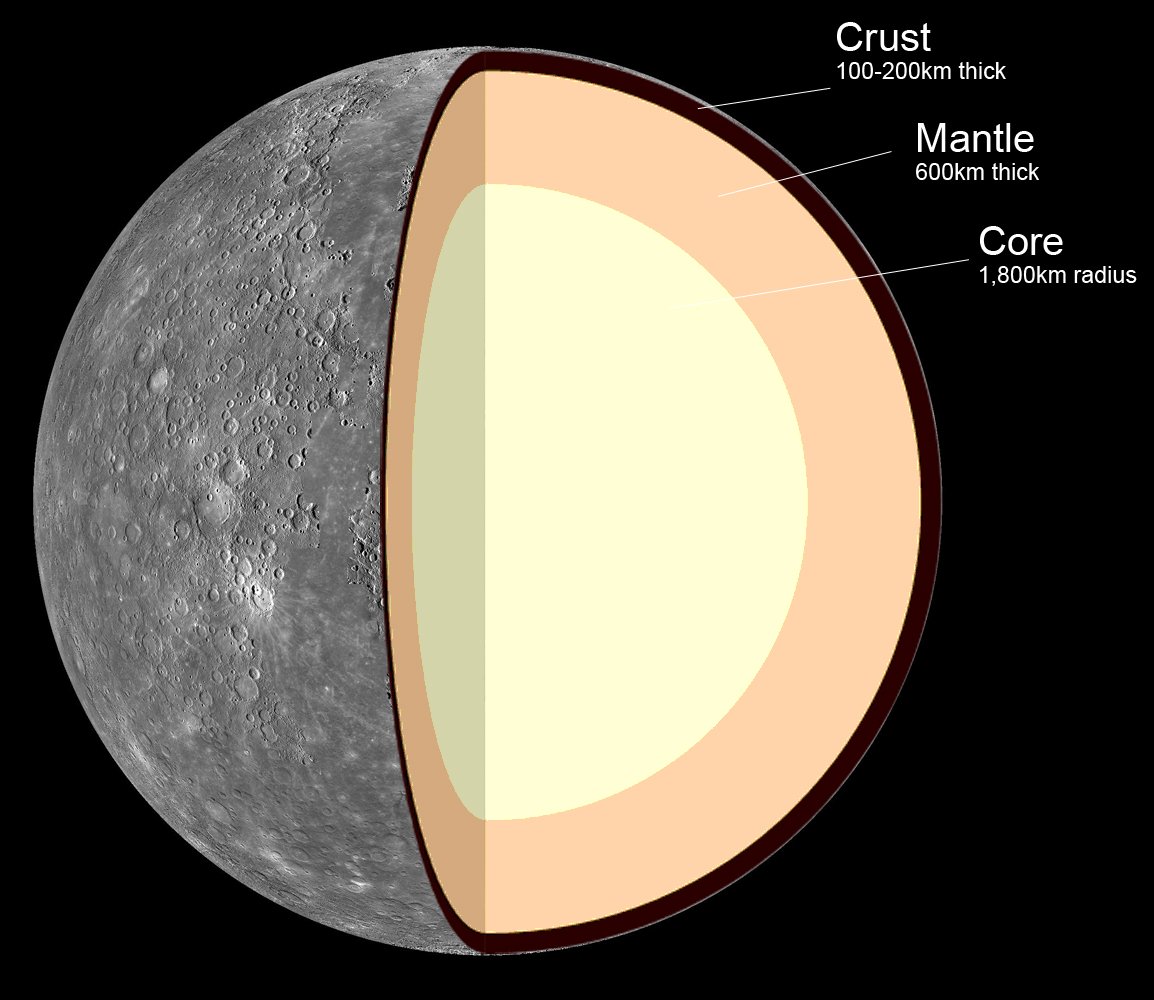
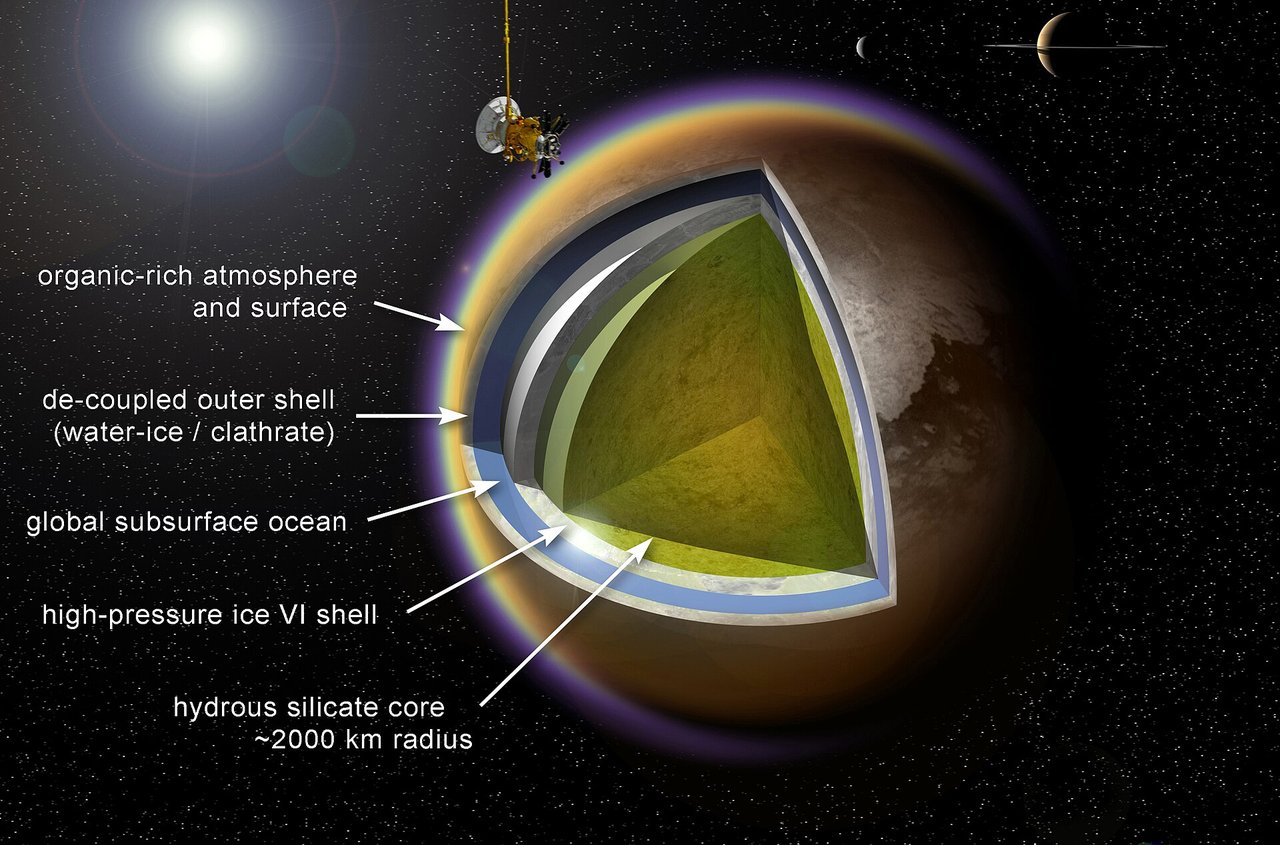
Models include a water-ice and clathrate shell, a likely global ocean containing antifreezes such as ammonia, deeper high-pressure ice, and a hydrated silicate core around 2,000 km in radius. Cassini gravity and tidal-deformation measurements support a liquid layer beneath the crust.
Methane clouds, rain, and seas
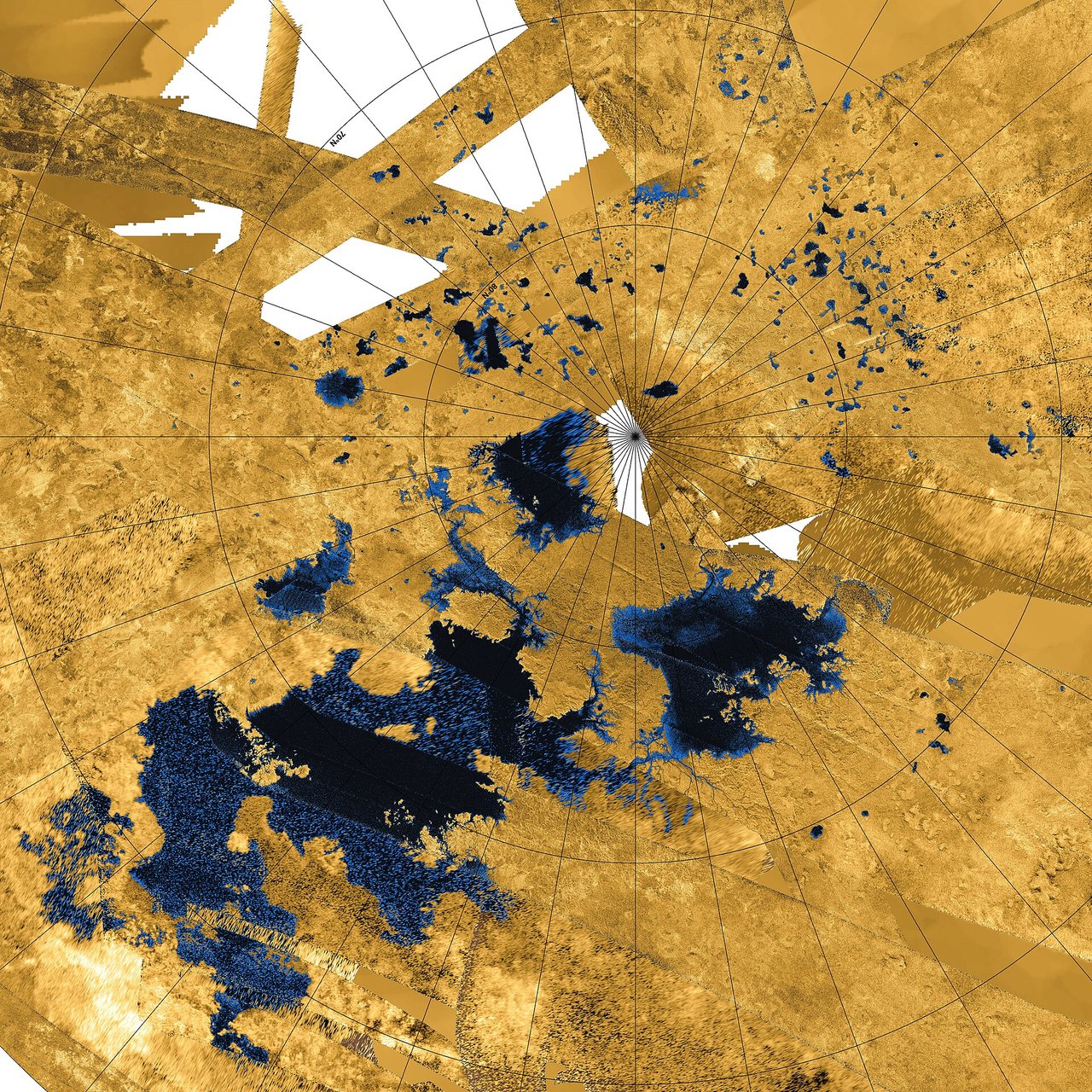
Methane evaporates, condenses, rains, carves channels, and gathers in lakes, echoing Earth’s water cycle. Cassini found many northern lakes and seas; Kraken Mare covers hundreds of thousands of square kilometers. Some surfaces are exceptionally calm, with very small waves.
Huygens: the most distant landing
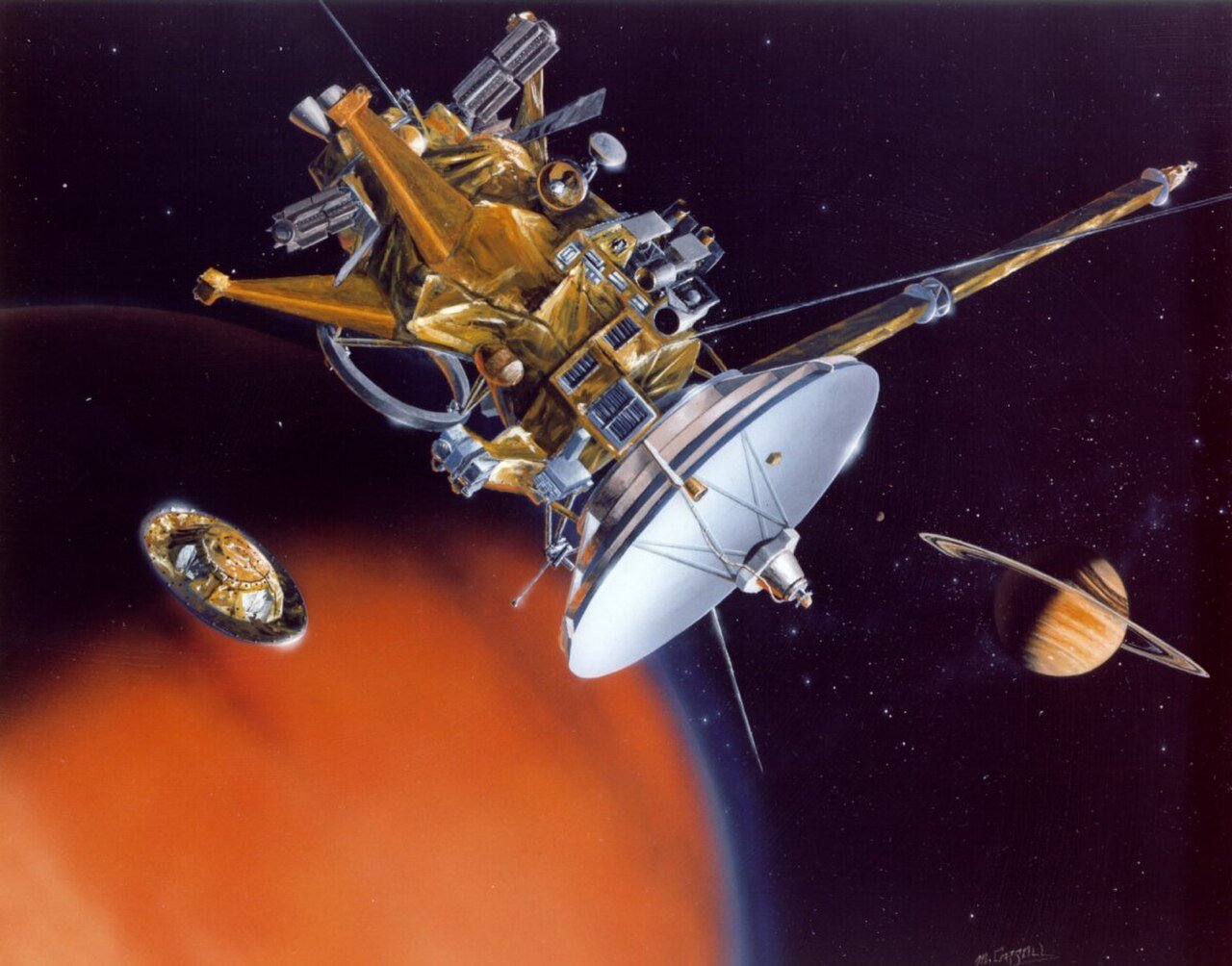
On January 14, 2005, three weeks after separating from Cassini, Huygens descended by parachute for about two and a half hours to an icy-pebble plain. Images showed drainage channels, shoreline-like features, and water-ice pebbles on methane-damp ground. It was the first outer-solar-system soft landing and remains the farthest from Earth.
Could you sail a methane sea?
A specially designed robot boat could float, but ordinary boats could not withstand the cold. Materials, batteries, lubricants, and radios need redesign, and shore conditions remain poorly known. People also need oxygen and extreme thermal protection. Dense air and low gravity do, however, make flight attractive.
Dragonfly: a flying explorer
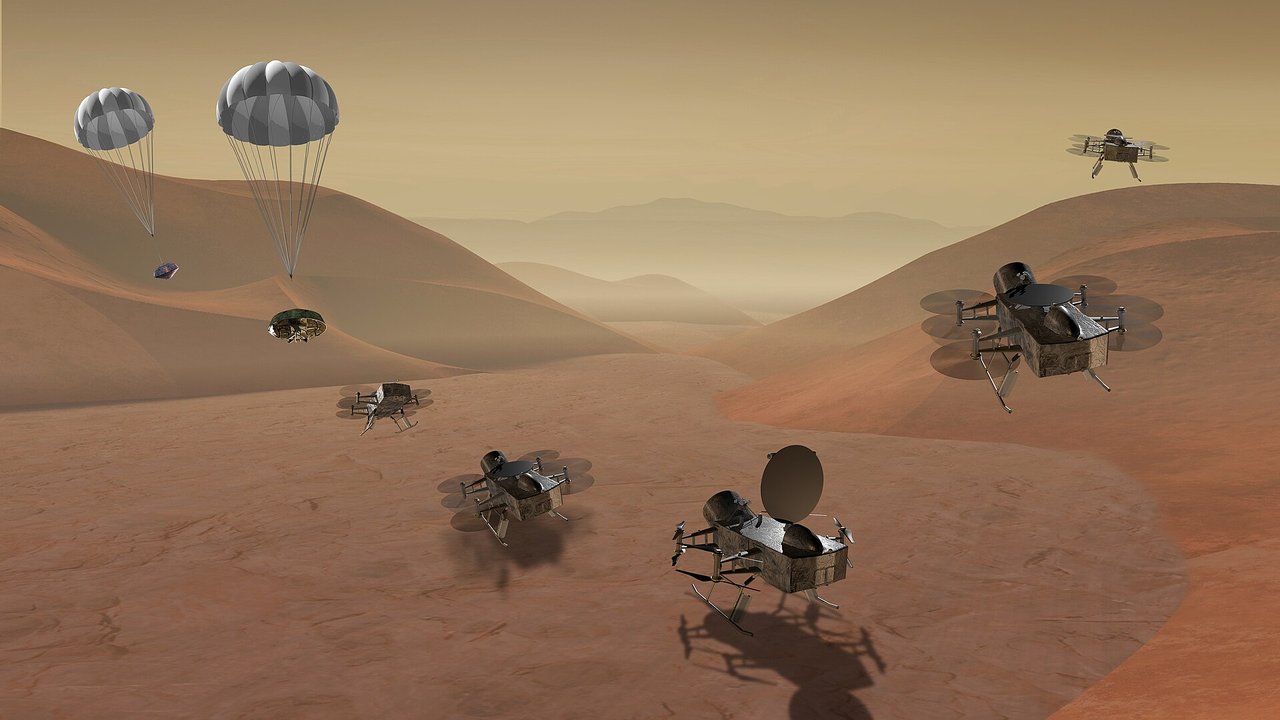
NASA’s Dragonfly is planned to launch no earlier than July 2028 on Falcon Heavy and arrive in 2034. The car-sized, eight-rotor vehicle will use radioisotope power to fly between organic-rich dunes and Selk Crater, studying prebiotic chemistry. Dates and routes may change as the mission develops.