Comet 67P: landing on a cosmic rubber duck
A duck-like shape, cliffs and dust, and an adventure that began with a bouncing landing: a comet is much more than a tail in the night sky.
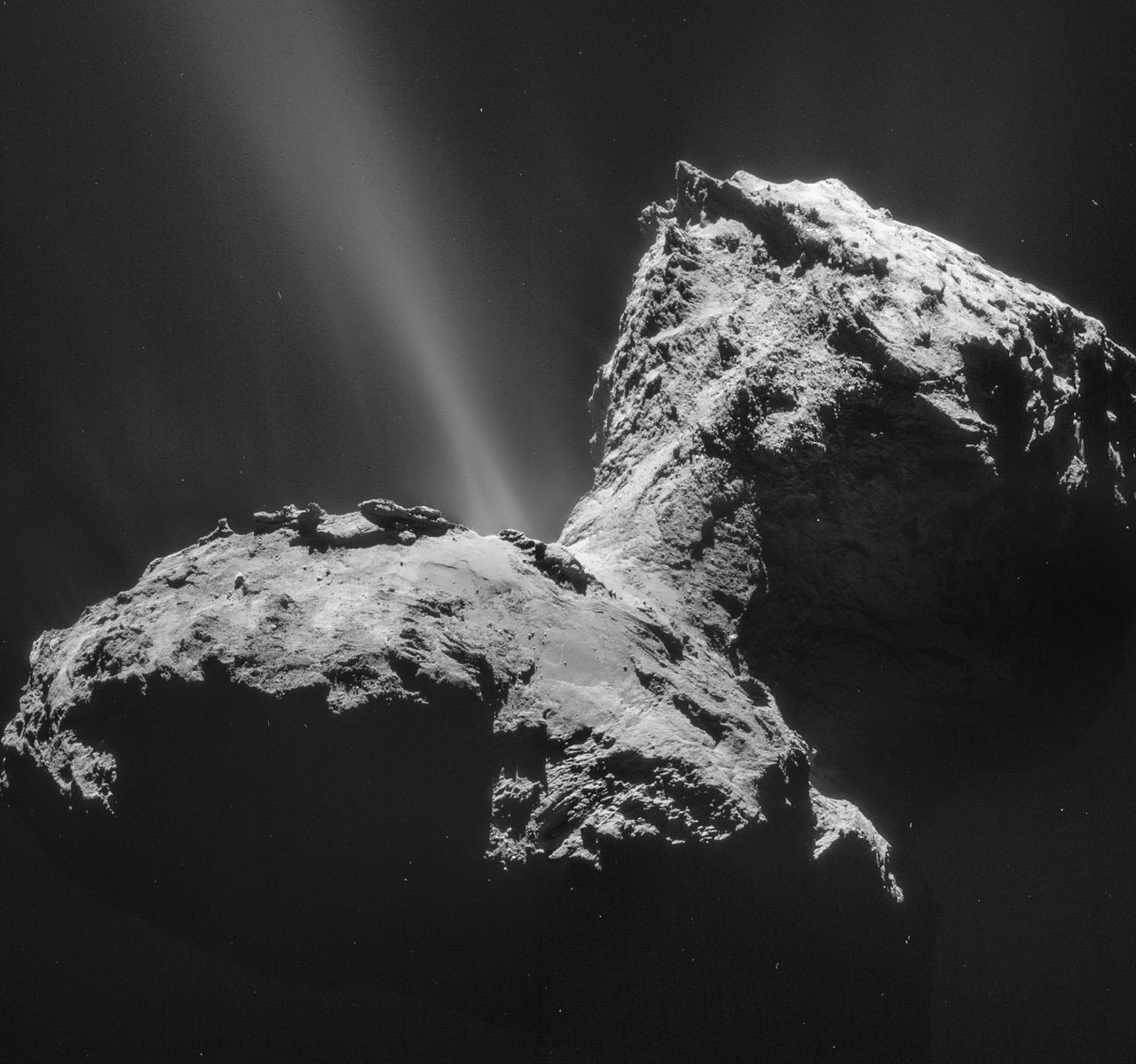
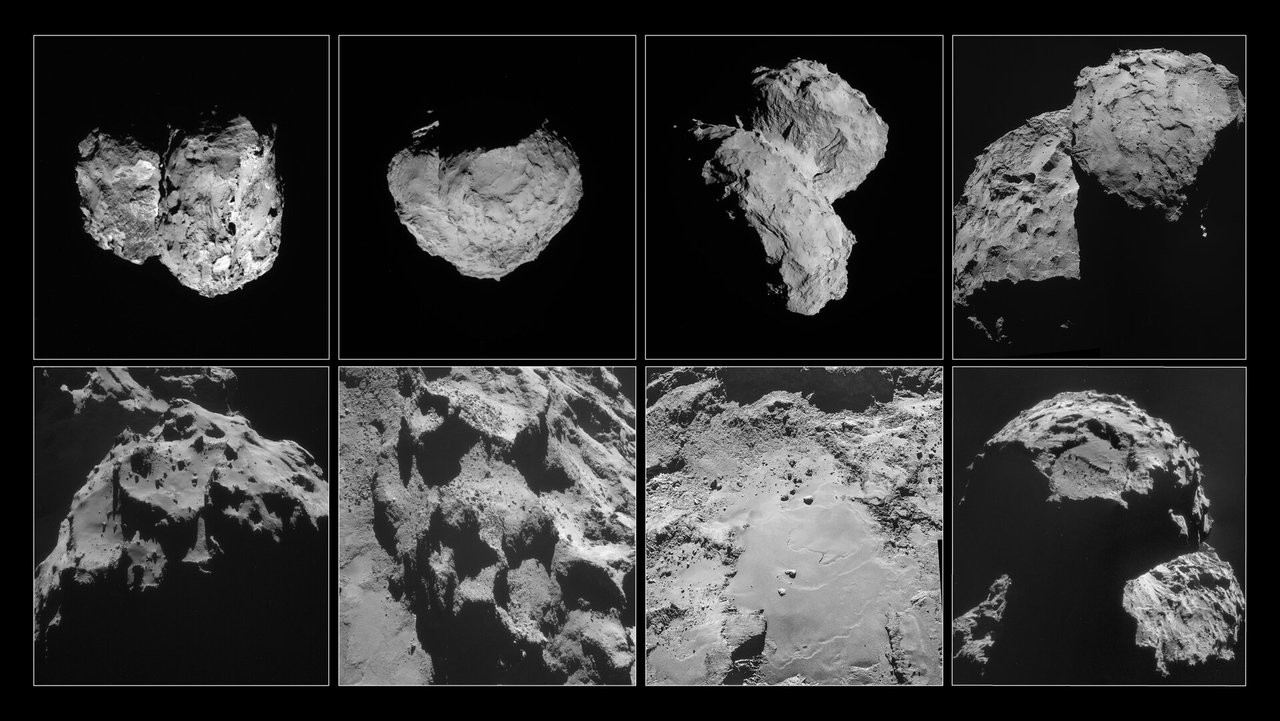
Its full name is 67P/Churyumov–Gerasimenko, but many people remember the cosmic rubber duck. Two unequal lobes joined by a narrow neck create its recognizable outline.
A comet is not glowing smoke
The nucleus contains ice, dust, and rock, with cliffs, pits, and boulders. Near the Sun, sublimating ice carries dust outward to form a coma and tails. Comet tails generally point away from the Sun, rather than simply trailing the direction of travel.
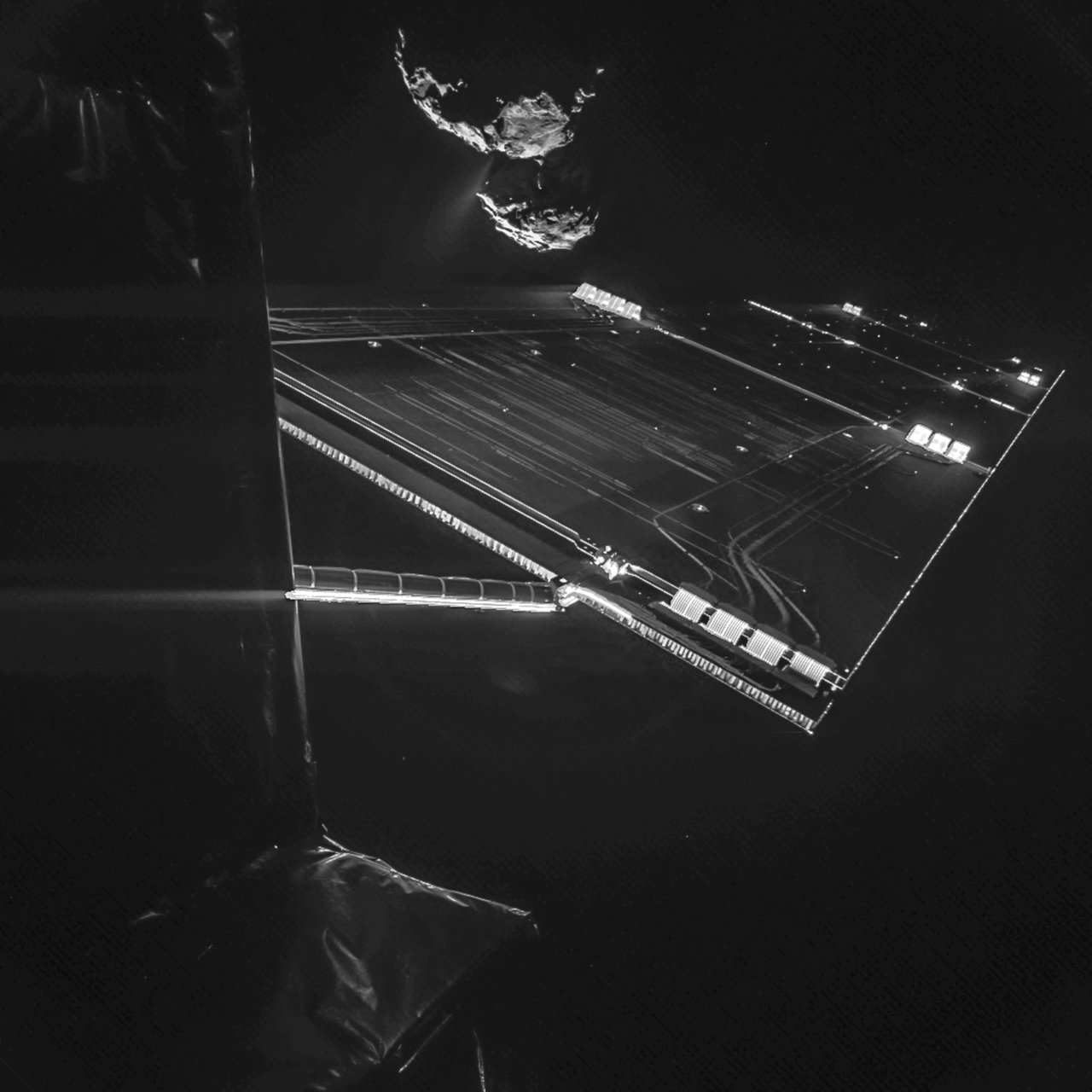
Ten years traveling, two years accompanying
Rosetta launched in 2004 and reached 67P in 2014, following it toward and away from the Sun. Sustained observations showed changing activity, exposed ice, and moving dust rather than a single flyby snapshot.
Philae’s unexpected landing
In November 2014, Philae made the first comet landing, but anchoring did not work as planned. It bounced into a poorly illuminated location, limiting power and communication. It still returned valuable data, and the team later identified its resting place in images.
Can it explain Earth’s origins?
Comets preserve early ices and complex chemicals, helping test how water and organics were distributed and transported. One comet does not represent all comets, and organic molecules do not establish life. Closer study makes the questions more specific—and more interesting.