Eris: the small world that changed textbooks
Eris is the most massive known dwarf planet, heavier than Pluto. Its discovery helped trigger the IAU’s 2006 definition of a planet. It follows an eccentric orbit reaching 97.6 AU, has a methane-ice surface, and is accompanied by its moon Dysnomia.
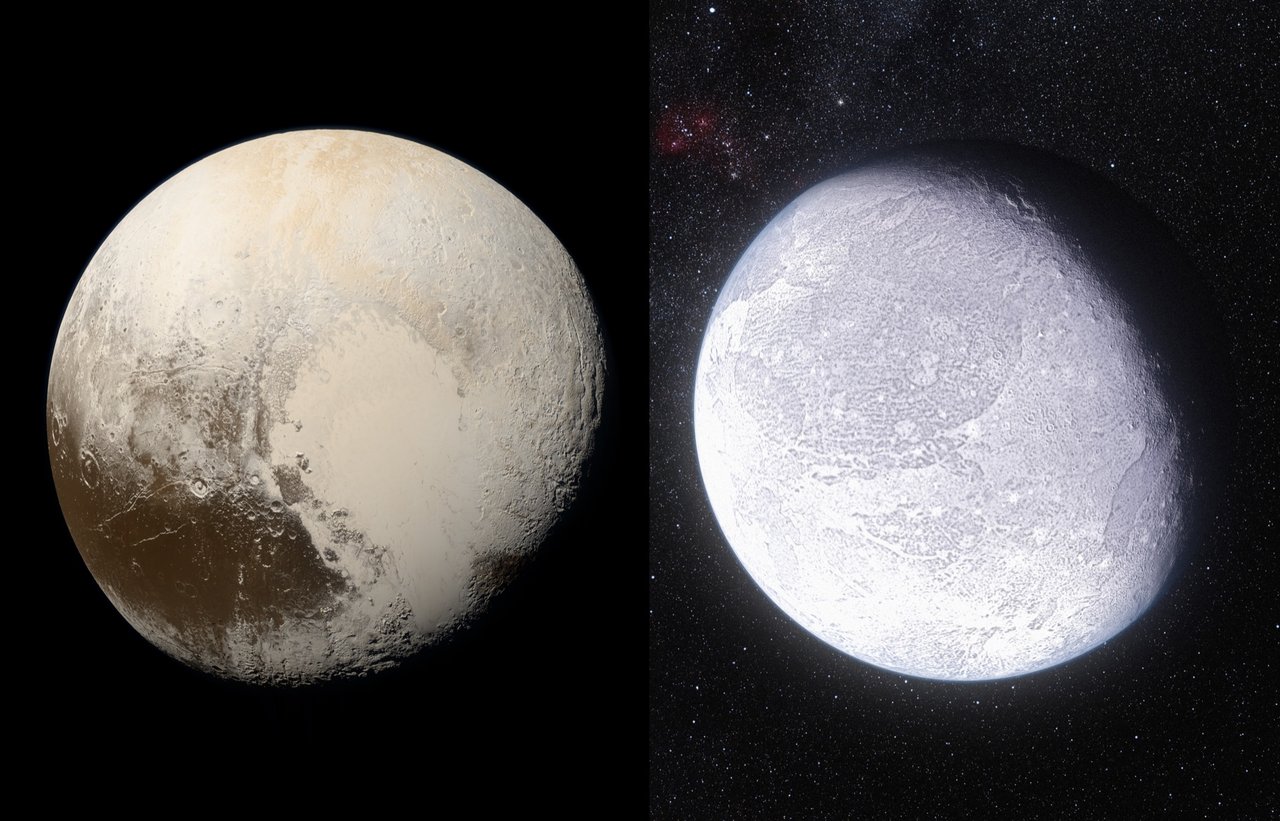
At Eris, the Sun looks like a distant bright star. This world is about 2,326 km across, slightly smaller than Pluto but around 27% more massive—the most massive known dwarf planet. Its 2005 announcement forced astronomy to confront the definition of a planet.
Smaller than Pluto, heavier inside
Its diameter is about 2,326 km and density around 2.43 g/cm³, indicating a higher rocky fraction than Pluto. Among bodies directly orbiting the Sun, it ranks ninth in mass.
Changing the textbooks
On January 5, 2005, Mike Brown, Chad Trujillo, and David Rabinowitz identified the slow-moving object in Palomar images from October 2003. Designated 2003 UB313 and nicknamed Xena, it was announced that July and sometimes called the tenth planet. The debate led to the IAU’s August 2006 planet definition and the dwarf-planet category. That September it was named for Eris, the Greek goddess of discord.
A distant, tilted ellipse
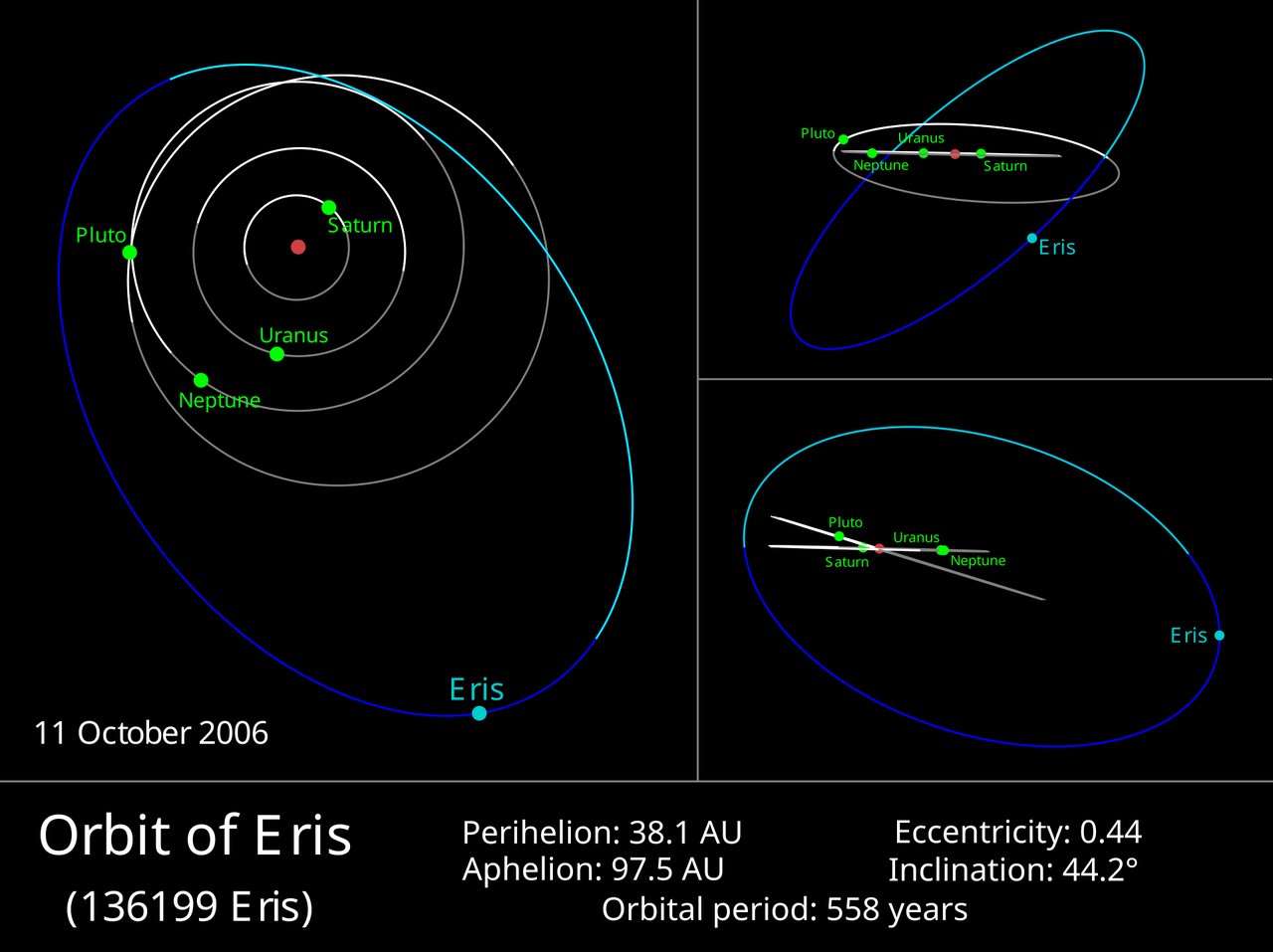
Eris belongs to the scattered disk, with eccentricity about 0.44 and inclination around 44°. Its orbit ranges from about 38 to 97.6 AU and takes roughly 557 years. It passed aphelion in the late 1970s and remains around 96 AU from the Sun.
Rock beneath ice
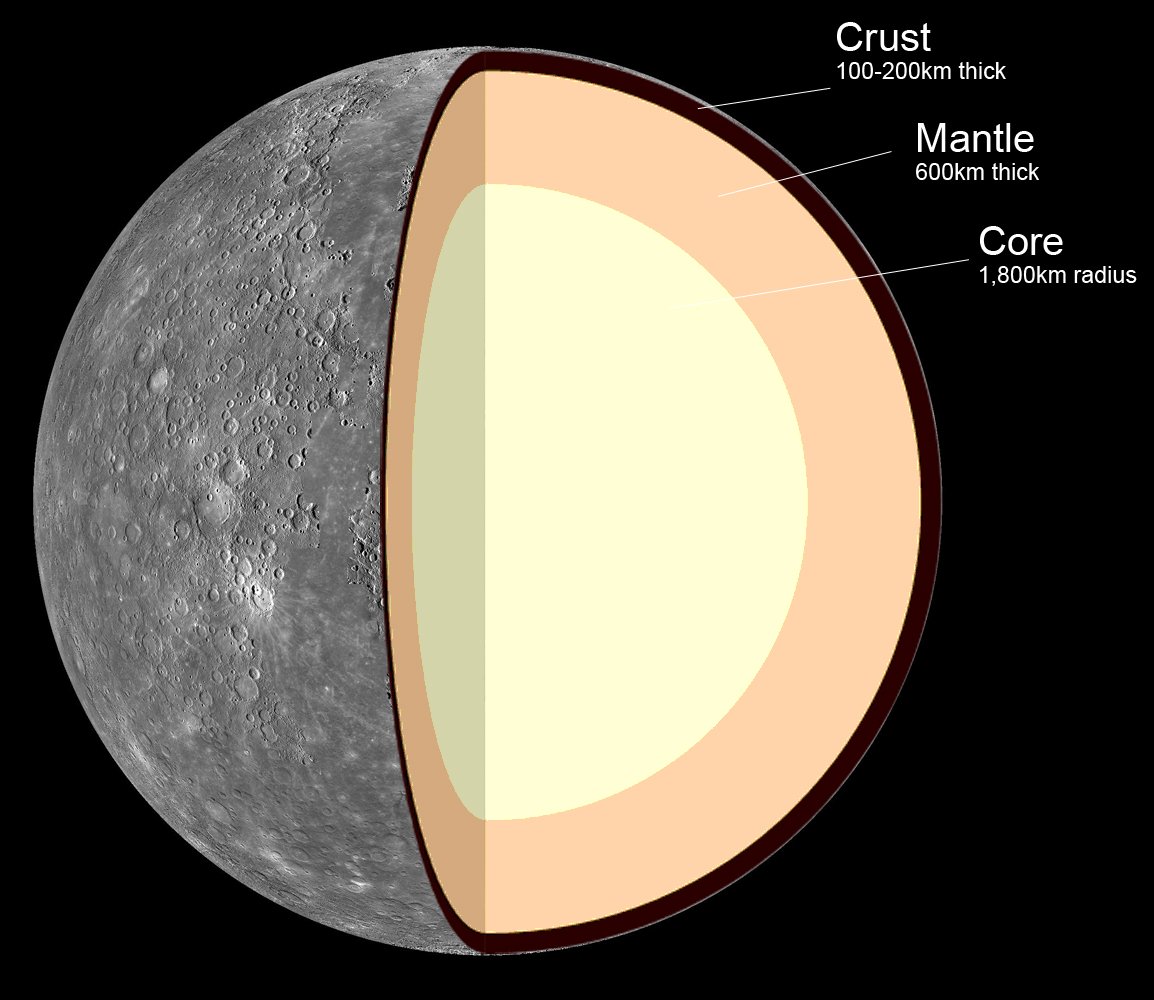
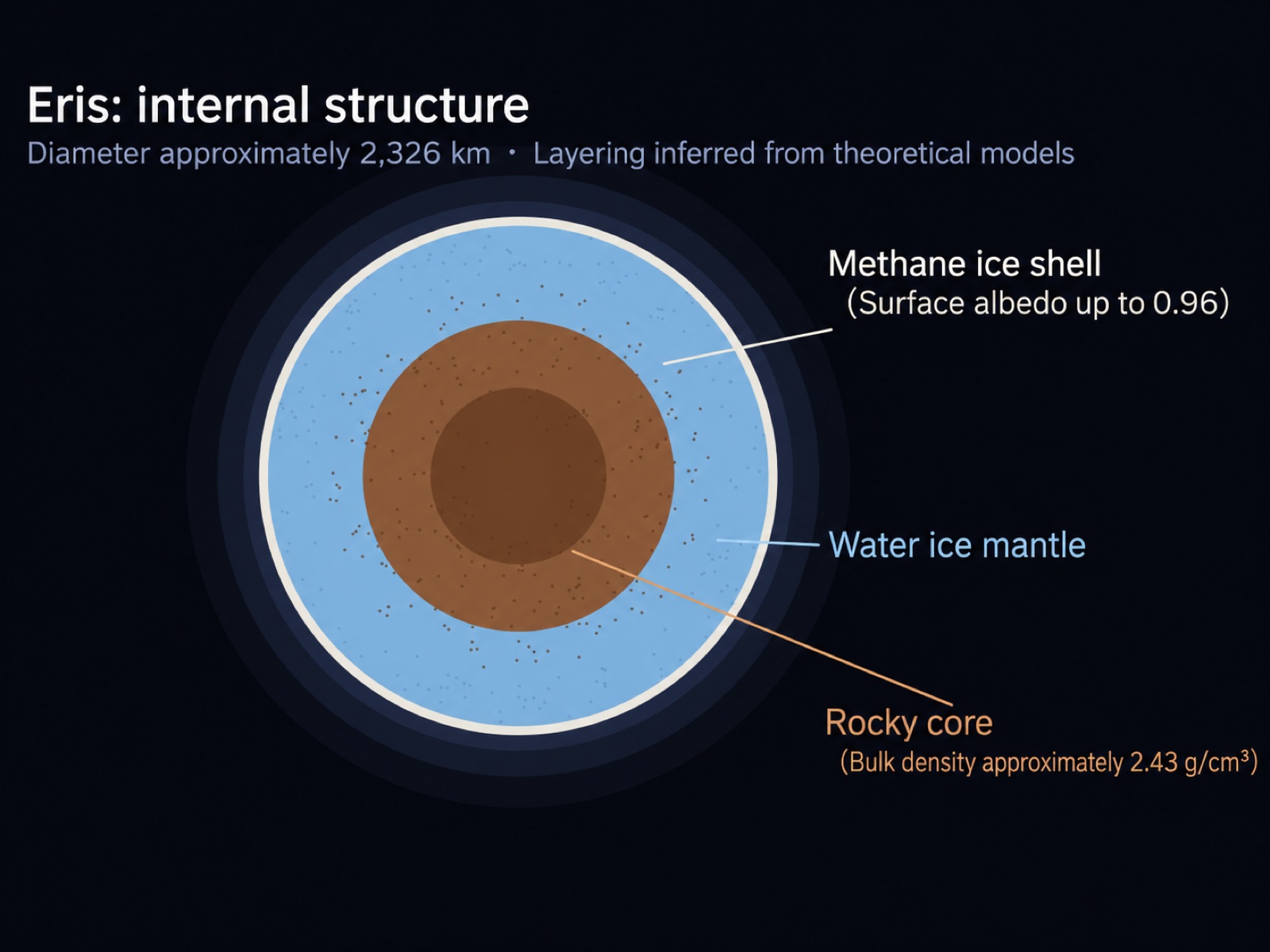
Without a spacecraft visit, internal models rely on mass, radius, and density. They suggest a rocky core, water-ice mantle, and methane-rich surface. Infrared isotope measurements in surface methane hint that weak internal thermal activity may persist.
Dysnomia
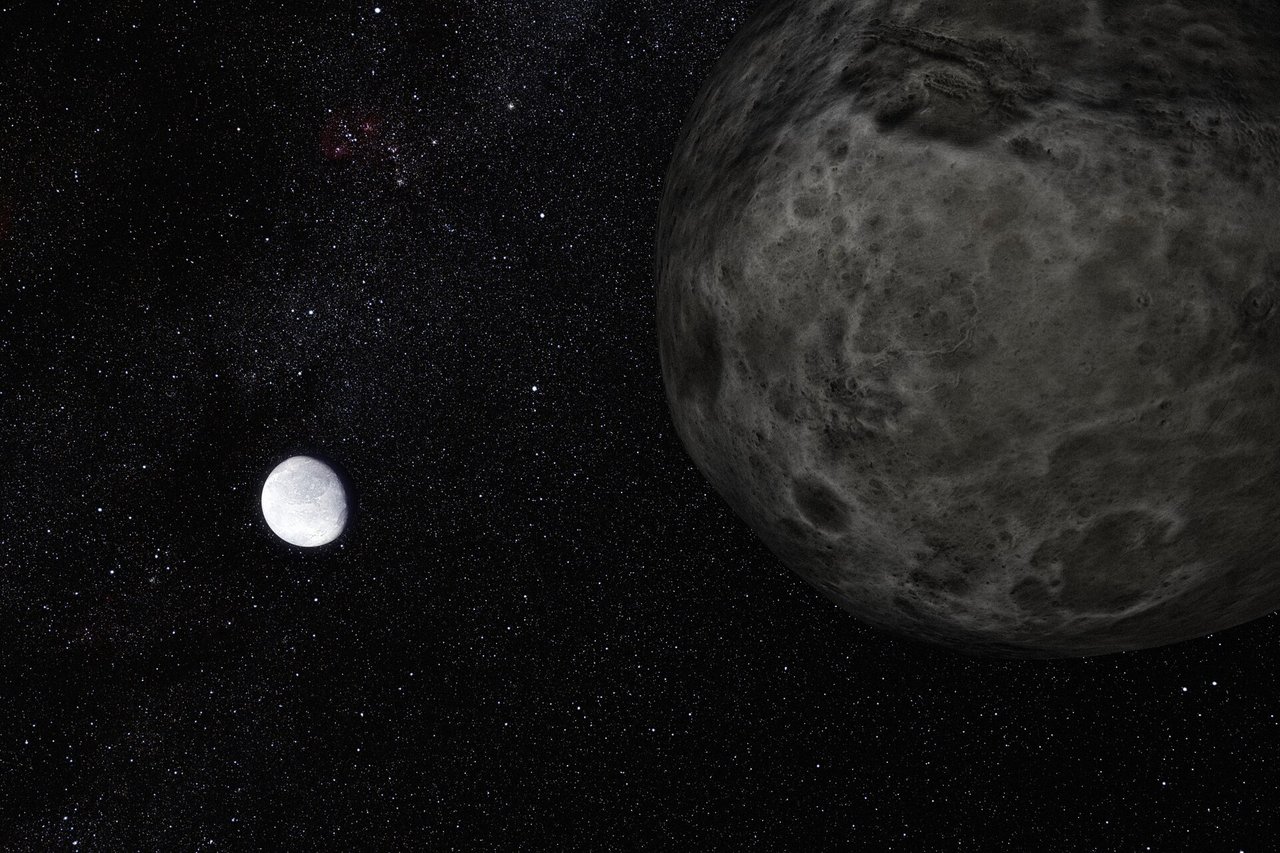
Keck adaptive-optics observations discovered its faint moon in September 2005. Dysnomia orbits about 37,000 km away in 15.8 days on a nearly circular path, potentially originating in an ancient impact. Its motion lets astronomers measure Eris’s mass through orbital mechanics.
A reflective frozen surface
Methane ice and traces of nitrogen give Eris an albedo around 0.96. Surface temperatures range approximately from −243°C to −217°C. Fresh frost suggests renewal; nearer perihelion, some ice may sublimate into a temporary atmosphere, an opportunity centuries away.
How bright would daytime be?
Sunlight is around one ten-thousandth of Earth’s intensity. It can still illuminate the surface but provides little warmth. Visitors would need all their air, energy, and extreme-cold protection; ordinary clothing would not suffice.