Europa: an ocean beneath the ice?
Slightly smaller than our Moon, Europa hides a global ocean beneath its icy shell, containing roughly twice the water in Earth’s oceans. It is a leading target in the search for life. Europa Clipper launched in 2024 and is due to arrive in 2030.
Europa’s frozen surface may be a lid over a global ocean. About 3,122 km across, it is the smallest Galilean moon and slightly smaller than our Moon. Its hidden water may exceed all of Earth’s oceans, making it a leading habitability target.
A young, fractured face
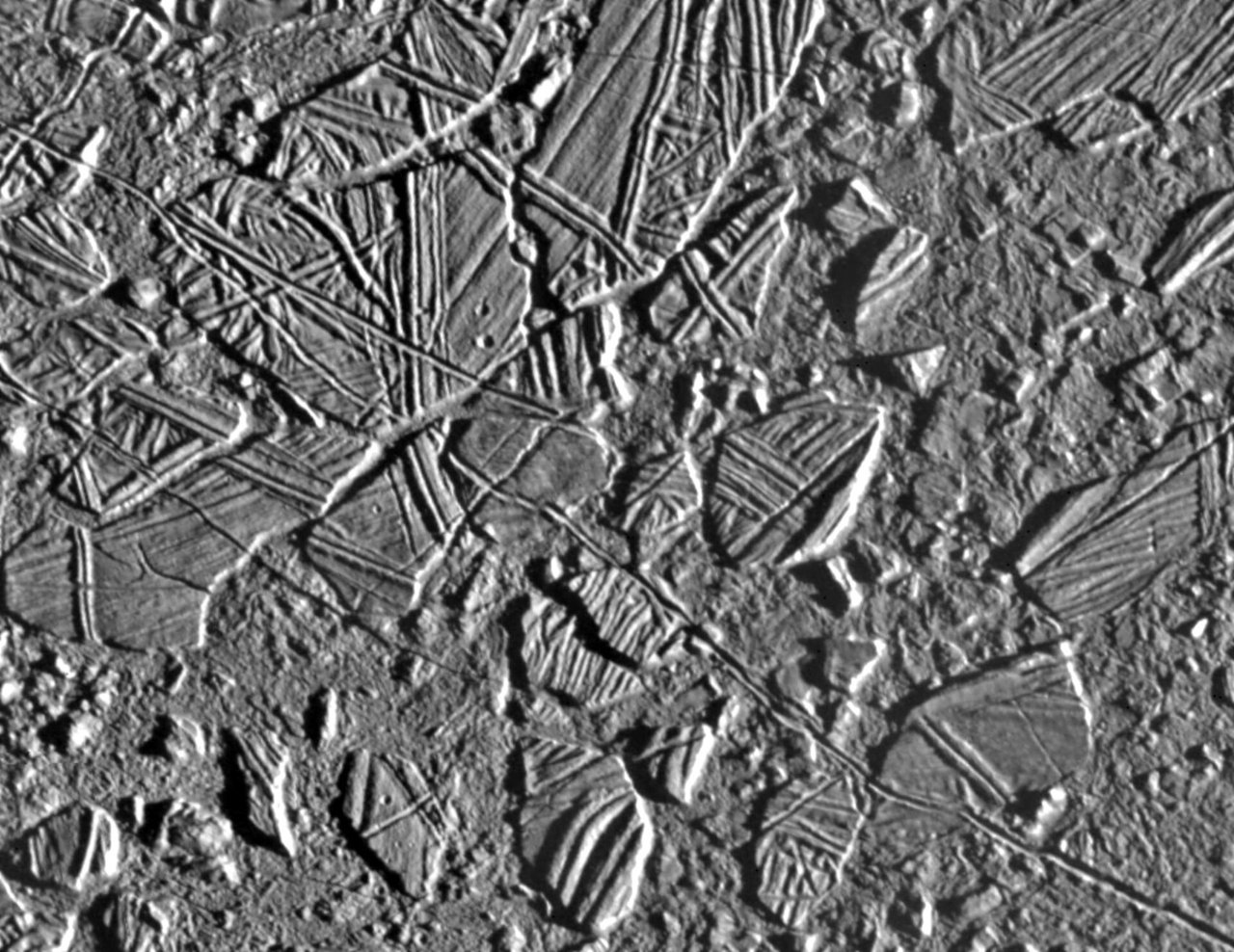
Galileo recorded Europa in 1610, but Voyager’s 1979 flybys revealed its surprisingly crater-poor surface. Long reddish ridges mark fractures and possible upwelling. In Conamara Chaos, displaced ice blocks suggest liquid or slushy material below when the terrain broke apart.
Ice, ocean, rock, and metal
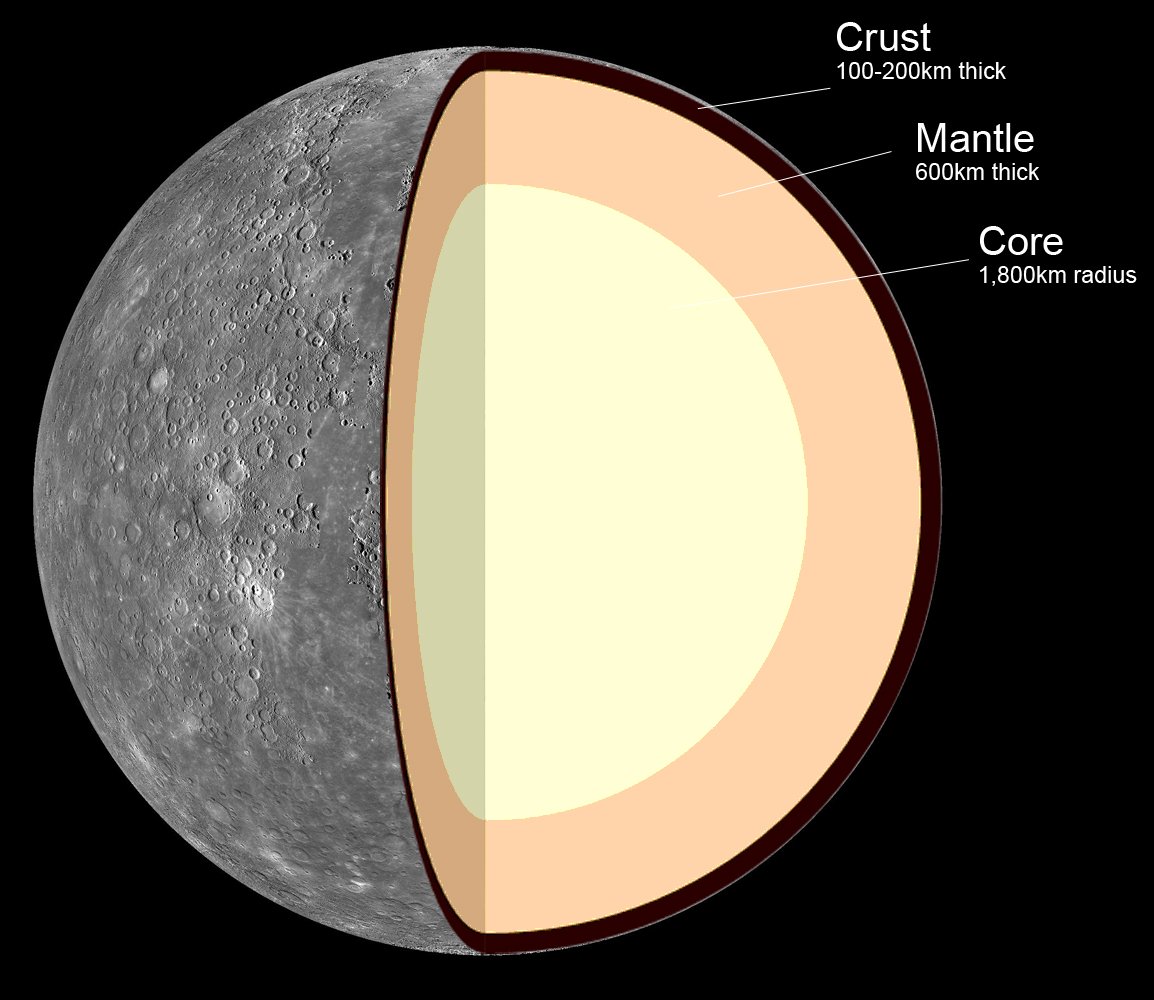
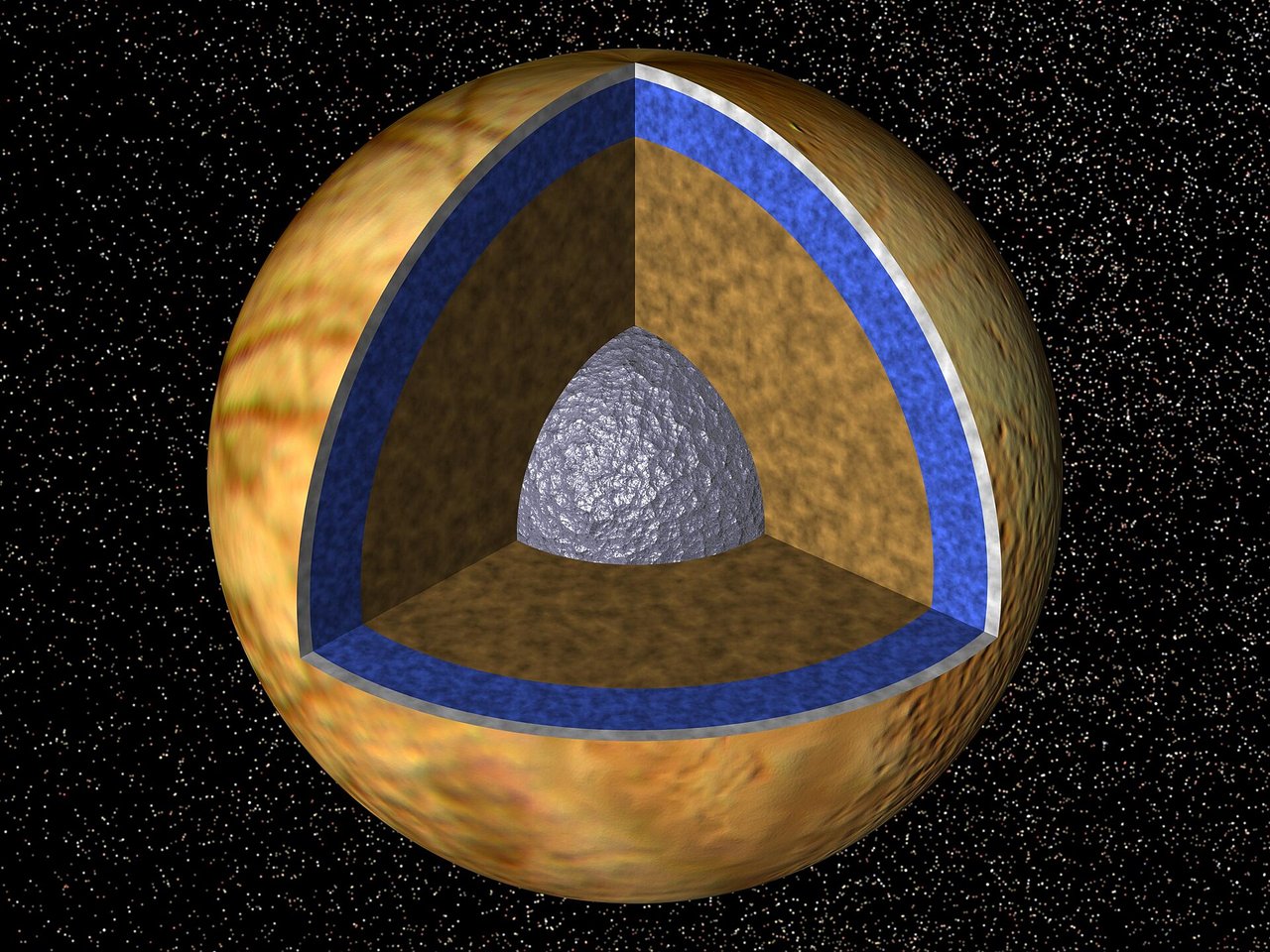
A density around 3 g/cm³ means Europa is not simply an ice ball. Models include an ice shell roughly 15–25 km thick, an ocean perhaps 80–100 km deep, a rocky mantle, and a possible metallic core. Galileo’s induced magnetic-field measurements provide strong evidence for a conducting salty layer.
How does the ocean stay liquid?
Despite a surface below −160°C, tides supply internal heat. Europa circles Jupiter in about 3.55 days; eccentricity and orbital resonances maintain repeated deformation. The ocean may contain about twice Earth’s ocean water and could have persisted for billions of years.
Possible vapor plumes
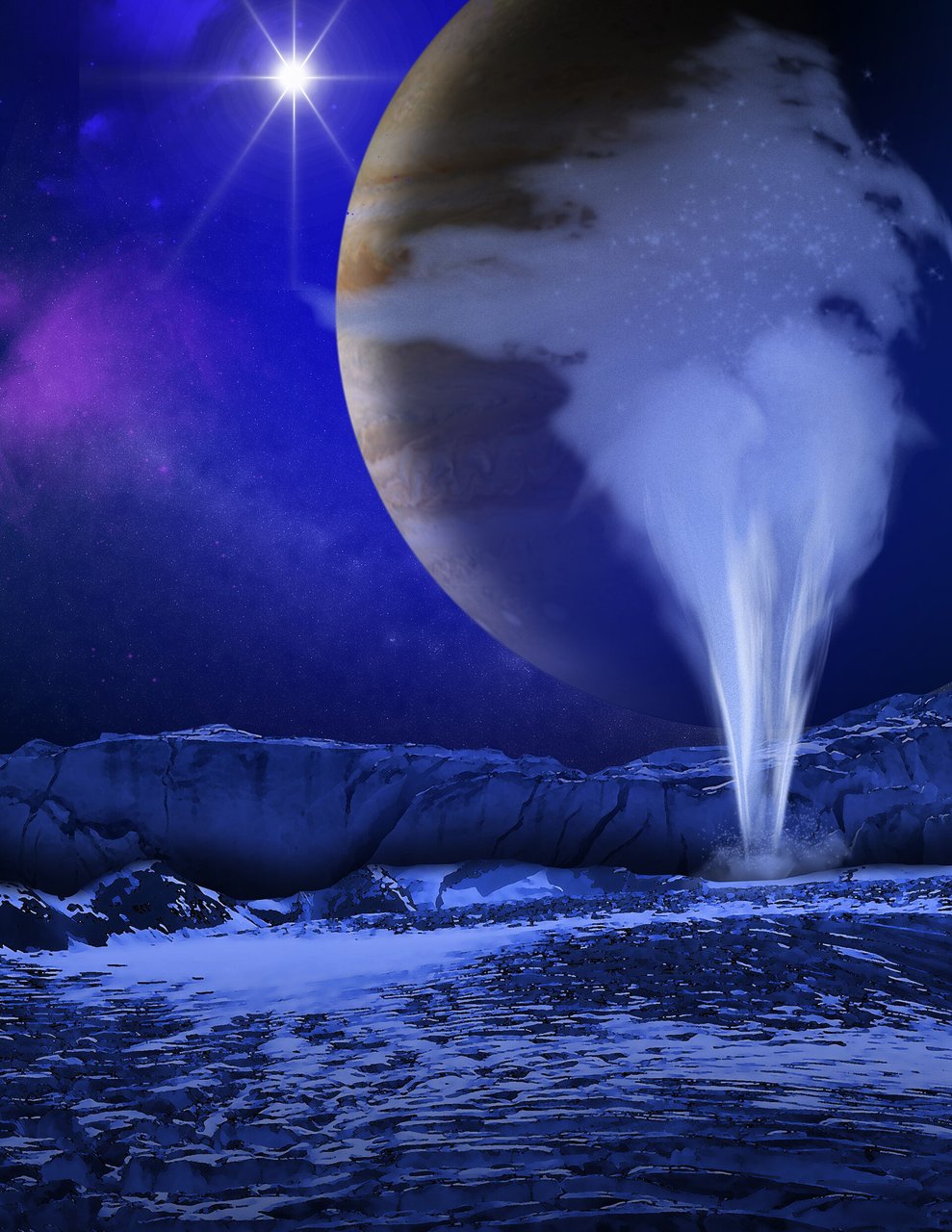
Hubble detected ultraviolet hydrogen and oxygen signatures near the south pole in December 2012, interpreted as a plume around 200 km high. Later observations suggested silhouettes against Jupiter. These signals are near instrumental limits and remain debated. If plumes exist, a spacecraft might sample ocean-related material without drilling through the shell.
Could life exist below the ice?
We do not know. Europa may offer liquid water, chemical ingredients, and usable energy from tides or hydrothermal activity. Earth’s deep-sea ecosystems show sunlight is not always necessary. No evidence of life has yet been found on Europa.
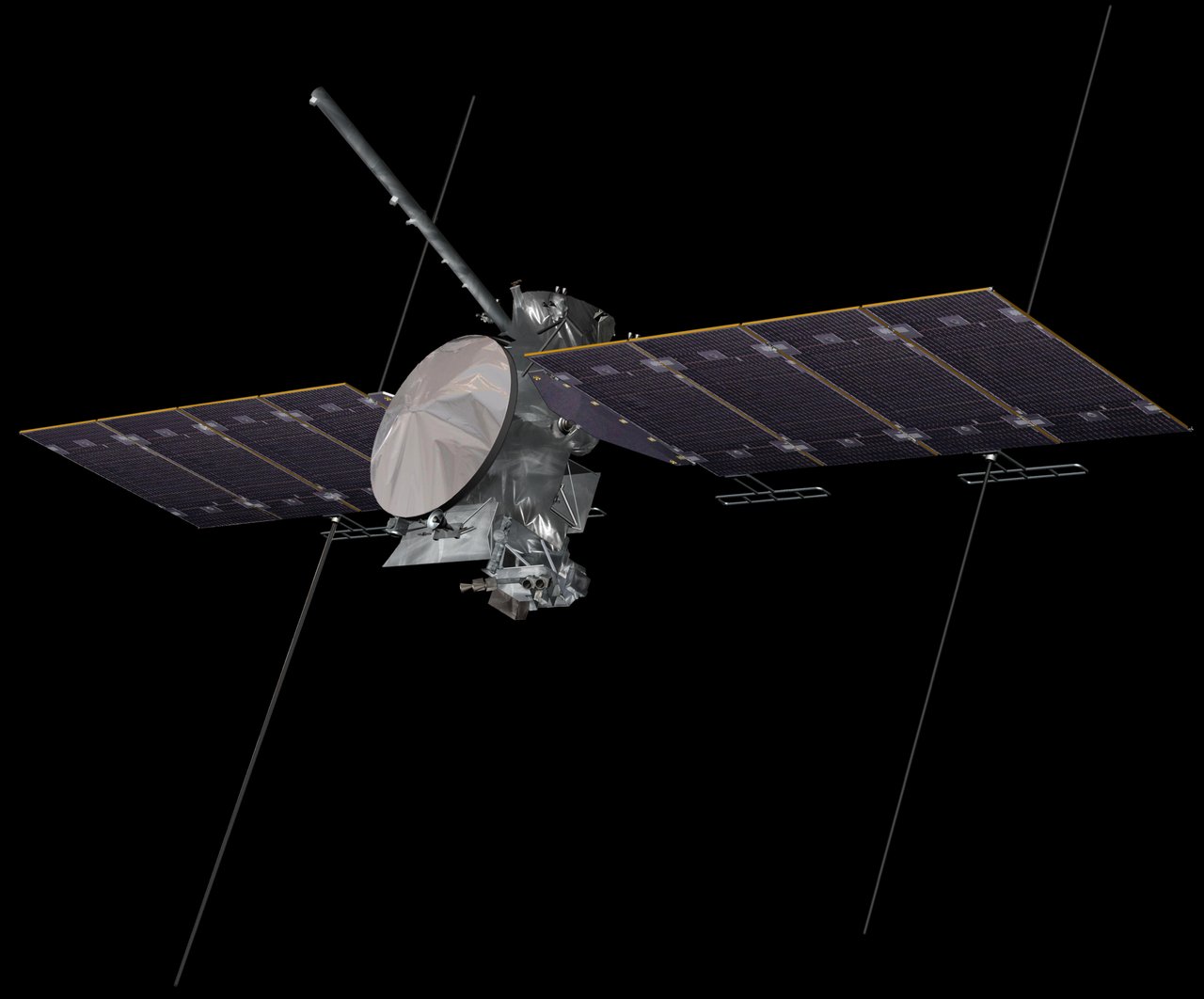
Europa Clipper is on its way
Launched on Falcon Heavy on October 14, 2024, Clipper spans over 30 m with arrays extended. It is scheduled to arrive in April 2030 and make nearly fifty Europa flybys from Jupiter orbit, some around 25 km above the ice. It studies habitability rather than directly searching for life.