Phobos: a moon slowly approaching Mars
Mars’s largest moon is a potato-shaped body only about 6,000 km above the surface. It moves inward by about 1.8 meters per century and may break apart into a ring tens of millions of years from now.
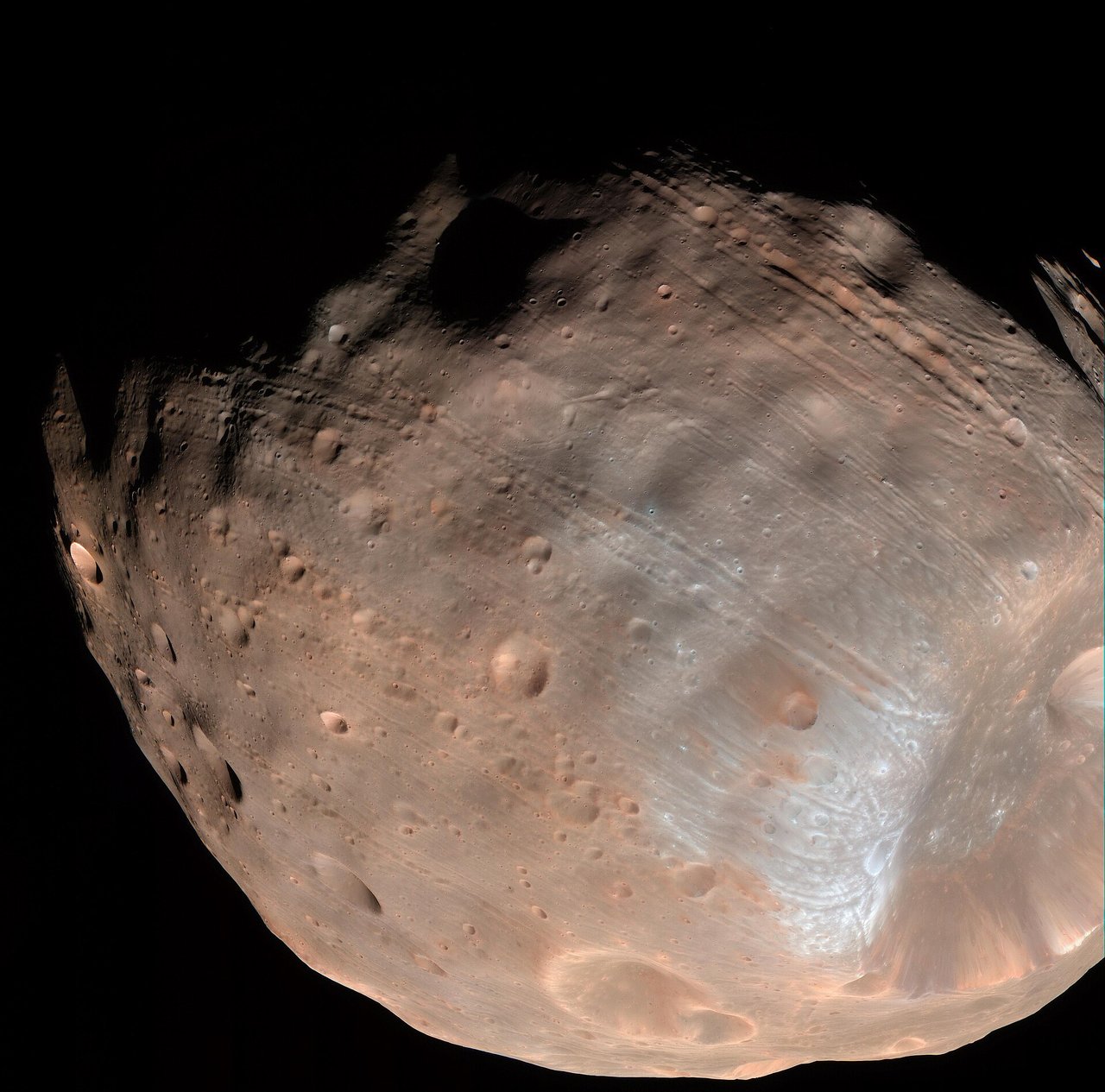
From Mars, Phobos rises in the west and sets in the east a little over four hours later, appearing twice in a day. The larger, inner Martian moon measures about 27 × 22 × 18 km and resembles a fast-moving potato-shaped rock.
Captured asteroid or impact debris?
Asaph Hall discovered Phobos in 1877. Its dark surface, albedo around 0.07, and carbonaceous-asteroid-like spectrum support capture from the asteroid belt.
An alternative is reassembly from debris after a giant impact on Mars. Its nearly circular, equatorial orbit is easier to explain this way than by capture. Neither explanation resolves every question.
Stickney and mysterious grooves
Stickney Crater is about 9 km across, enormous for a moon only around 22 km wide. It is named after Hall’s wife, Angeline Stickney, who encouraged his search.
Grooves hundreds of meters wide may include fractures from impacts or tides, or tracks left by rolling debris. Some may indicate stresses as Mars gradually disrupts the moon.
A loose rubble pile?
Its mean density of about 1.86 g/cm³ suggests substantial internal voids. It may be loosely assembled rock beneath impact-produced regolith rather than one solid block.
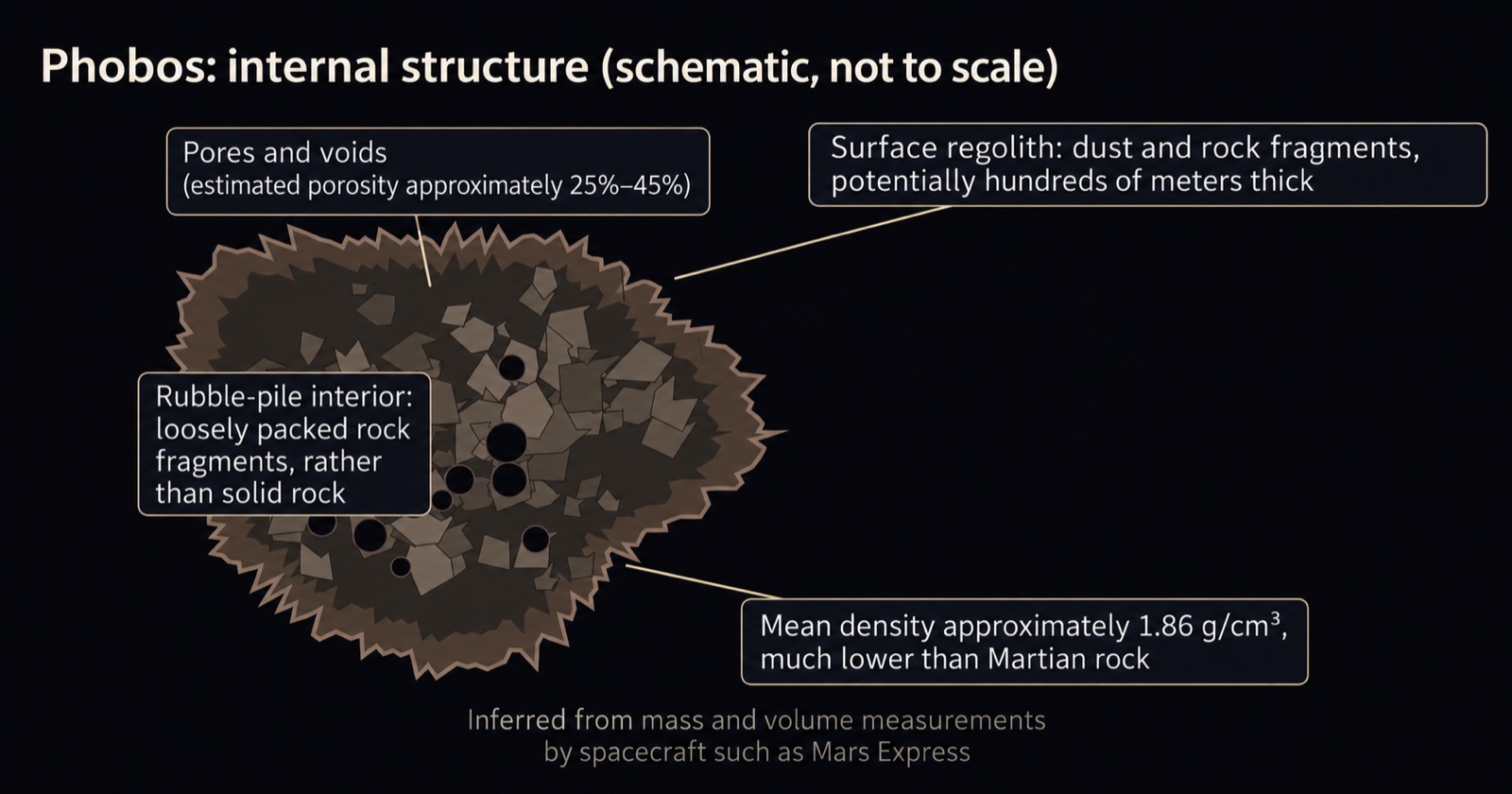
Surface gravity is roughly one two-thousandth of Earth’s. A small jump could last minutes. Without an atmosphere, temperatures range approximately from −4°C in sunlight to −112°C in darkness.
Will it fall onto Mars?
Phobos orbits about 9,376 km from Mars’s center, only about 6,000 km above the surface, in 7 hours 39 minutes. Below synchronous orbit, tides remove orbital energy and lower it by roughly 1.8 m per century.
In about 30–50 million years, it may break into a temporary ring, with some larger fragments reaching Mars. The outcome depends on its internal strength; a ring is a well-supported prediction, not the only possibility.
Exploration and MMX
Viking returned close views in the 1970s. The Soviet Phobos 1 and 2 missions launched in 1988 but were lost, the latter after reaching Mars and returning images. Russia’s 2011 Phobos-Grunt sample mission, carrying China’s Yinghuo 1, failed to leave Earth orbit.
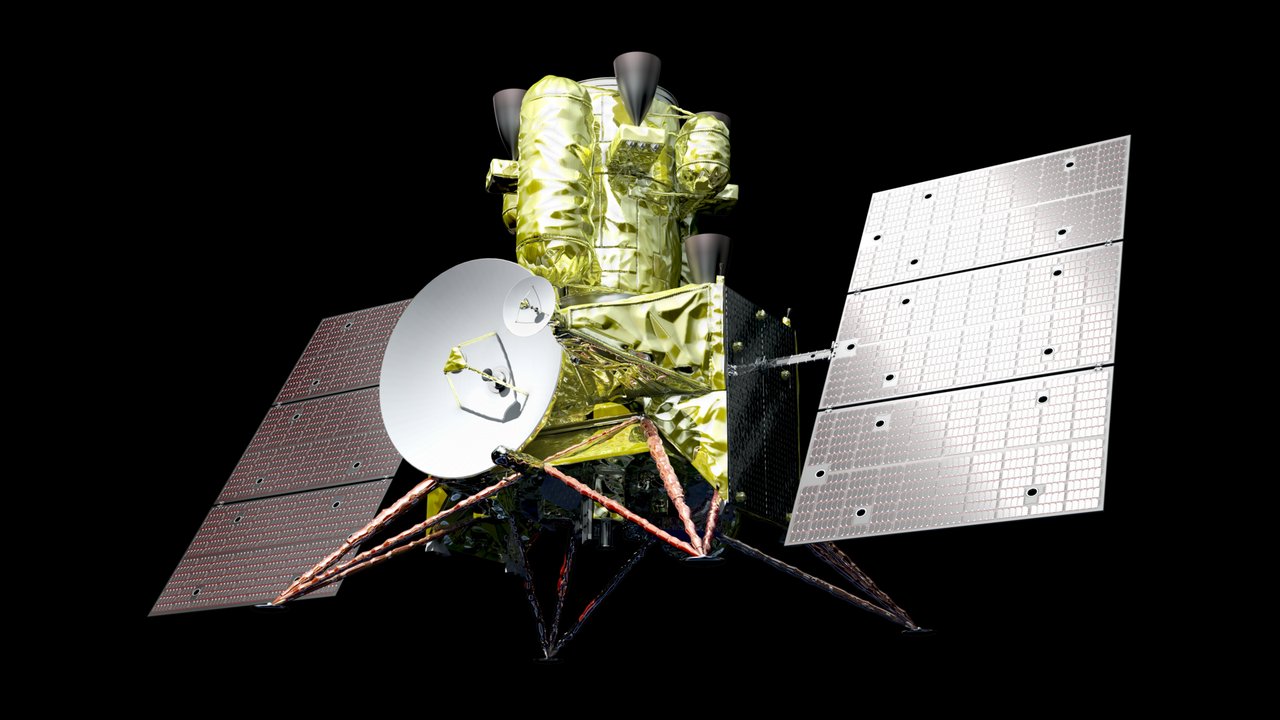
JAXA’s MMX is planned for launch on H3 in October 2026. It aims to operate near Phobos, collect at least 10 g, deploy the French–German IDEFIX rover, and fly past Deimos. If successful, samples return in 2031 and may resolve the moons’ origins.