Triton: the story of a backward-orbiting moon
Neptune’s largest moon is the only large moon in a retrograde orbit and may be a captured Kuiper Belt object. Its surface can reach −235°C yet has nitrogen geysers and a pinkish nitrogen-ice cap. Billions of years from now, tides may tear it into an icy ring.
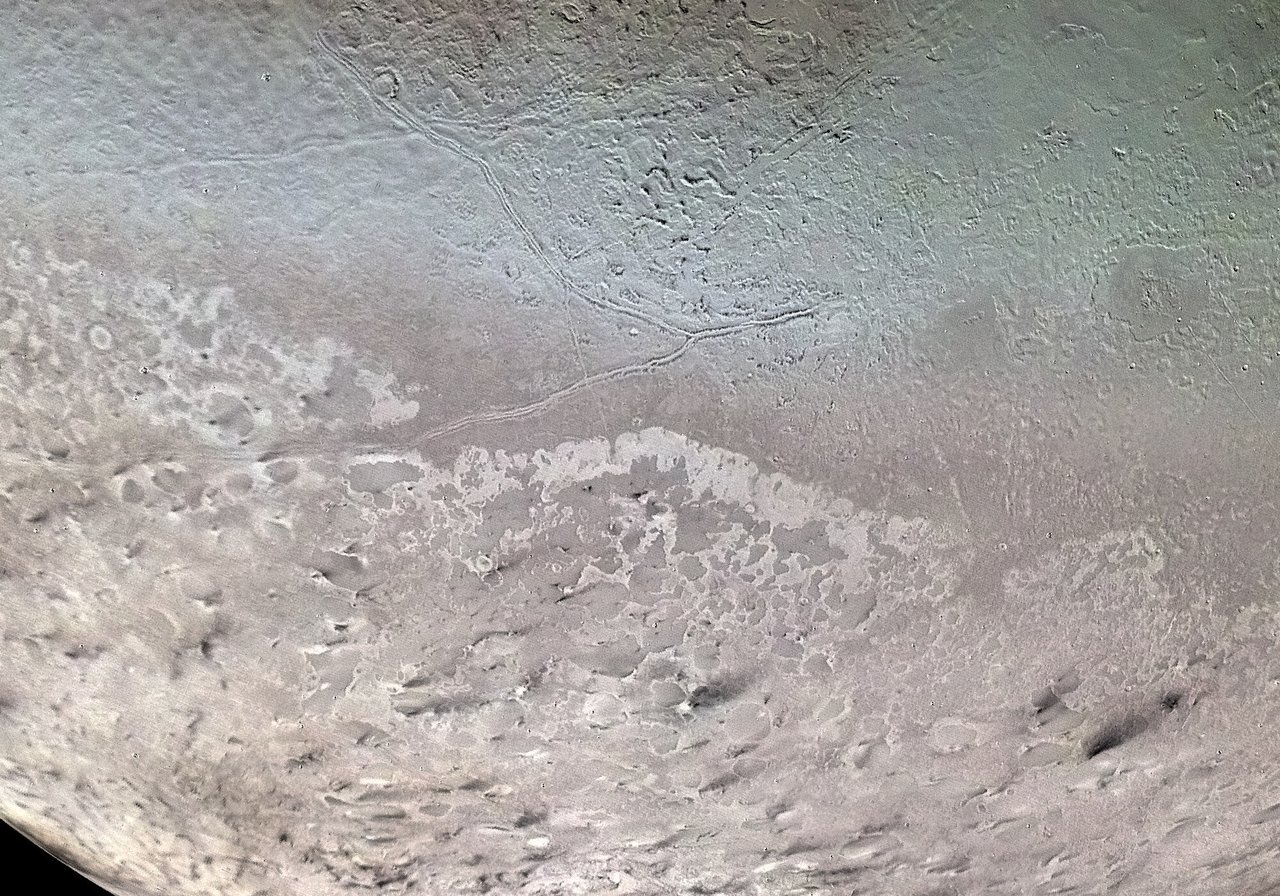
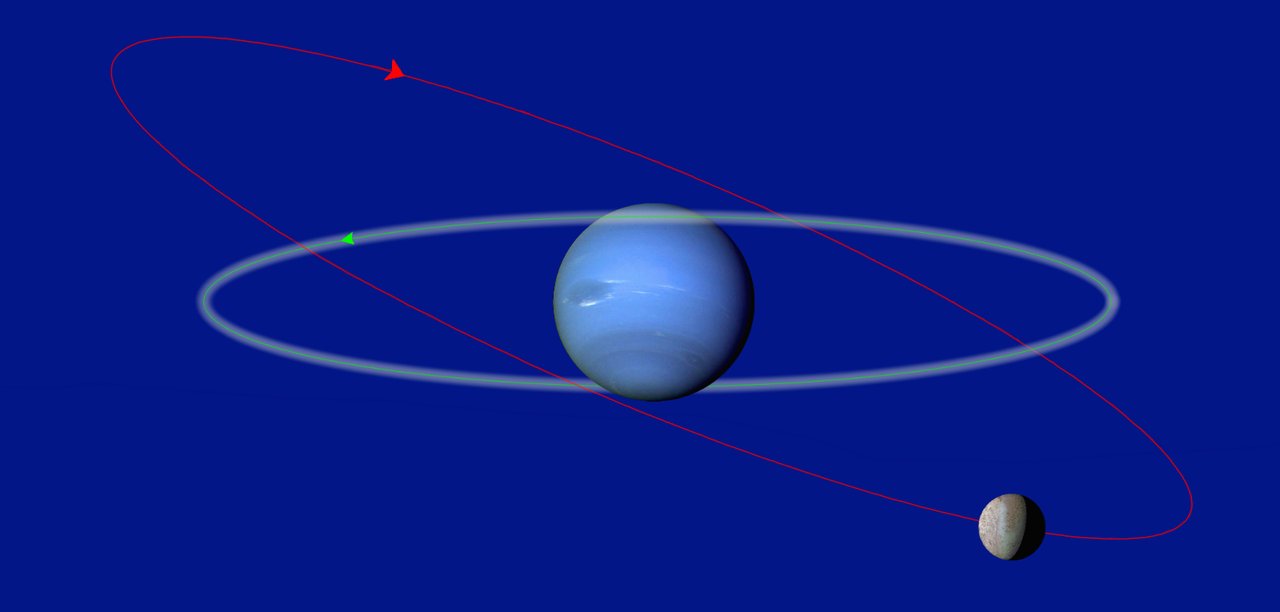
Triton travels backward around Neptune relative to the planet’s rotation. About 2,707 km across, larger than Pluto, it is Neptune’s largest moon. Its unusual orbit strongly suggests it was captured from the Kuiper Belt.
A retrograde orbit
Triton is the only large moon with a retrograde orbit. It circles Neptune in about 5.88 days on an almost circular path roughly 355,000 km from the planet—closer than our Moon is to Earth.
Captured from the Kuiper Belt
A moon formed in Neptune’s original disk would normally orbit in the same direction. Triton’s motion and its Pluto-like nitrogen and methane ices support capture of an independent Kuiper Belt object. The event likely disrupted earlier moons, while tides gradually circularized Triton’s initial eccentric orbit.
Rock, ice, and a possible ocean
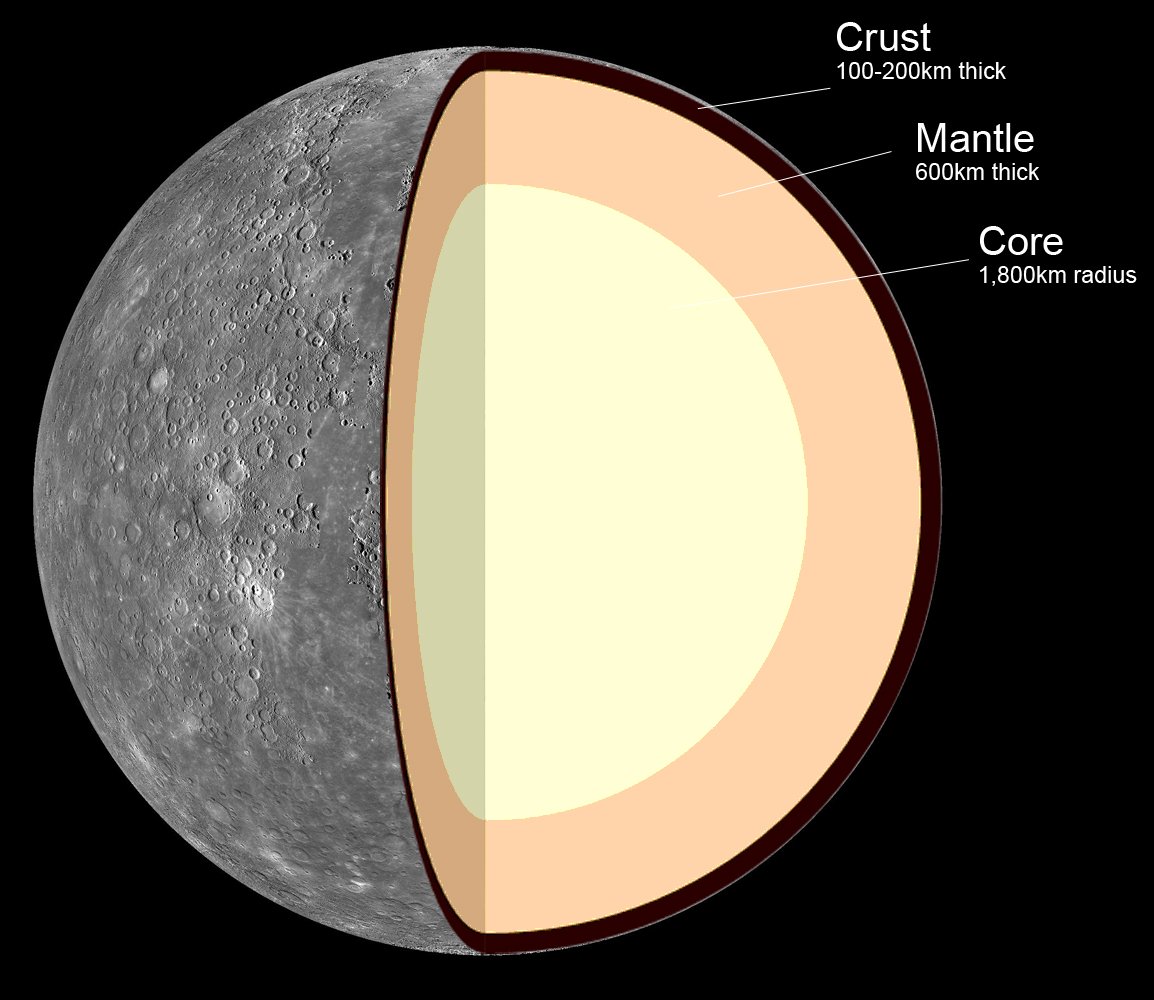
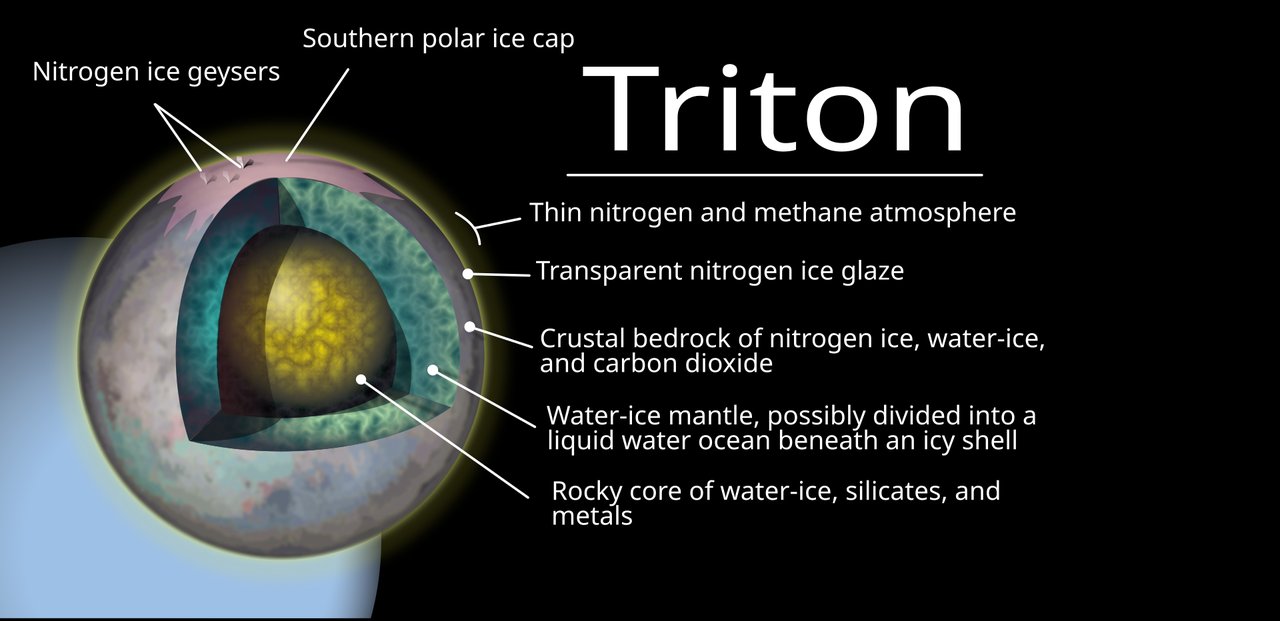
A density around 2.06 g/cm³ suggests a substantial rocky fraction. Models include a rock–metal core holding roughly two-thirds of the mass, water-ice layers, and surface nitrogen, methane, and carbon-monoxide frost. Strong tidal heating during capture may have created a subsurface ocean that has not fully frozen.
Nitrogen geysers in extreme cold
Surface temperatures can reach −235°C. Voyager 2 nevertheless observed active nitrogen plumes carrying dark dust about 8 km high and leaving long windblown streaks. A leading explanation is sunlight passing through translucent nitrogen ice and warming a dark layer below, building gas pressure until it erupts.
Would you hear a geyser?
The nitrogen atmosphere is too thin to carry sound as effectively as Earth’s air. These are cold gas-and-dust eruptions, not hot lava. A lander would see pinkish ice beneath a black sky, with Neptune staying roughly fixed because of tidal locking. Extreme cold and communication delays would make exploration difficult.
Pink ice and cantaloupe terrain
Radiation acting on methane produces complex organic material, often called tholins, tinting southern nitrogen and methane ice pink. Pitted cantaloupe terrain at other latitudes and few impact craters indicate resurfacing and geological youth.
Will it become a ring?
Retrograde tides slowly lower the orbit. Estimates suggest that in roughly 1.4 to 3.6 billion years, Triton may cross the Roche limit and fragment, with some material forming a ring. Timing and outcome depend on internal structure and are not settled facts about the distant future.