Vesta: some meteorites on Earth came from here
The main belt’s second most massive asteroid is about 525 km across. It differentiated early into an iron core, mantle, and crust. The huge Rheasilvia impact nearly shattered it, ejecting fragments that reached Earth as HED meteorites. Dawn became its first orbiter in 2011.
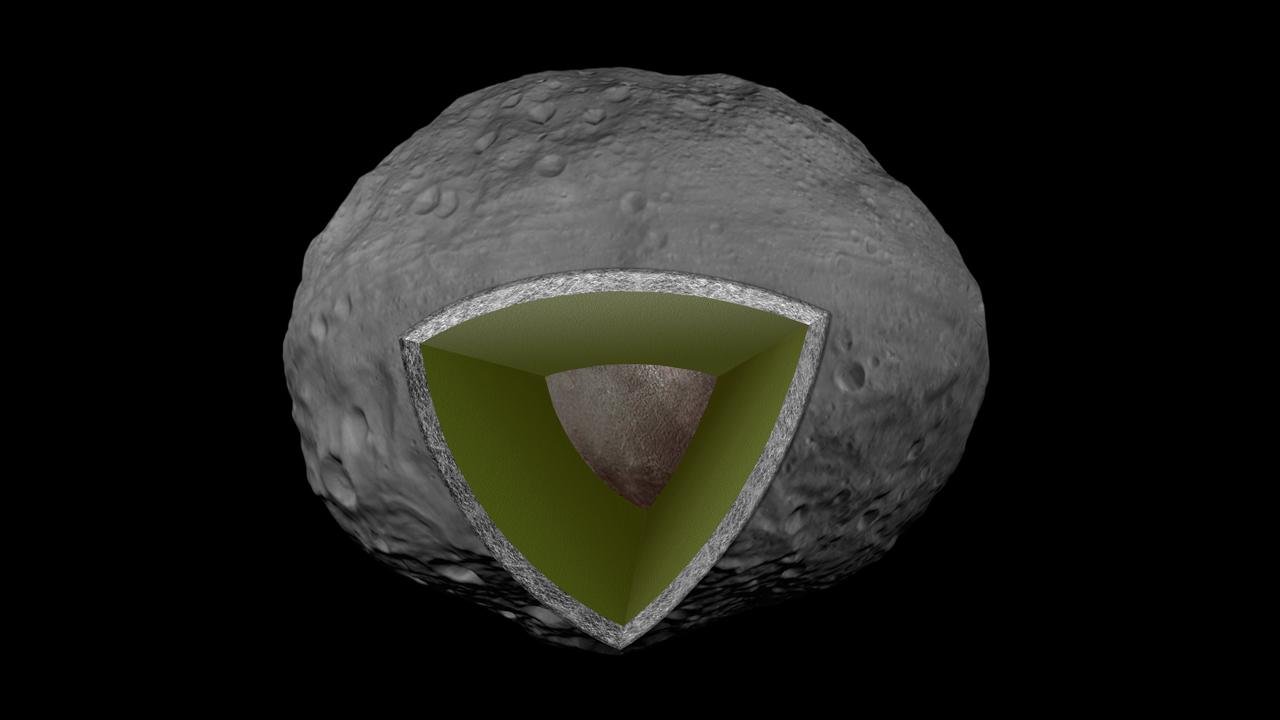
Vesta resembles a planet whose growth was paused. About 525 km across and the main belt’s second most massive body, it nevertheless has a crust, mantle, and iron core.
A surviving protoplanet
Many early protoplanets between Mars and Jupiter were shattered, merged, or ejected. Vesta and Ceres survived. Vesta orbits at about 2.36 AU in 3.63 years and rotates in about 5.3 hours. It holds roughly 9% of the belt’s mass and has a high albedo near 0.43, sometimes making it visible to the naked eye near opposition. It preserves a valuable record of planetary origins.
Layers like a planet
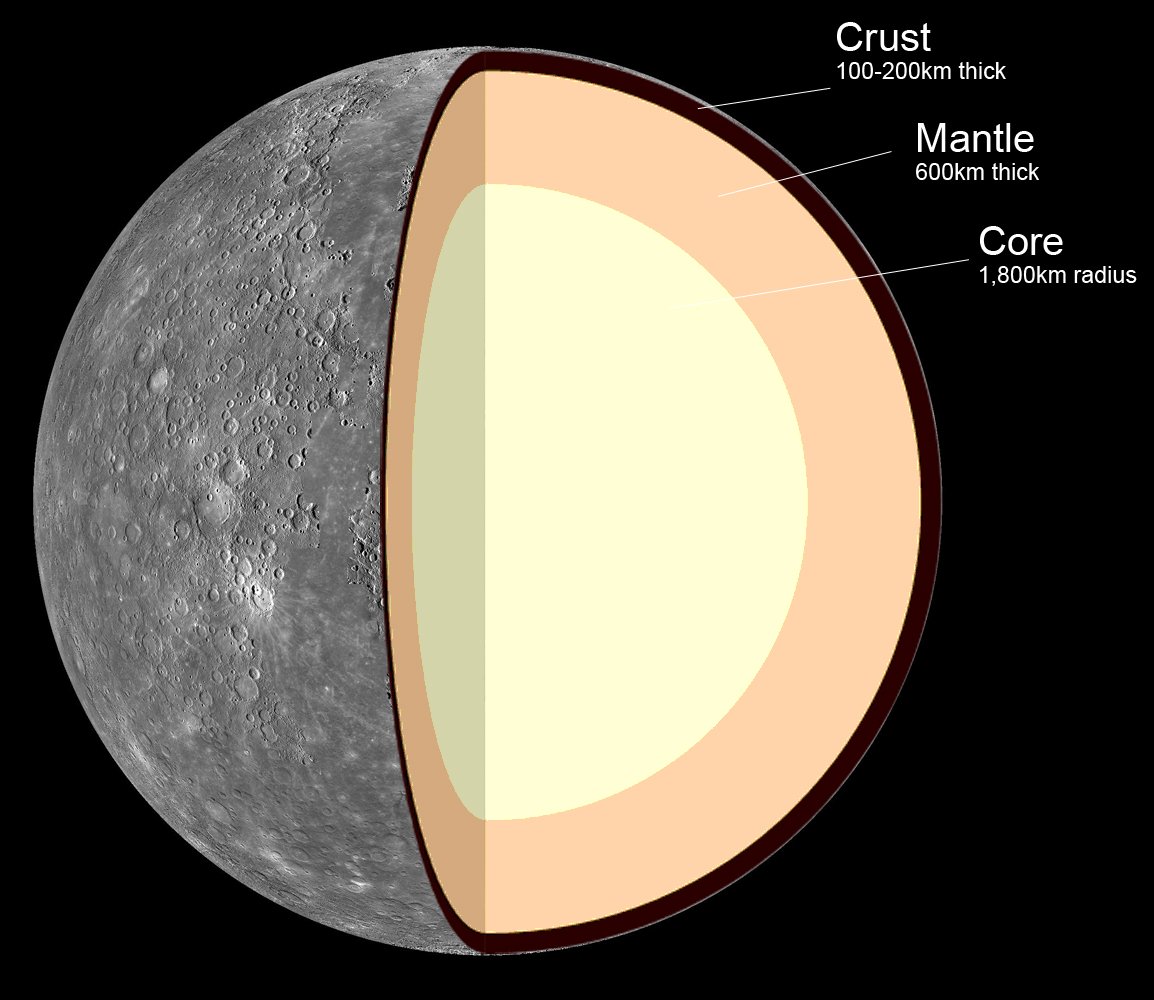
Early aluminum-26 decay heated Vesta into a magma ocean. Iron and nickel sank while lighter silicates rose. Dawn’s gravity measurements support a metallic core about 220 km in diameter beneath an olivine-rich mantle and basaltic crust, unlike an undifferentiated rubble pile.
Rheasilvia: nearly shattered
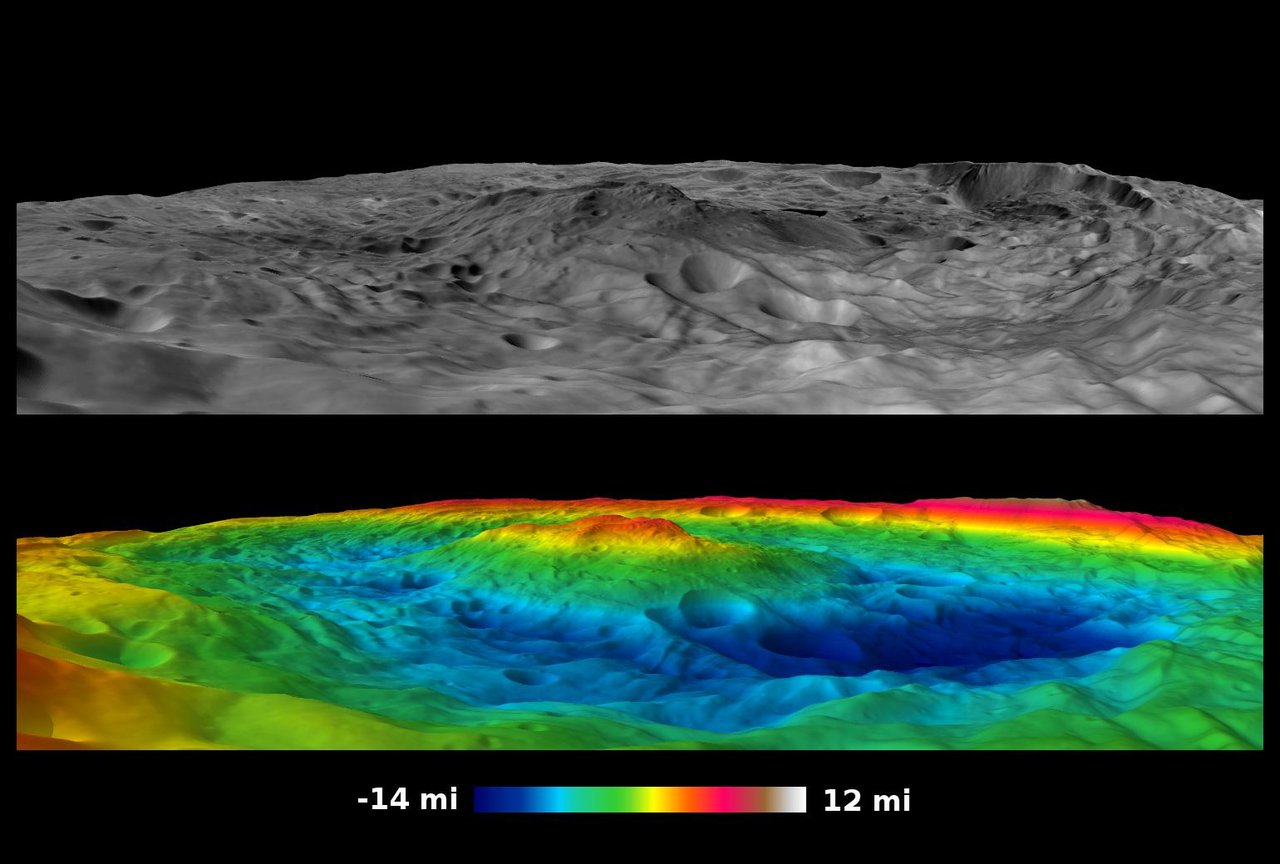
The Rheasilvia south-polar basin is about 500 km wide and 19 km deep, almost as wide as Vesta itself. Its central mountain rises over 20 km above the floor. Beneath it lies the older, roughly 400 km Veneneia basin. The more recent impact, about a billion years ago, ejected around 1% of Vesta’s mass and created the Vesta asteroid family, but the main body survived.
Have we touched Vesta?
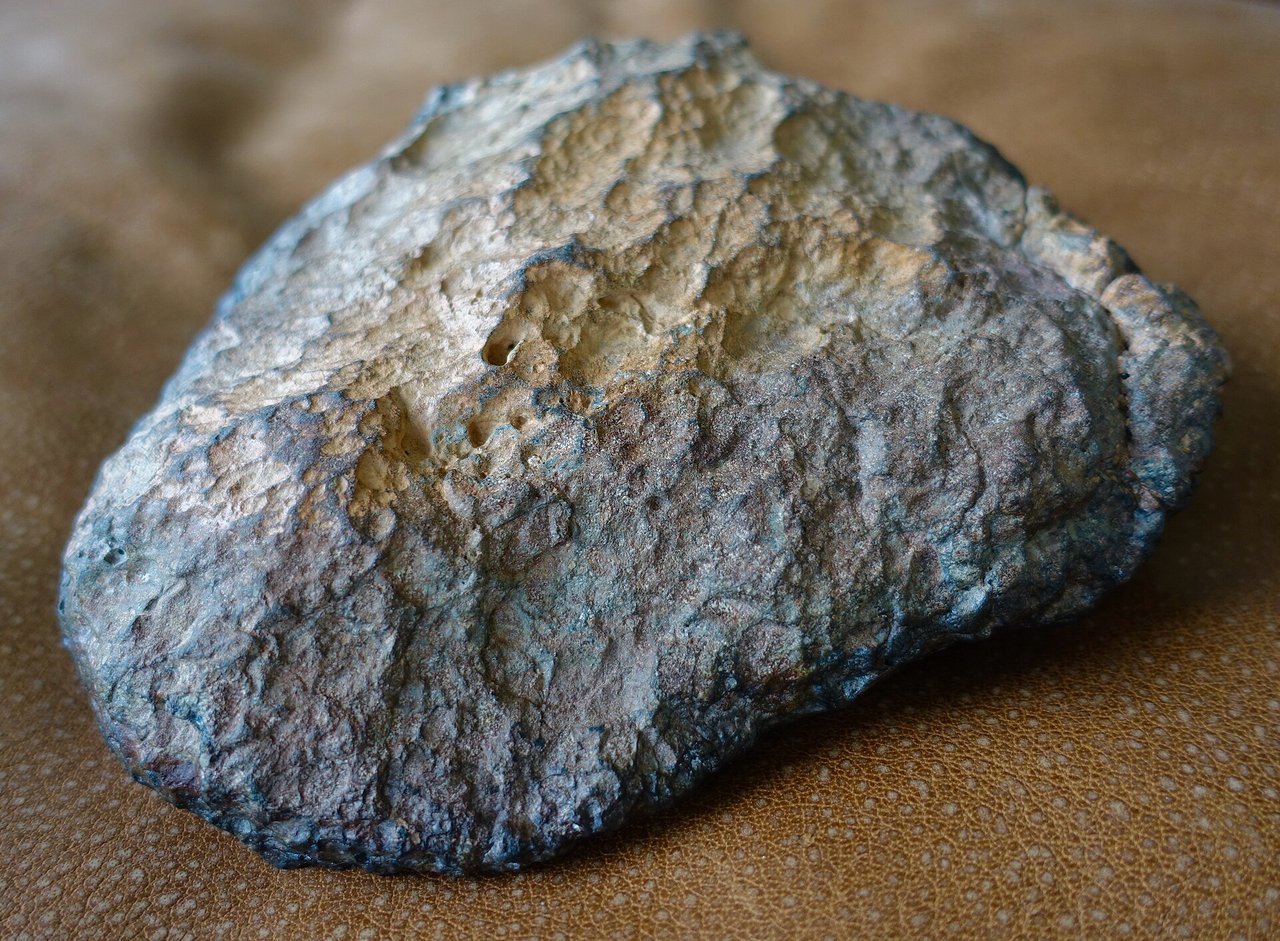
Some impact fragments entered resonant orbital routes toward Earth. Most HED meteorites—howardites, eucrites, and diogenites—are associated with Vesta, with over a thousand named samples. They represent mixed impact material, basaltic crust, and deeper rocks. Spectral comparisons suggested the relationship before Dawn strengthened it: laboratories already held pieces of this world.
Dawn’s visit
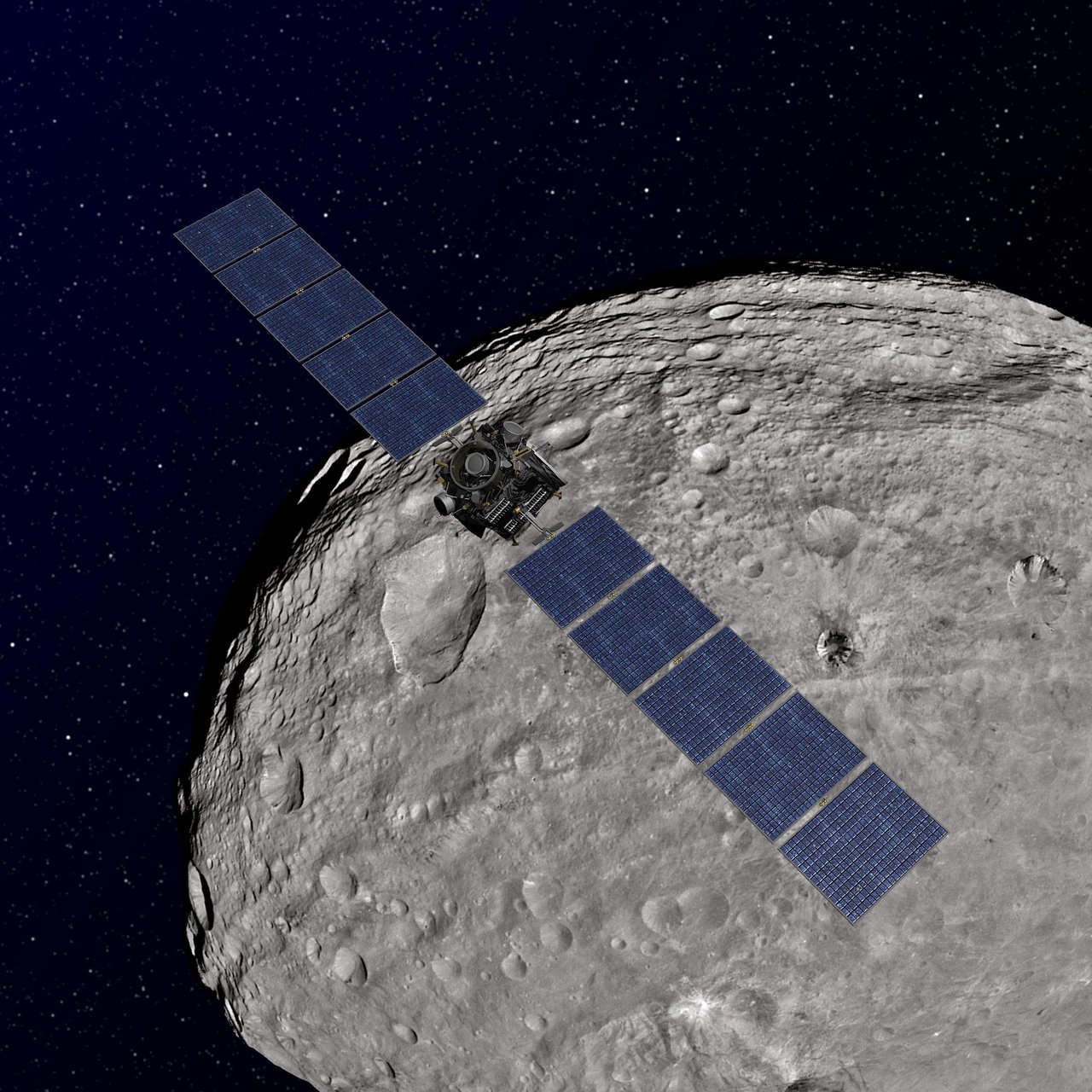
Dawn launched in September 2007 and entered Vesta orbit on July 16, 2011, the first orbiter of a main-belt body. Over fourteen months it descended to about 210 km, mapped the globe, returned tens of thousands of images, and investigated the core and meteorite connection. It departed for Ceres on September 5, 2012.