Fengyun weather satellites
China’s weather satellite family includes polar and geostationary series. More than twenty have launched since Fengyun 1A in 1988, monitoring typhoons and heavy rain and sharing data with over a hundred countries.
How do forecasters know whether a typhoon at sea is turning, strengthening, or weakening? Repeated cloud images from Fengyun satellites provide part of the answer.
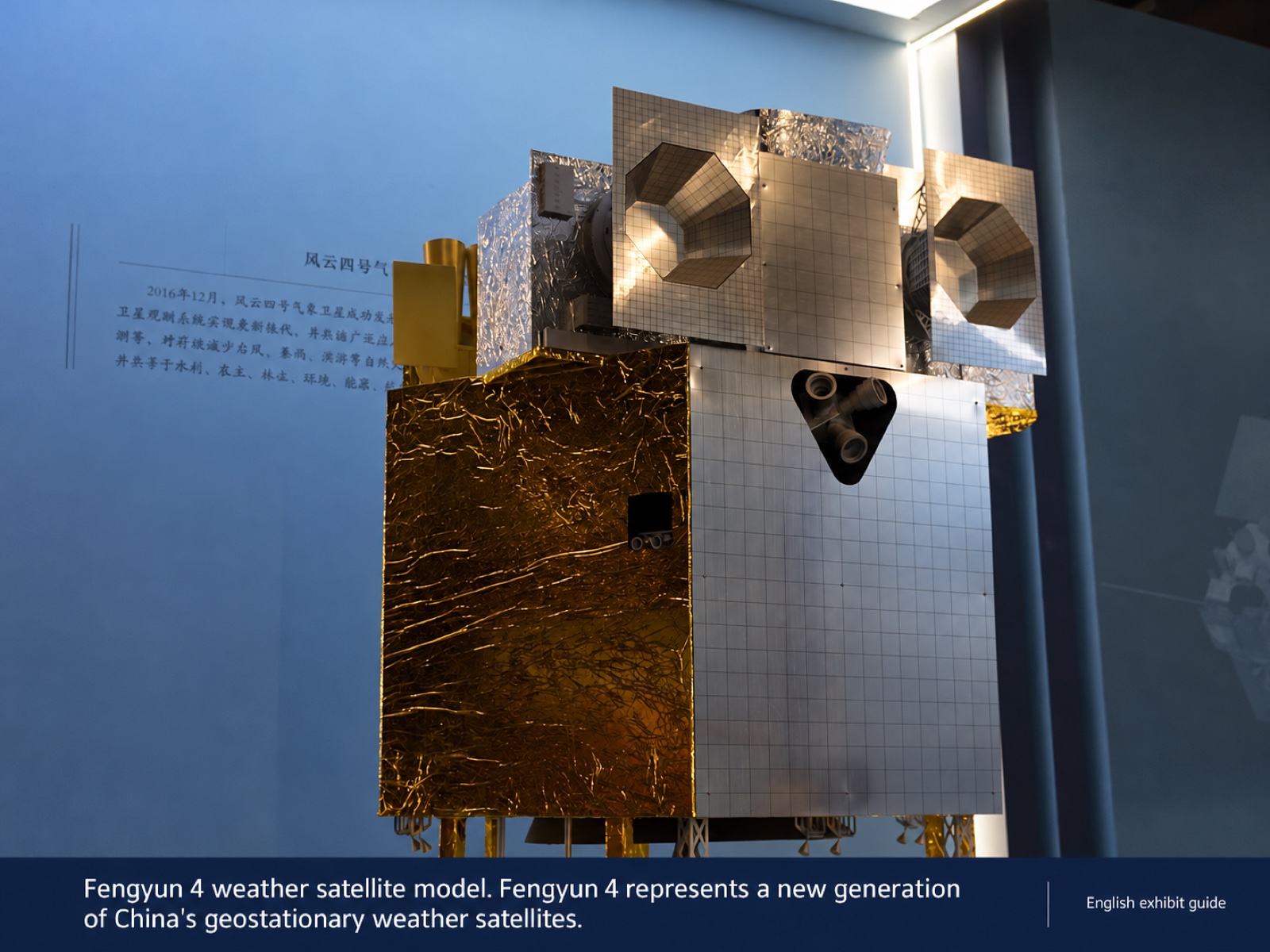
China’s Fengyun family includes the 1, 2, 3, and 4 series, working together to observe clouds, rain, wind, and lightning around the clock.
Why do some orbit while others seem stationary?
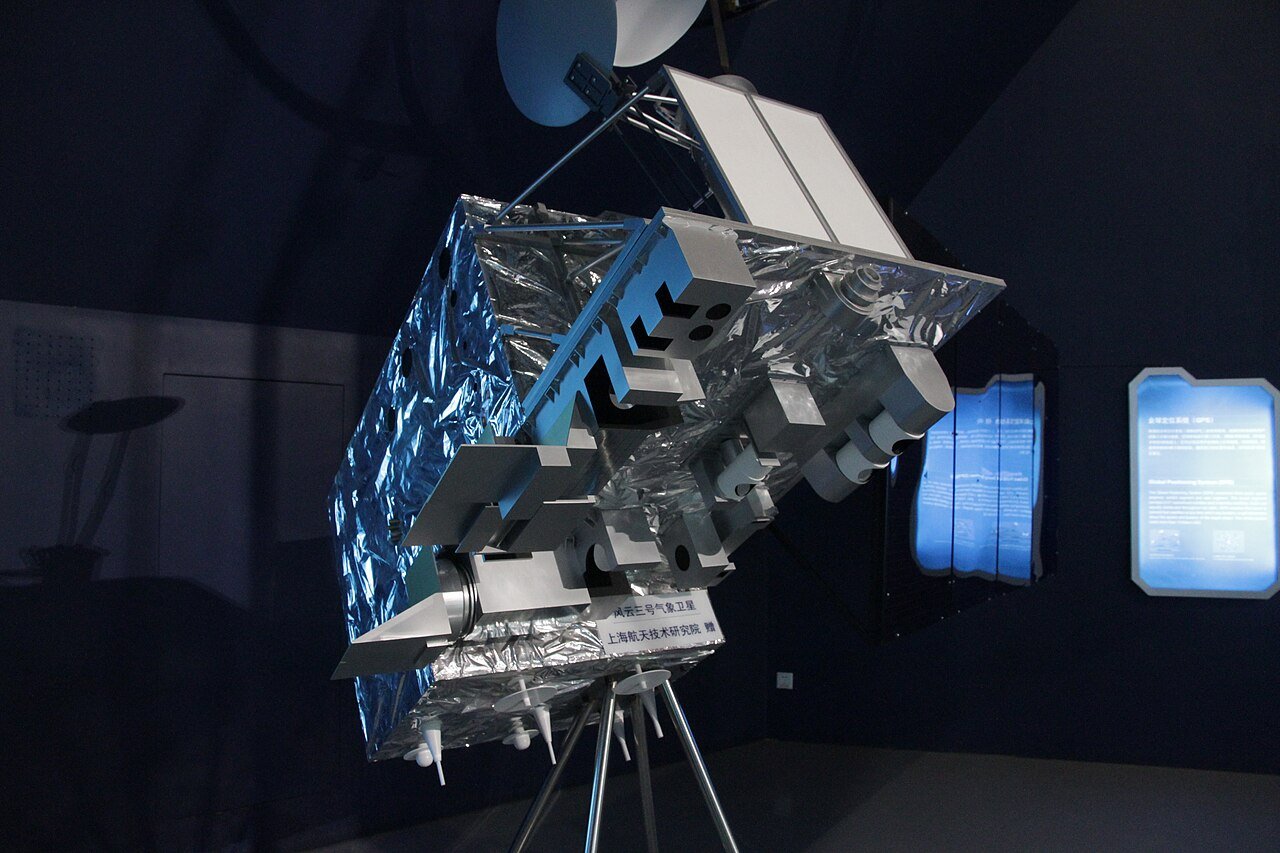
Odd-numbered series, such as Fengyun 1 and 3, generally use low polar orbits. Even-numbered series, including Fengyun 2 and 4, occupy geostationary orbit to watch the same region continuously.
At roughly 36,000 km above the equator, a geostationary satellite’s period matches Earth’s rotation. Polar satellites instead scan different regions on successive circuits.
In September 1988, a Long March 4A launched Fengyun 1A, China’s first polar weather satellite. The China Meteorological Administration operates the system, with several aerospace organizations contributing development.
How do they track typhoons and rainstorms?
Fengyun 2 and 4 frequently update cloud images, revealing storm rotation and movement. Fengyun 3 collects global atmospheric temperature, humidity, ocean, and land data. Fengyun 4A, launched in 2016, carried China’s first geostationary lightning imager.
Fengyun 3G, launched in 2023, was China’s first low-inclination precipitation-measurement satellite. It transmits signals into rain clouds and measures echoes to build vertical profiles of rainfall.
Could my phone forecast use Fengyun data?
Yes. Weather agencies combine Fengyun observations with other satellites, radar, and stations. A small weather icon reflects the work of many instruments and models.
Fengyun is included in the World Meteorological Organization’s global operational satellite system. Its shared data supports typhoon, heavy-rain, fire, water-vapor, and forecasting services internationally.
Did you know?
- Odd numbers generally scan the globe; even numbers watch from geostationary orbit.
- Fengyun is abbreviated FY, as in FY-1A or FY-4B.
- Weather imagery can also reveal sea temperatures, dust, snow, and fires.