Why don’t satellites fall down?
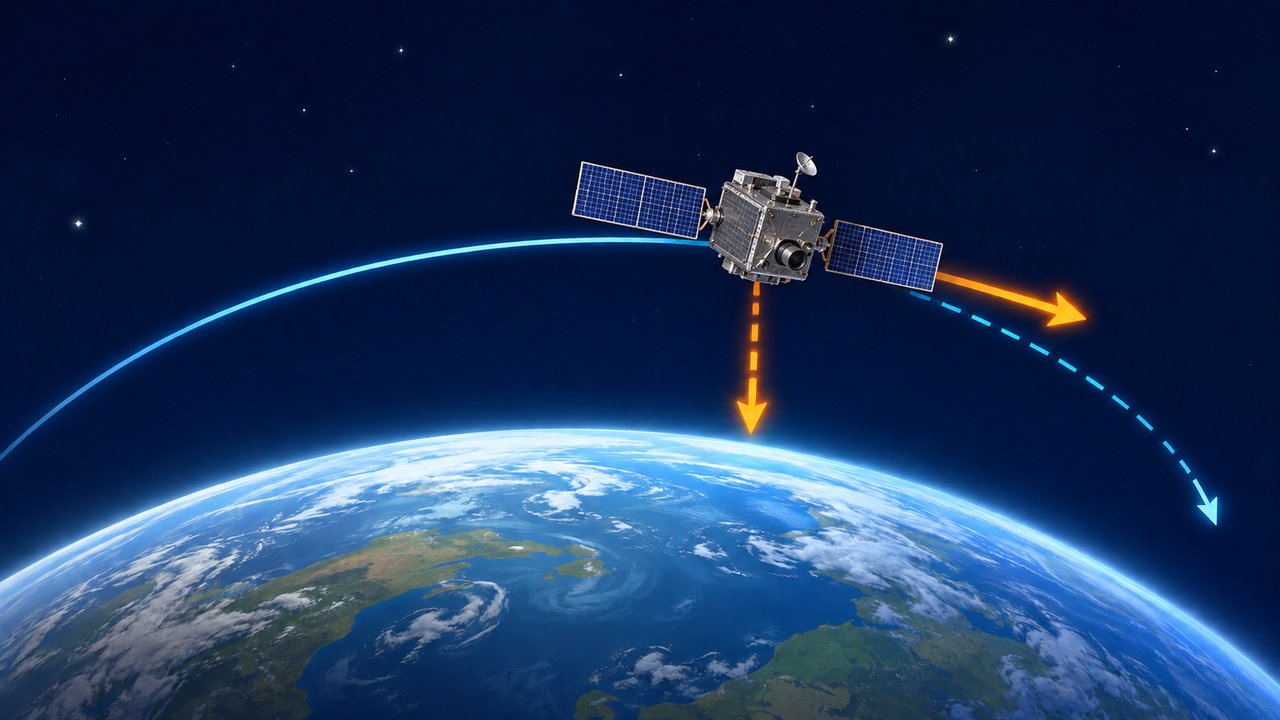
Satellites never escape gravity: they keep falling toward Earth. They move sideways so fast that the surface curves away beneath them, turning their fall into an orbit.
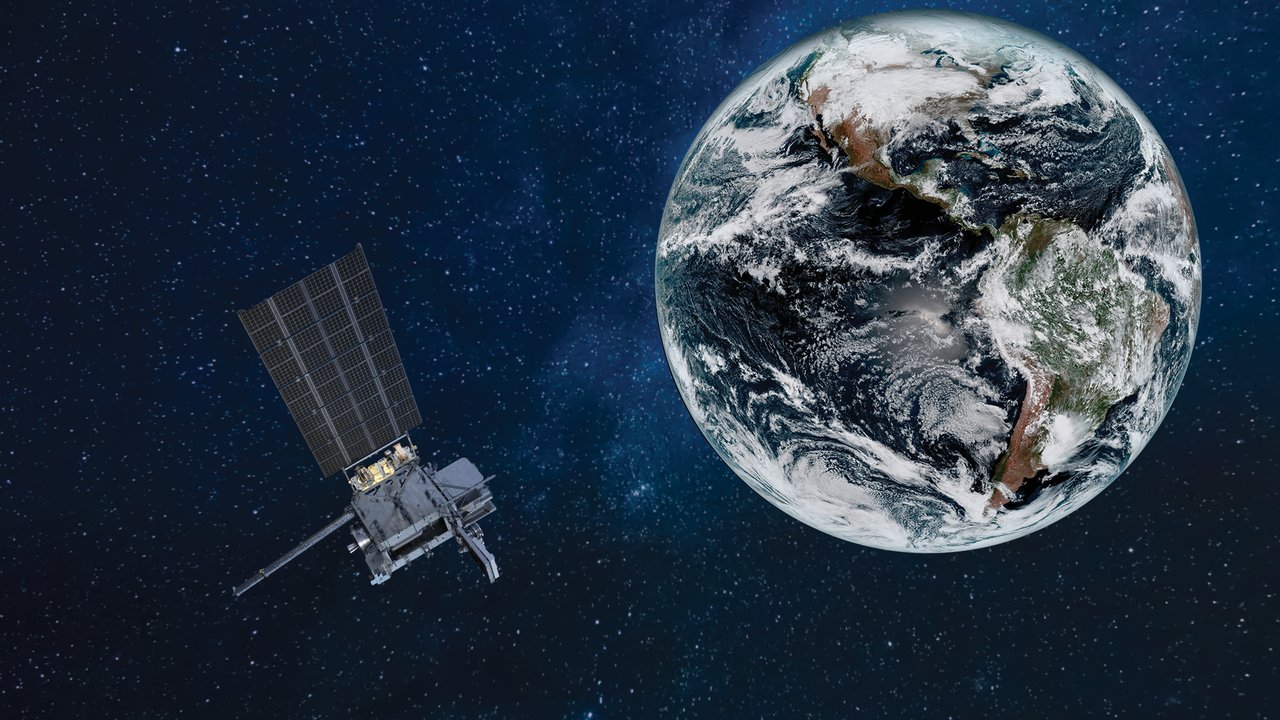
Throw a ball and it falls to the ground. Satellites also feel Earth’s gravity, so why do they stay up? The surprising answer is that satellites are always falling. They move forward fast enough that Earth’s curved surface falls away beneath them.
Why doesn’t a satellite fall straight down?
Imagine throwing a ball horizontally from a very high mountain. The faster you throw, the farther it travels before landing. At sufficient speed, its falling path matches Earth’s curvature: it keeps falling toward Earth without reaching the ground. This is orbital motion.
Must the engines run all the time?
Usually not. A rocket gives the satellite the appropriate altitude, speed, and direction. Once in orbit, inertia carries it onward. Engines and thrusters mainly adjust its orbit, avoid debris, and control its attitude, rather than running continuously like aircraft engines.
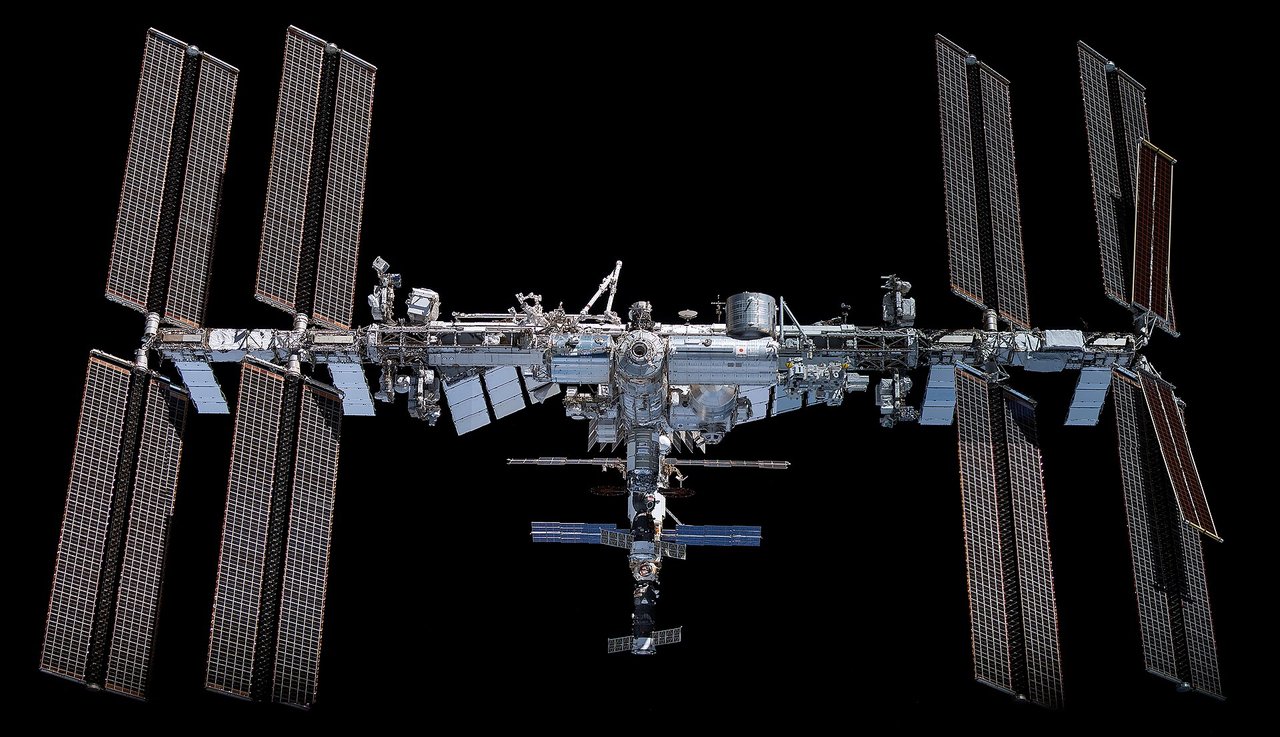
Low Earth orbit is not a perfect vacuum. Very thin air gradually slows the ISS and lowers its orbit, so visiting spacecraft or onboard thrusters periodically reboost it.
Does a higher orbit mean greater speed?
Usually the opposite: around the same body, lower orbits are faster. About 400 km up, the ISS travels roughly 7.7 km per second and circles Earth in about 90 minutes. Geostationary satellites are about 35,786 km above the ground and take nearly 24 hours.
Can anyone see satellites?
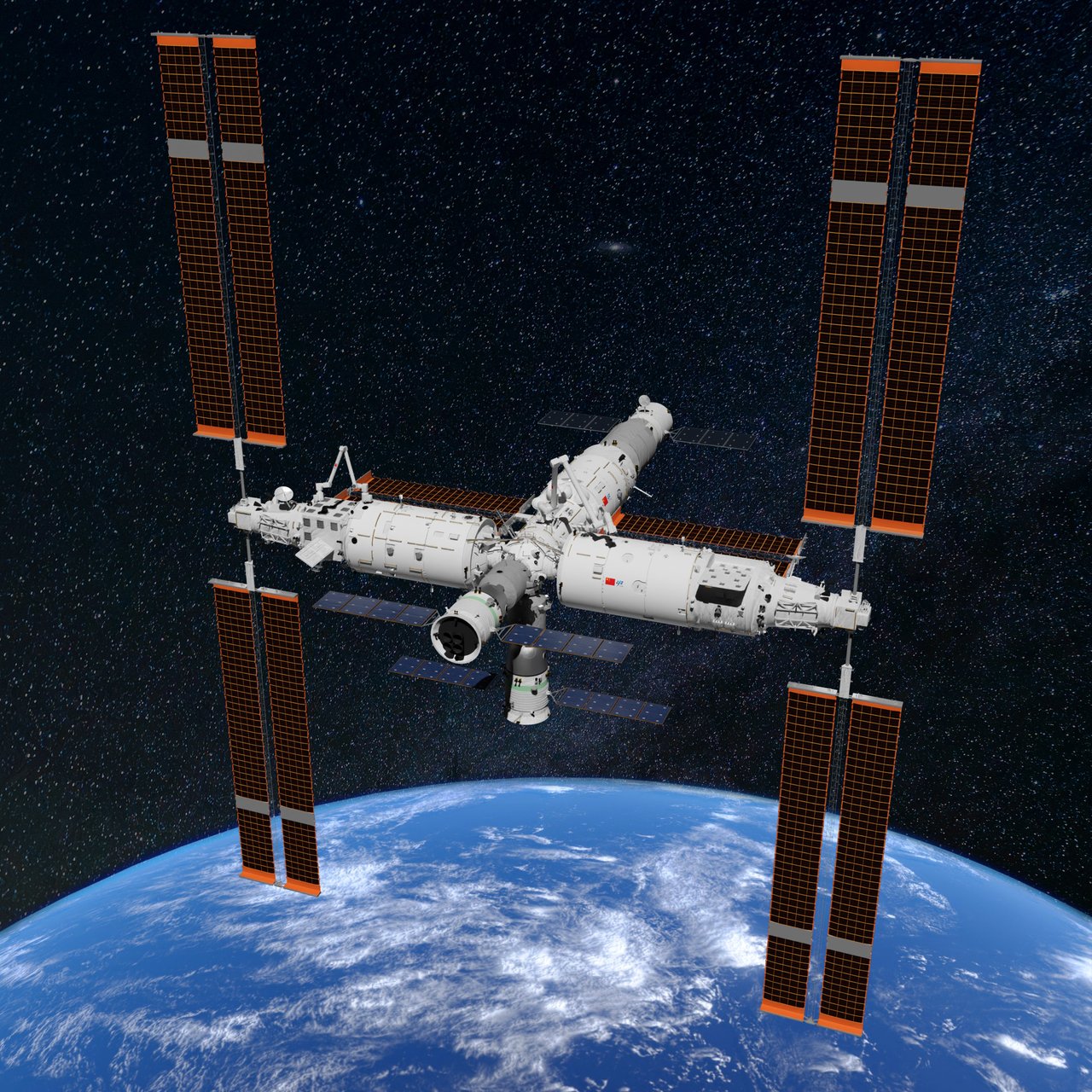
Yes. Shortly after sunset or before sunrise, the ground can be dark while satellites overhead remain sunlit. Reflected sunlight makes them look like steadily moving stars. Space stations and newly deployed formations can be especially noticeable; they have no colored navigation lights and usually do not flash like aircraft.
The next time a quiet point crosses the sky, remember: it is not a lamp parked overhead, but a machine continuously falling at tremendous speed.