Callisto: ancient history written in craters
Callisto is 4,821 km across, with an ancient, heavily cratered surface and the huge Valhalla multi-ring basin. A salty ocean may lie below the ice. Its location beyond Jupiter’s intense radiation belts makes it an attractive candidate for future human exploration.
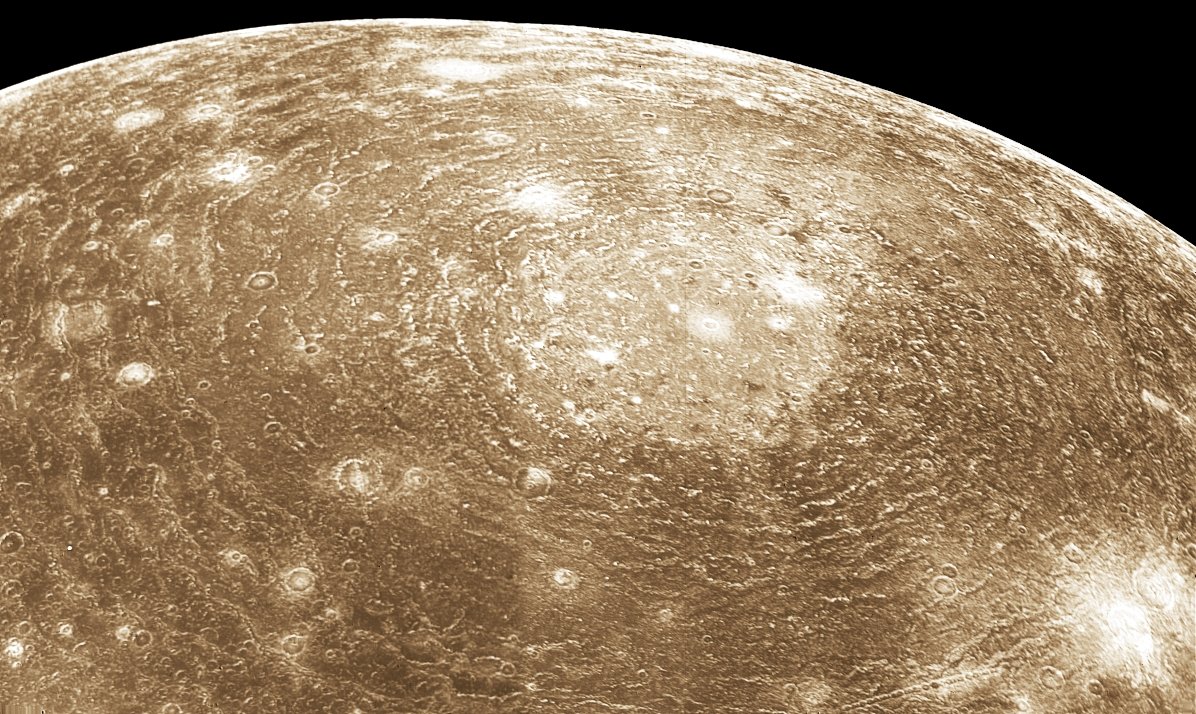
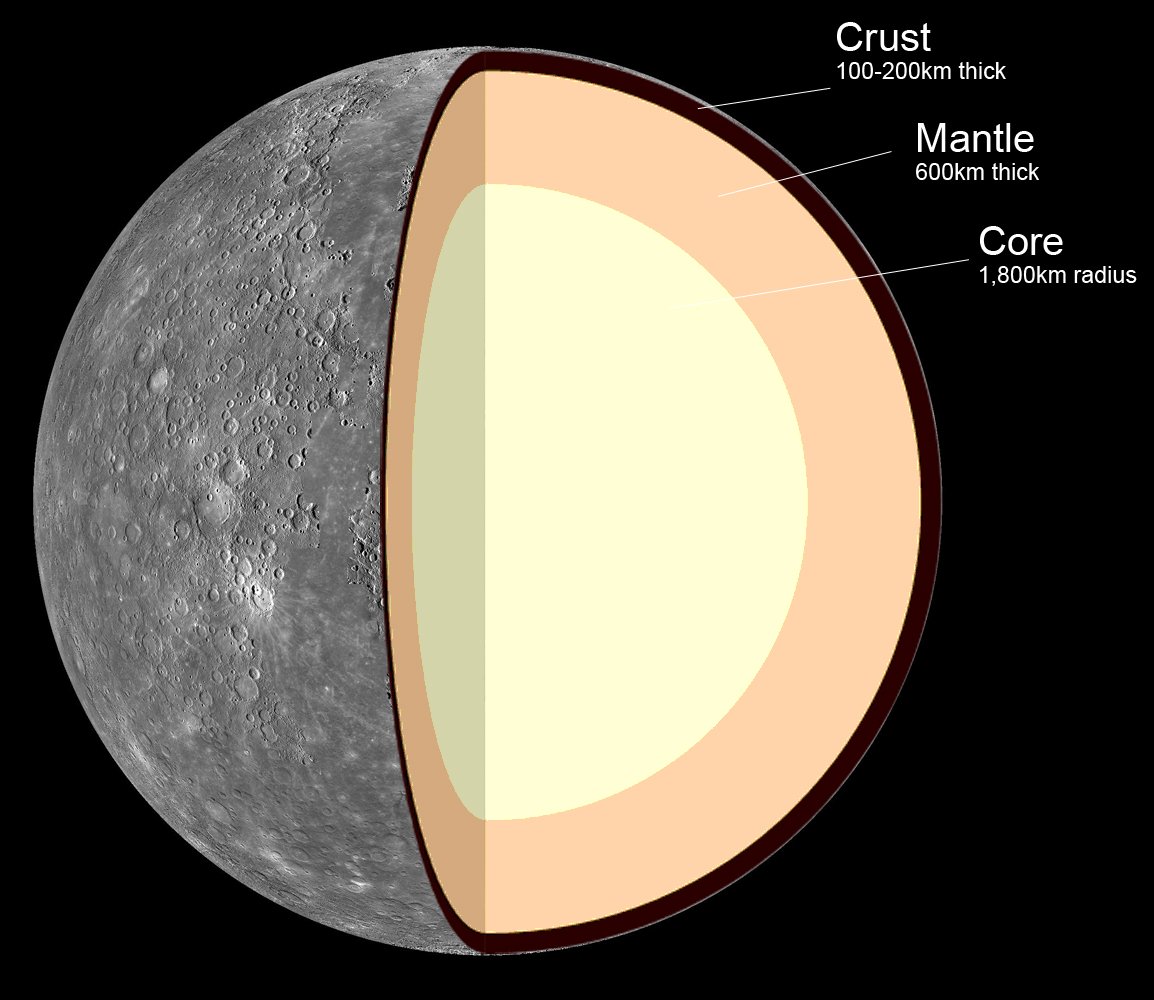
At 4,821 km across, Callisto approaches Mercury in size and is Jupiter’s second-largest moon and the solar system’s third-largest. Galileo discovered it in January 1610. The outermost Galilean moon is comparatively quiet, without known active volcanoes or great plumes, but its surface records an extraordinary impact history.
An ancient, saturated surface
Callisto orbits about 1.88 million km from Jupiter in 16.7 Earth days. Weak tidal heating allowed geology to quiet early. Its surface is over four billion years old and nearly saturated with craters, new impacts often overlapping older ones. Bright young scars contrast with dark ancient terrain, averaging roughly −139°C.
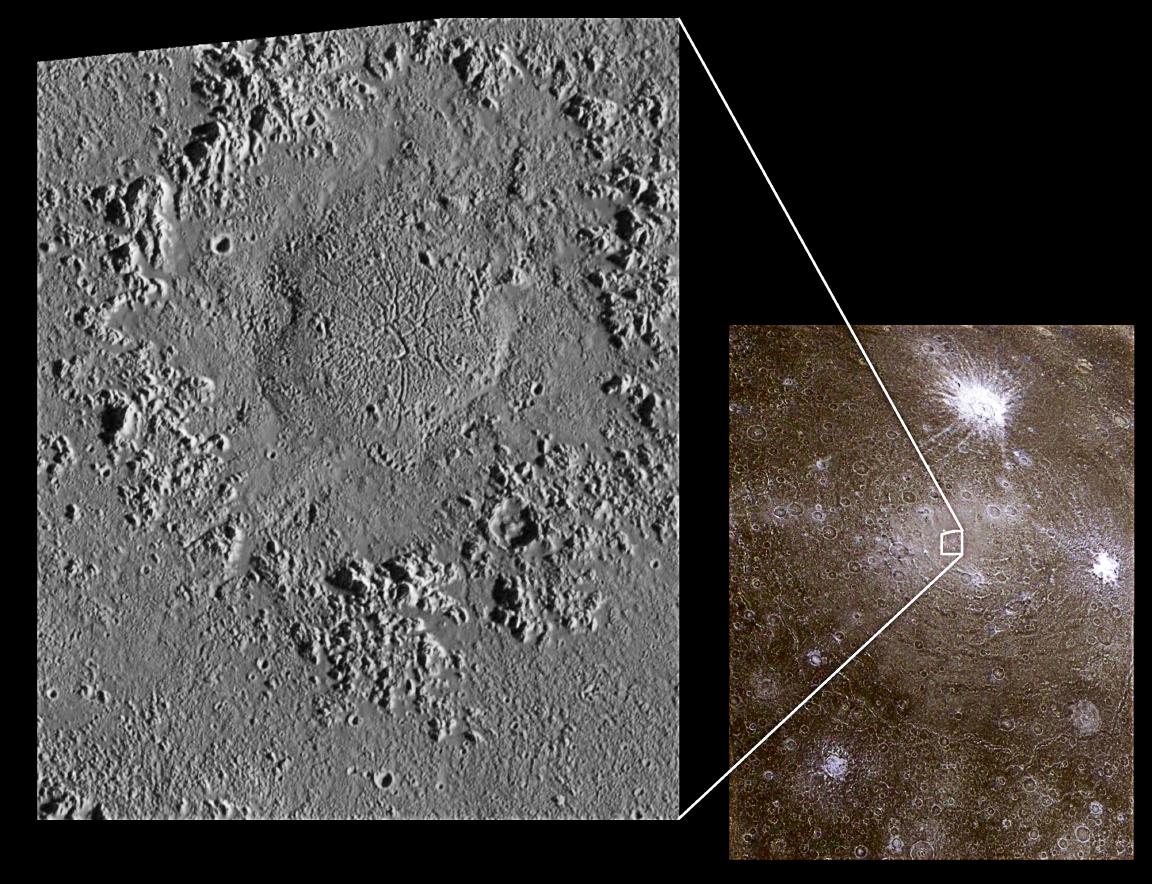
Valhalla’s concentric rings
A bright central region about 600 km wide is surrounded by rings spanning nearly 3,800 km. This vast multi-ring basin formed when an ancient impact sent ripples through the icy crust, leaving lasting concentric structures.
Ice, a possible ocean, and a mixed interior
Its density around 1.83 g/cm³ suggests roughly comparable amounts of rock and ice. Unlike fully differentiated Ganymede, Callisto may retain a gradual ice–rock mixture, with more rock at depth. Beneath a roughly 100–200 km ice shell may lie a salty subsurface ocean. Its carbon-dioxide atmosphere is exceedingly thin.
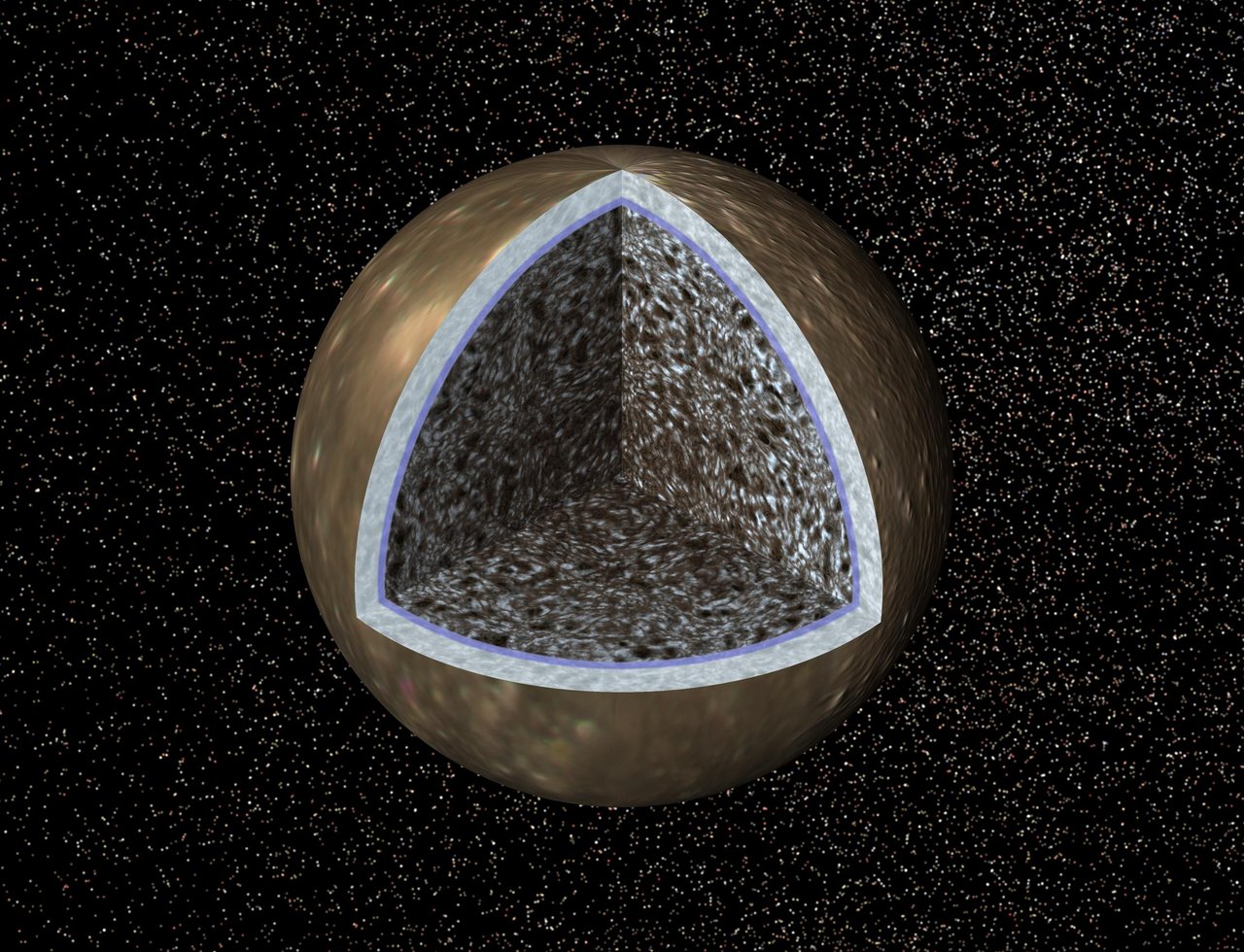
Clues to an ocean
Galileo flybys in 1996–1997 measured a magnetic response varying with Jupiter’s field. A conductive liquid layer, perhaps over 10 km deep, is a plausible explanation. Reanalysis strengthens the case, though the ionosphere may contribute. Its status as an ocean world remains unconfirmed.
Could people build a base?
Lower radiation than at Europa, stable terrain, and water ice make Callisto attractive. Gravity is about one-eighth Earth’s: a 40 kg child would exert the weight associated with roughly 5 kg on Earth.
Yet there is no breathable atmosphere, the cold is extreme, and supplies must cross hundreds of millions of kilometers. Any base would need sealed or underground habitats.
A possible deep-space outpost
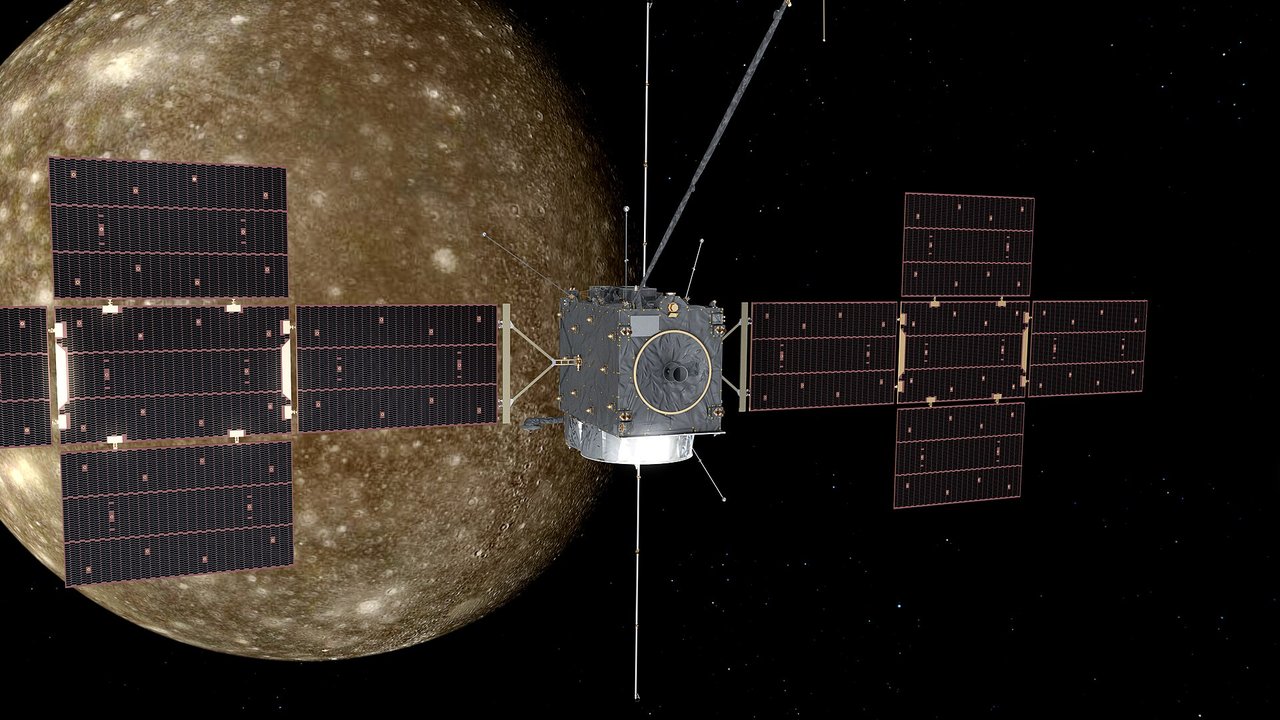
NASA’s early-2000s HOPE concept considered crewed exploration near Callisto. ESA’s JUICE, launched in April 2023 and due at Jupiter in July 2031, will make repeated flybys to investigate its possible ocean.