Eurybates: an elder in a collision family
Why is its color different from many neighbors ahead of Jupiter? Lucy will investigate whether an ancient collision exposed secrets from within.
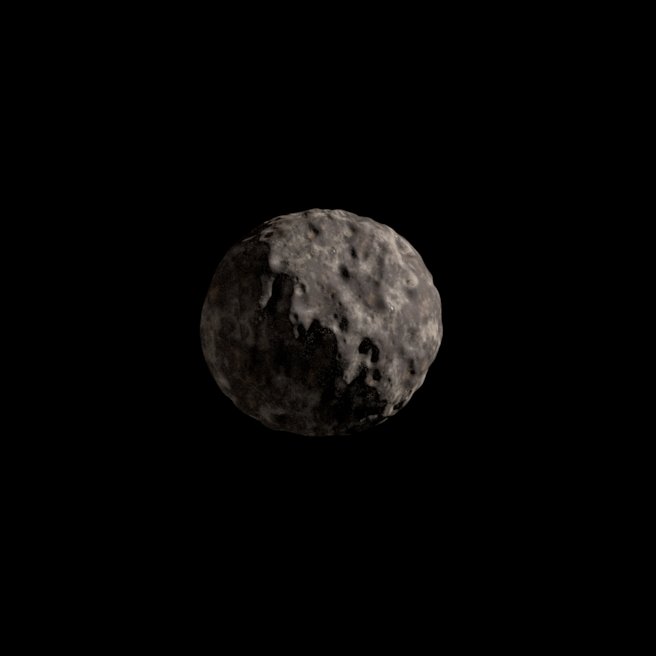
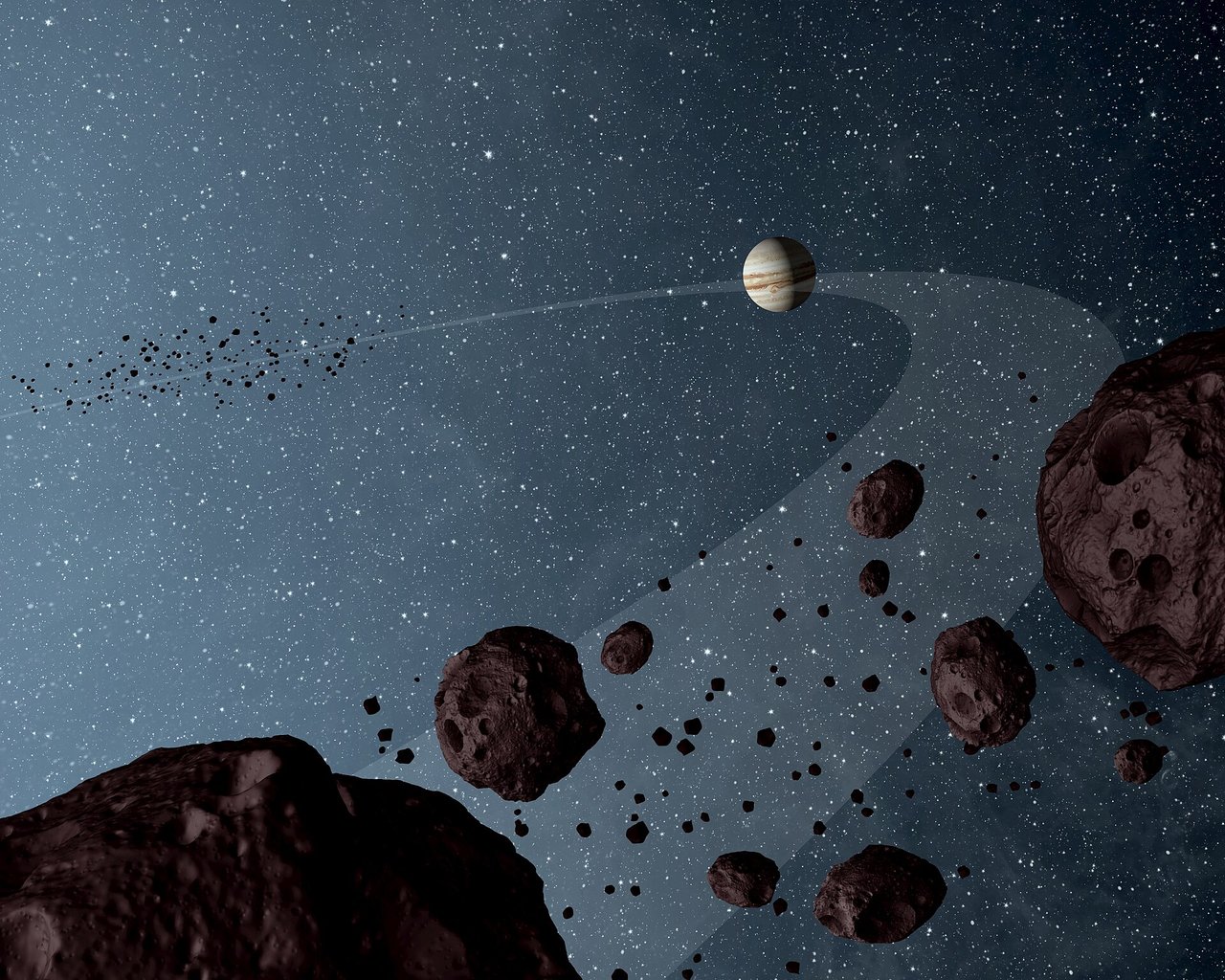
Eurybates is a Jupiter Trojan orbiting the Sun with a period similar to Jupiter’s, not a moon orbiting the planet. It belongs to the leading L4 swarm, like a runner spaced ahead on the same track.
A collision family
Asteroids with related orbits and properties can be fragments of a common parent. Eurybates is a prominent member of a Trojan collision family, a large surviving piece of the puzzle.
What does a grayer color reveal?
Its C-type spectrum is more neutral than many reddish Trojans. Splitting reflected light into wavelengths reveals absorption patterns. Did an impact expose deeper material, or did the surface evolve differently? These remain questions.
A tiny companion
Hubble discovered its moon Queta, useful both as a target and for measuring system mass. Lucy is scheduled to visit the pair in 2027.
Can we map it yet?
No flyby-resolution surface map exists yet. The cover is a mission-team illustration, not evidence for particular craters. Close images will test and revise current ideas.