Hygiea: did a collision make it round?
The main belt’s fourth-largest body is its largest carbonaceous asteroid. Very Large Telescope observations in 2019 found it nearly spherical, perhaps after reassembly following a giant impact about two billion years ago, making it a candidate for the smallest dwarf planet.
Can dark rubble be shattered and then reassemble into a round world? Hygiea may have done exactly that. About 434 km across, it is the fourth-largest main-belt body and largest carbonaceous asteroid. Clear images in 2019 raised the question of whether it qualifies as the smallest dwarf planet.
A carbonaceous giant
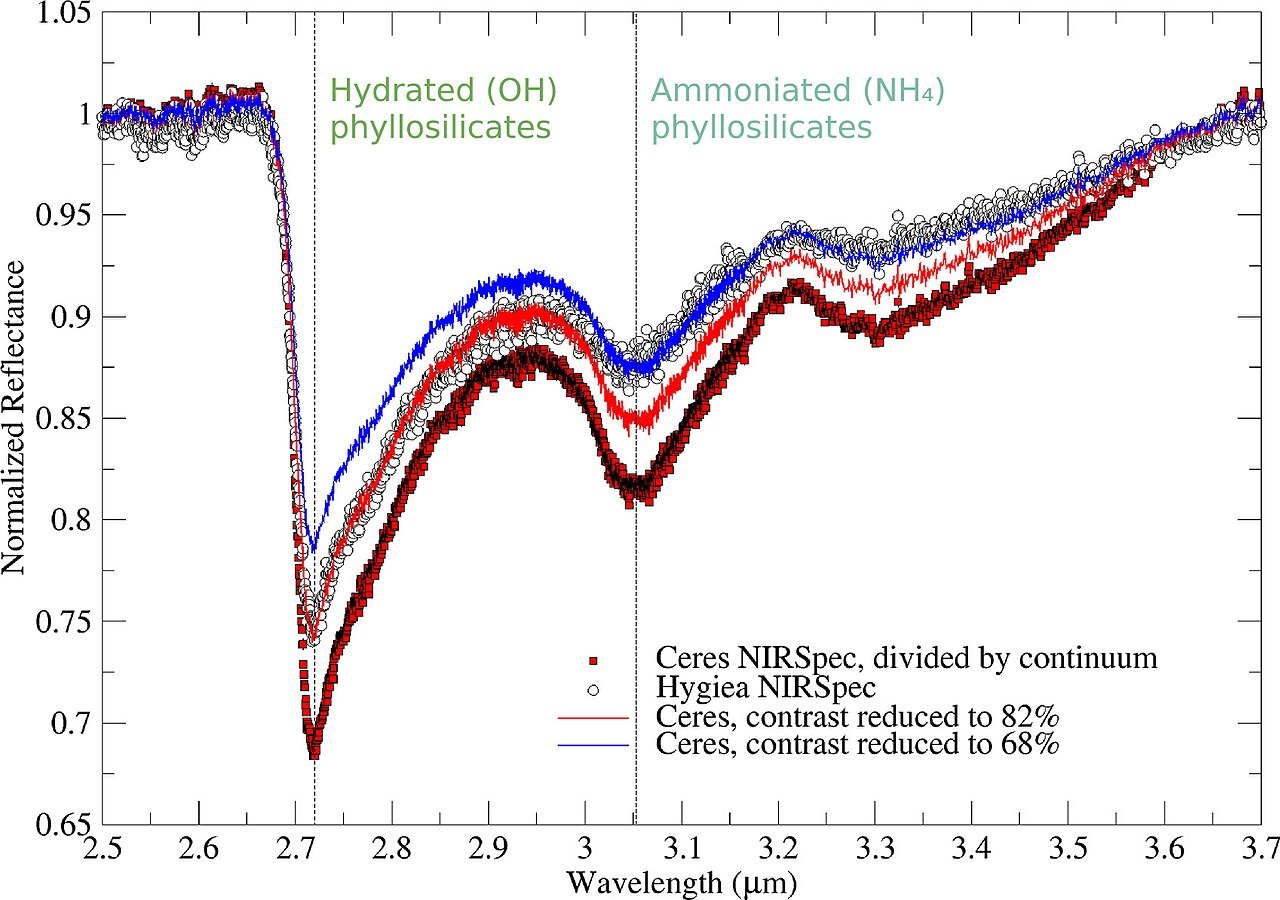
C-type asteroids make up much of the main belt. Hygiea’s carbon-rich material and hydrated minerals give it an albedo around 0.07, so despite its size it appears faint. Webb near-infrared spectra reveal hydrated phyllosilicates, useful for studying early water and organics.
Discovery and orbit
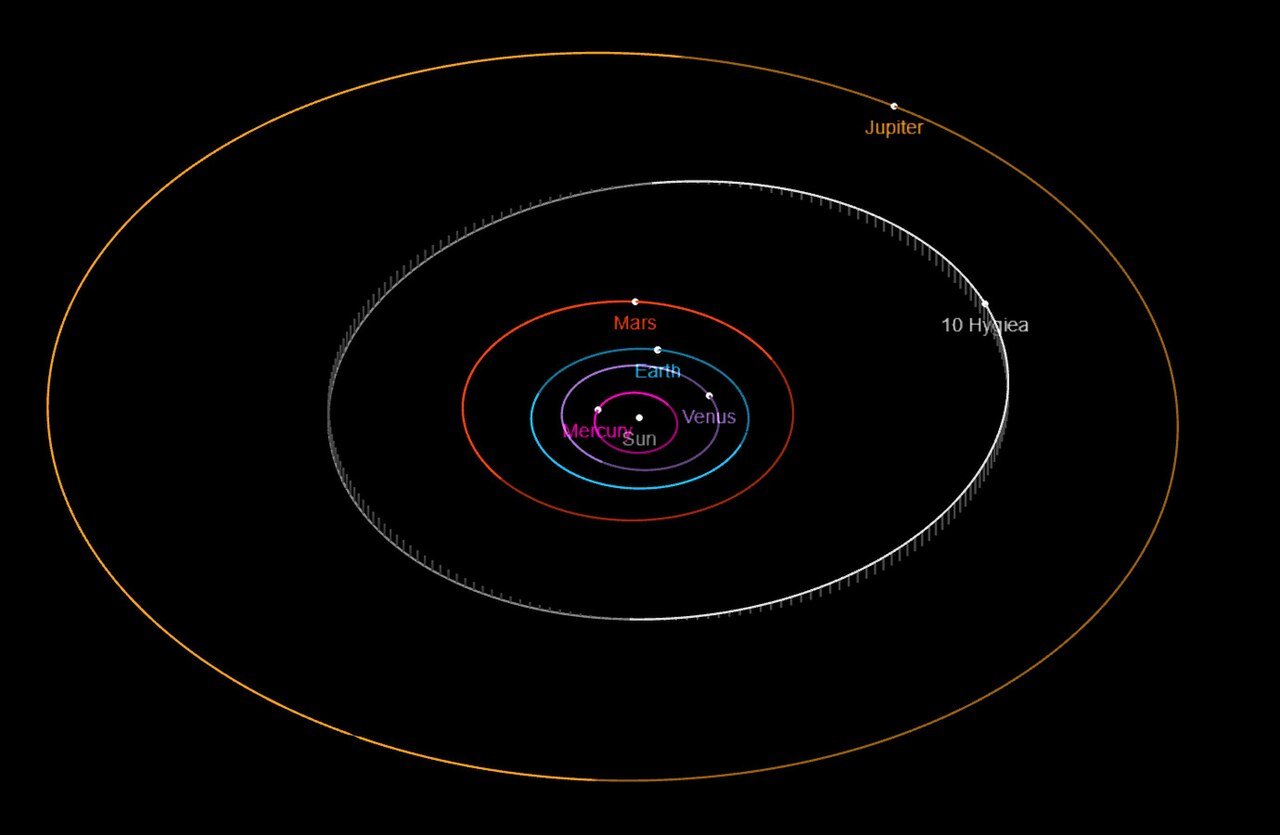
Annibale de Gasparis discovered asteroid 10 in Naples on April 12, 1849, naming it after the Greek goddess of health. Its inclination is about 3.8° and eccentricity around 0.12. Its rotation, long estimated at 27.6 hours, was revised in 2020 to 13.8 hours after resolving ambiguity in the repeating light curve.
Rounded by an ancient collision?
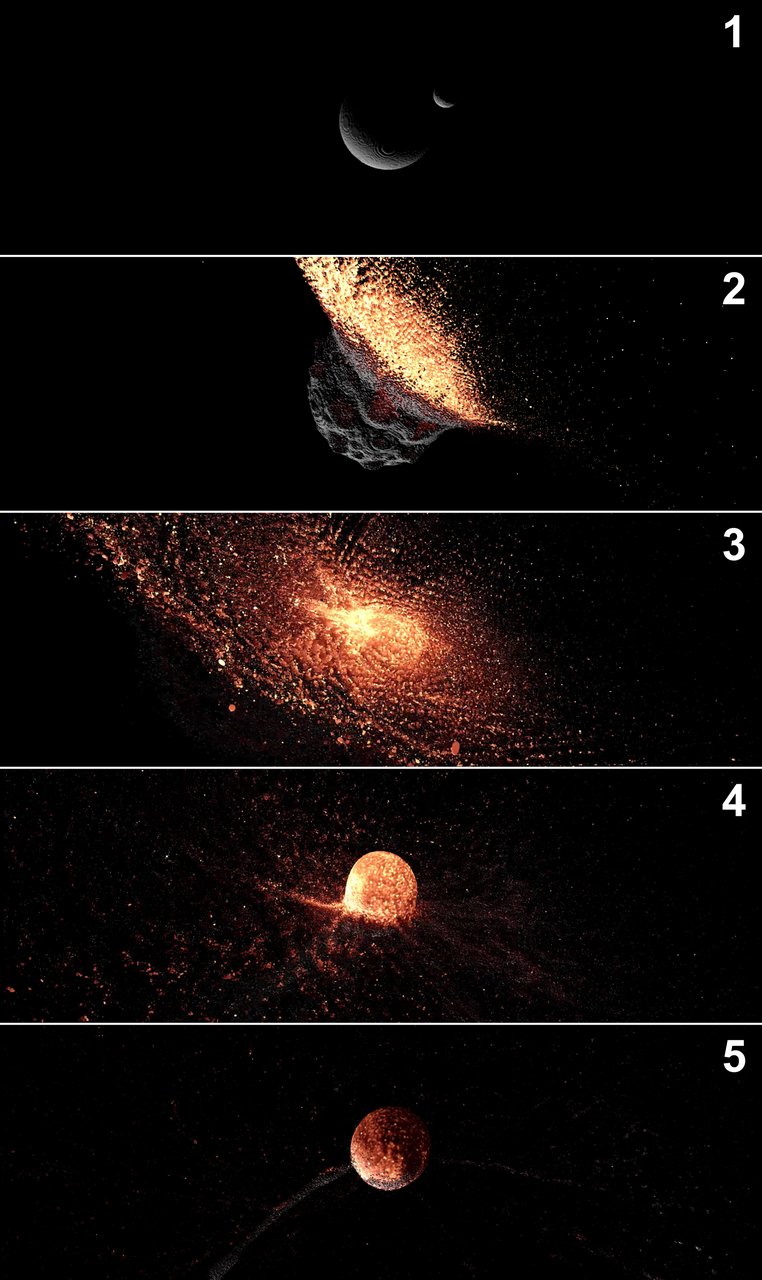
A 2019 Nature Astronomy study found a nearly spherical body but no enormous basin matching the collision that formed its asteroid family. Simulations suggest that about two billion years ago, a roughly 100 km impactor disrupted Hygiea. Most fragments remained gravitationally bound and reassembled into today’s round shape; escaping debris formed the family.
An interior rebuilt from fragments
Its density around 2 g/cm³ suggests pores rather than a solid monolith. It may contain loosely reassembled blocks beneath impact breccia. Later impacts left craters roughly 100 and 180 km wide.
Is it a dwarf planet?
A dwarf planet orbits the Sun, is not a moon, has not cleared its neighborhood, and is massive enough for a near-round hydrostatic equilibrium shape. The question is whether Hygiea’s roundness reflects that equilibrium or its reassembly history. The IAU has not formally added it to the recognized list.
Surface gravity may be around 1% of Earth’s. A jump would rise high, but escape still requires sufficient speed. There is no breathable atmosphere or safely familiar ground.