Mars: traces of water in a red desert
Why does Mars look rusty? Its dust is rich in iron oxides. Giant volcanoes, long canyons, and ancient riverbeds make it a prime destination for studying past water and imagining future human landings.
Mars has a creamy orange daytime sky, and the Sun looks about two-thirds its apparent size from Earth. The fourth planet is about 6,779 km across, with a year of 687 Earth days and a familiar 24.6-hour day.
A rusty planet
Its rocks and dust are rich in iron oxides. Reactions involving iron, water, and oxygen left a reddish coating that dust storms spread across the sky.
The atmosphere has less than 1% of Earth’s pressure and is about 95% carbon dioxide. It retains little heat: average temperatures are around −60°C, with polar winter nights near −120°C.
Olympus Mons and Valles Marineris
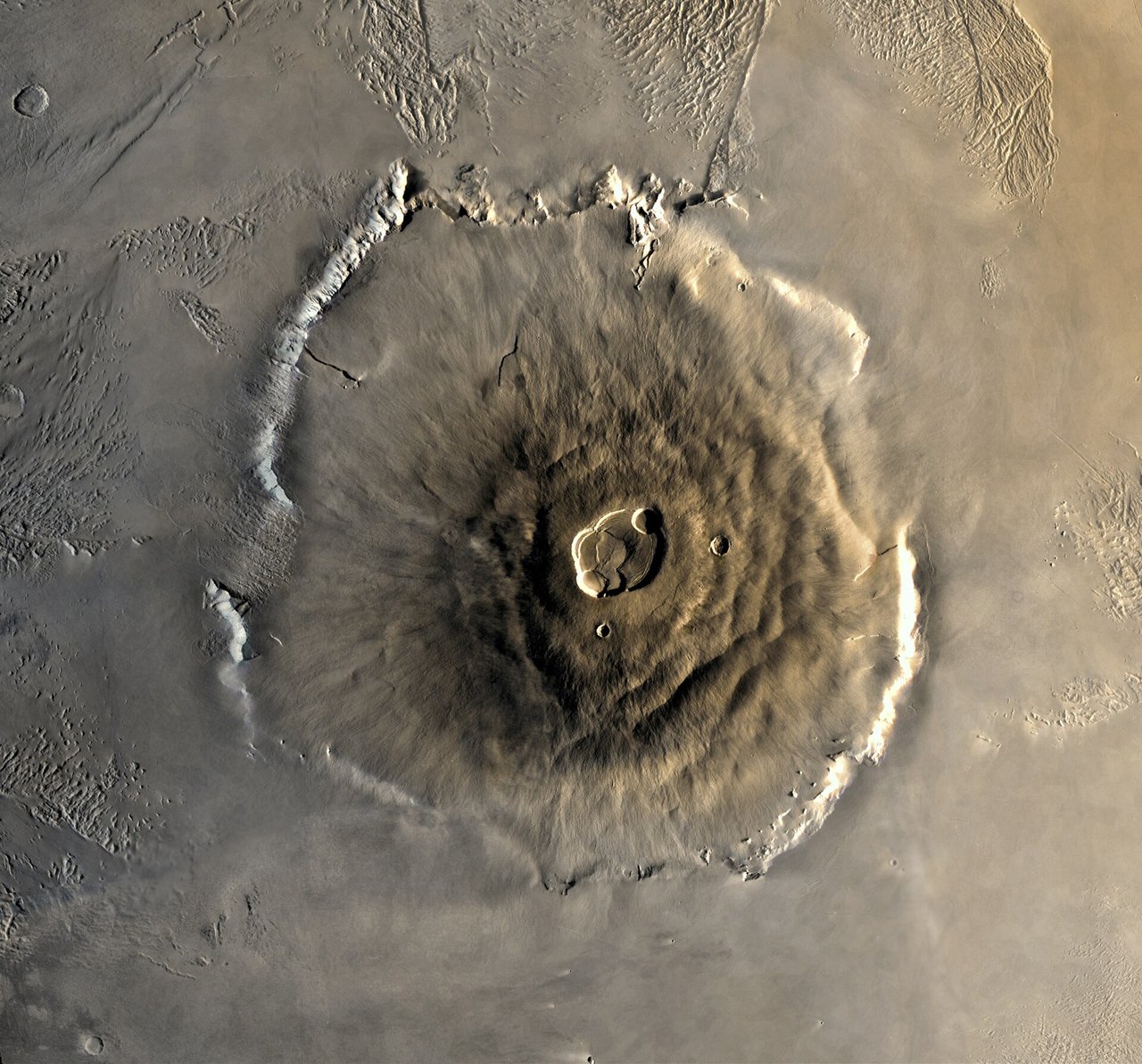
Olympus Mons rises about 21.9 km above surrounding plains, more than twice Everest’s height, and spans roughly 600 km. Without moving plates, repeated eruptions built a huge shield volcano over a long-lived hotspot.
Valles Marineris extends over 4,000 km and reaches about 7 km deep. Crustal stretching associated with the Tharsis rise opened it, with erosion widening the canyons.
Polar caps and traces of water
Winter dry ice covers the poles; summer exposes persistent water ice. Dry valleys, lake deposits, and deltas record past flowing water.
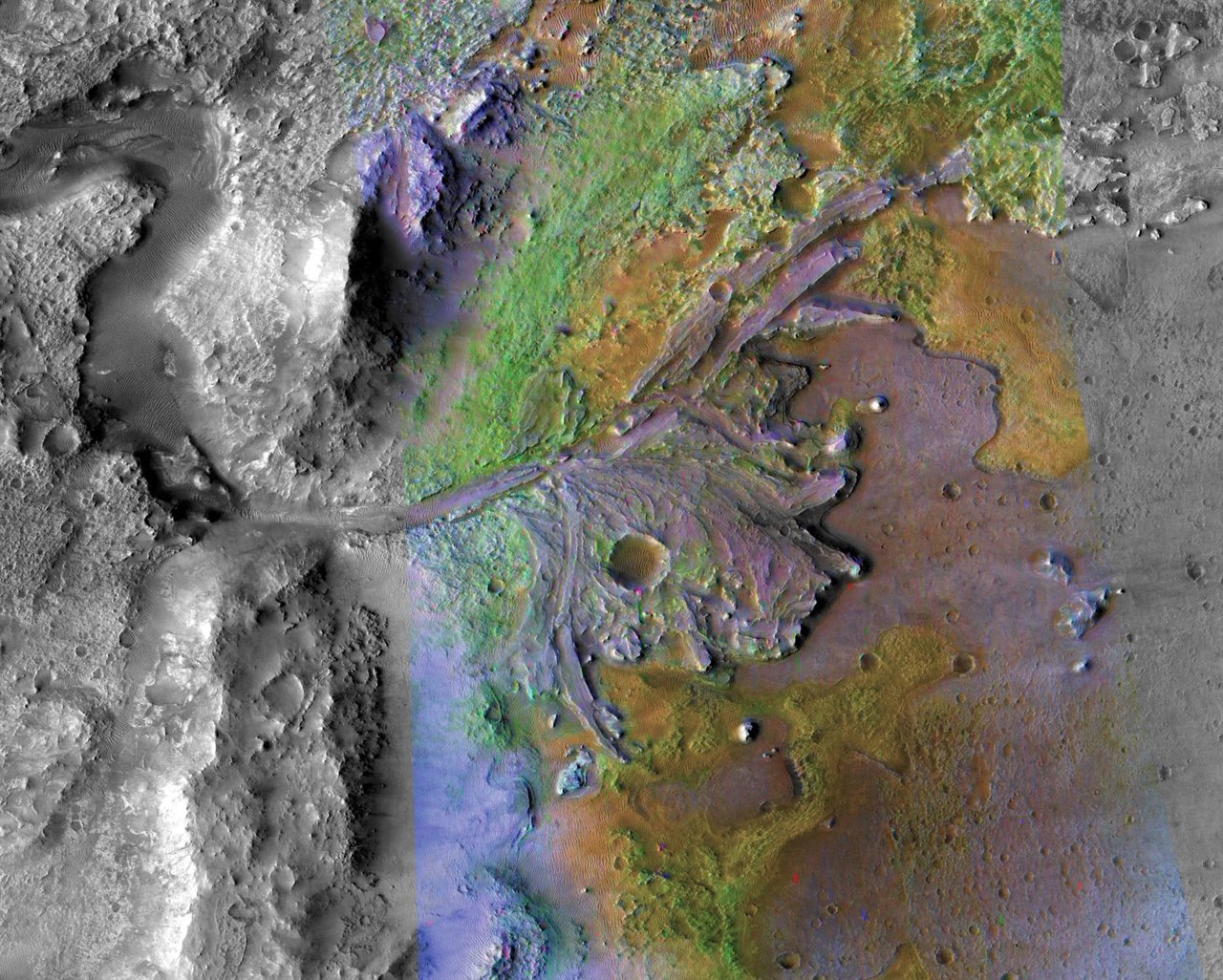
Jezero’s preserved delta shows that rivers flowed on Mars around 3.5 billion years ago under wetter conditions.
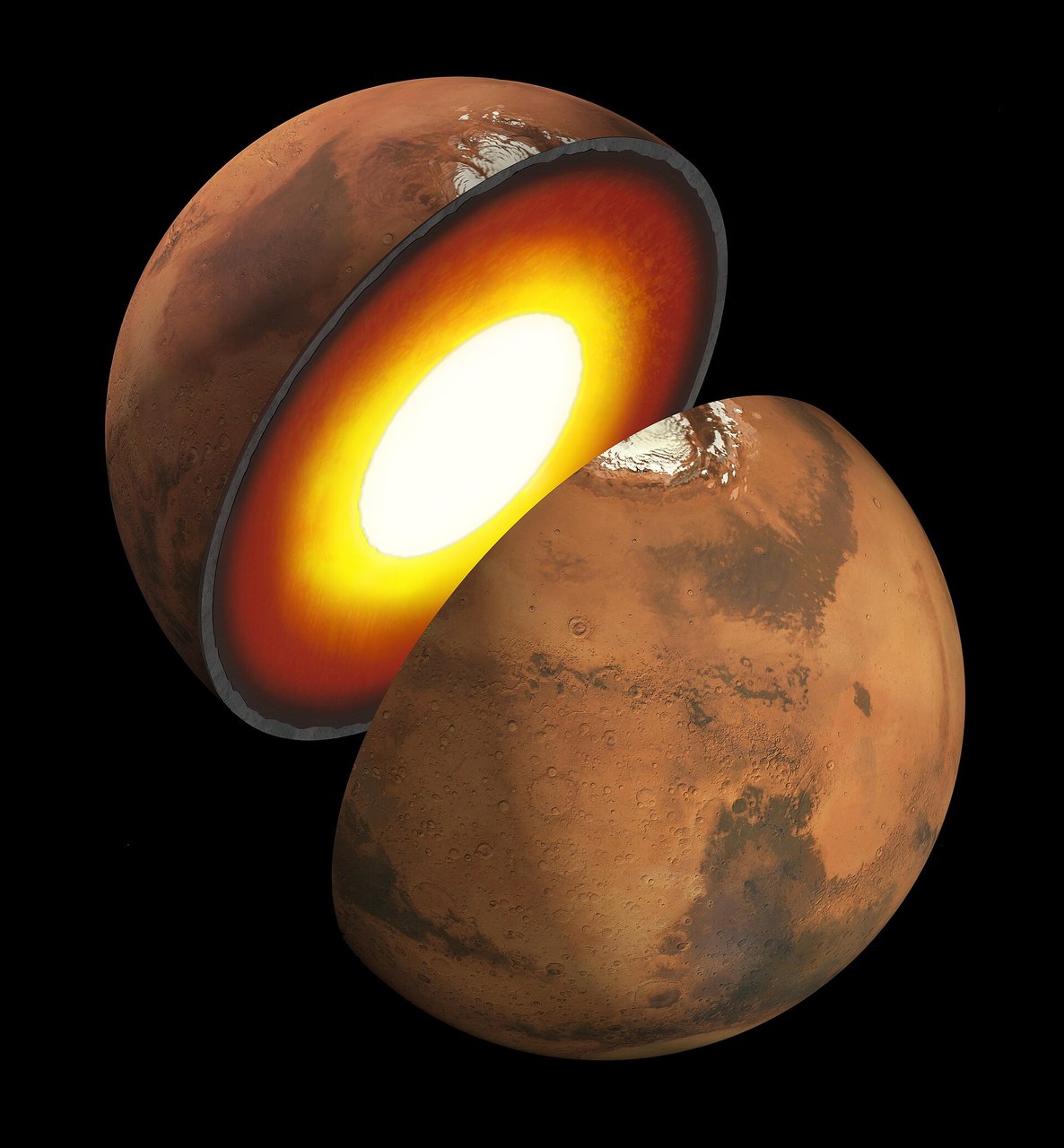
Inside Mars
InSight’s marsquake measurements reveal a layered world: a crust roughly 24–72 km thick, a mantle, and a largely molten iron–nickel–sulfur core originally estimated at about 1,830 km in radius.
Mars once had a global magnetic field. Its disappearance around four billion years ago left the atmosphere more exposed to solar-wind erosion, contributing to today’s cold desert.
From Viking to Zhurong
Viking 1 landed successfully on July 20, 1976. Curiosity reached Gale Crater by sky crane in 2012 and found evidence for a freshwater lake once suitable for microbes.
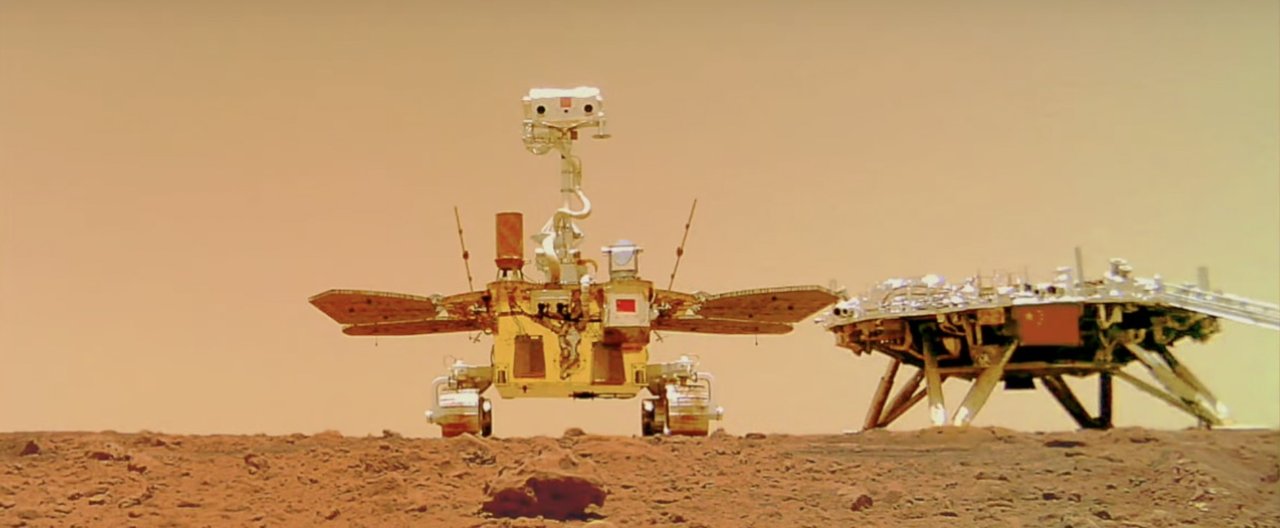
Perseverance landed in Jezero in February 2021, collected samples, and deployed Ingenuity, the first helicopter on another world. On May 15, 2021, Zhurong landed with Tianwen-1, making China the second country to operate a Mars rover successfully.
Could people live there unaided?
No. The thin carbon-dioxide atmosphere requires pressure suits and life support. Cold, radiation, dust, and low gravity complicate long stays.
Habitats would resemble sealed laboratories, recycling air and water and shielding against radiation with walls, soil, or underground space. Growing plants requires controlled water, nutrients, temperature, and treatment of potentially harmful perchlorates.
When will people go?
Several organizations study crewed missions, but no firm landing date is established. Transit radiation, long microgravity exposure, heavy landing systems, and safe return all require validation. The first footprints depend on engineering progress, not simply a timetable.