Pallas: an unusually tilted orbit
The second asteroid discovered, in 1802, is the main belt’s third-largest body. Its orbit is inclined by about 35°, its surface is heavily cratered, and no spacecraft has visited it.
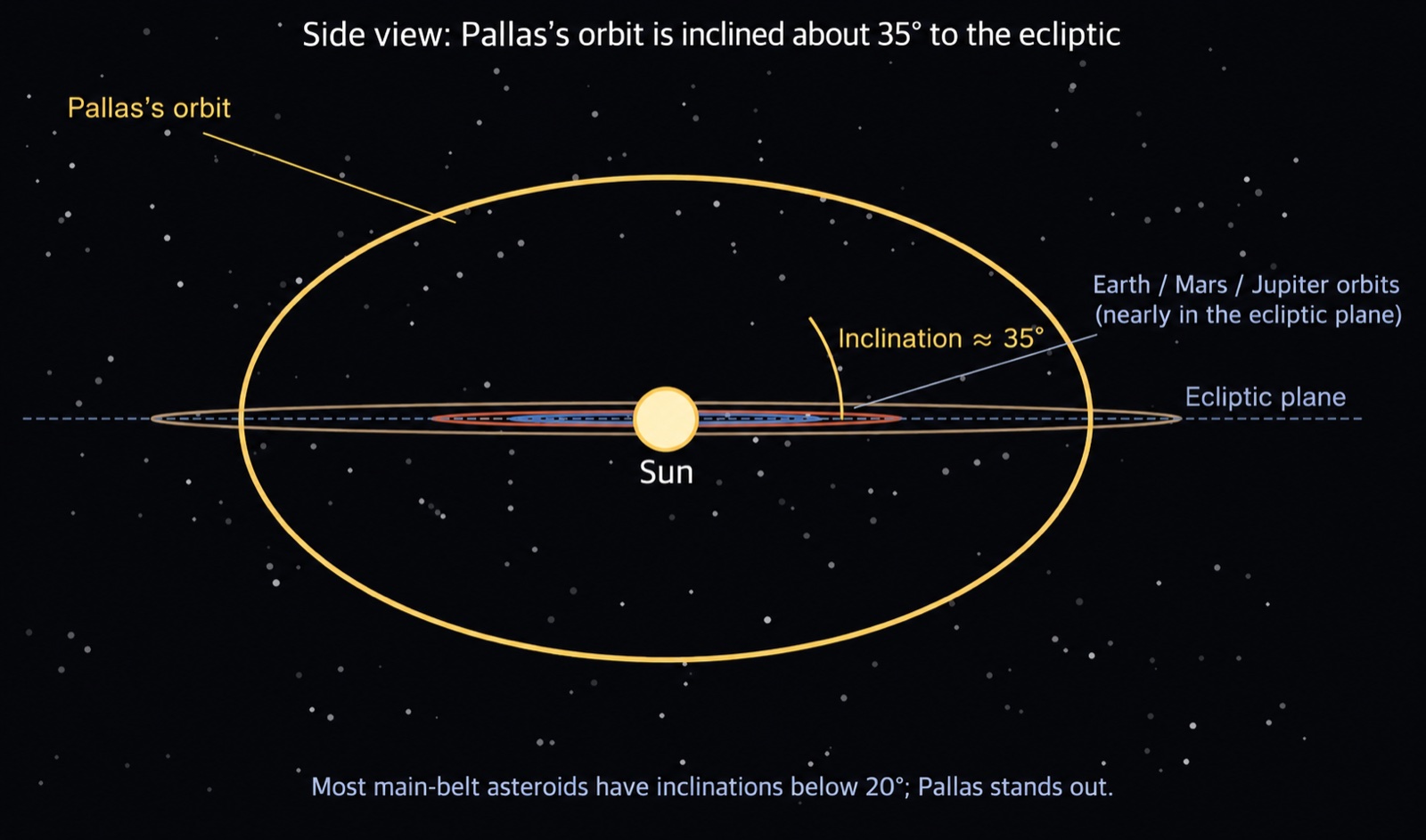
If most asteroid orbits lie like a record, Pallas cuts through on a track tilted about 35°. The second asteroid discovered and the main belt’s third-largest body has a golf-ball-like cratered surface, still unvisited by spacecraft.
The second asteroid discovered
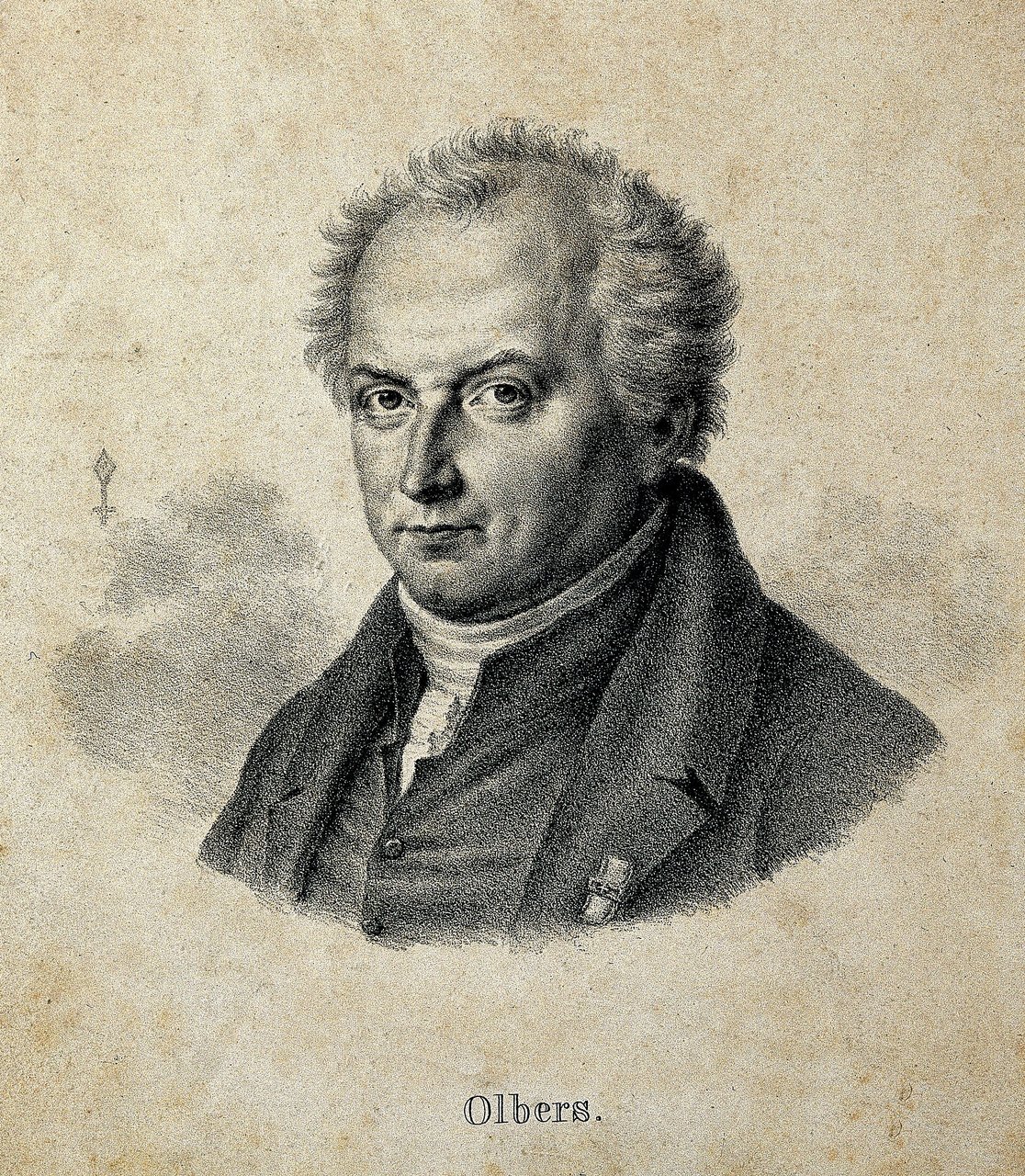
After Ceres was discovered and then lost in 1801, Gauss calculated its orbit. While searching, Wilhelm Olbers found another moving point over Bremen on March 28, 1802: Pallas, named for Pallas Athena. Initially called a planet, it later joined the growing asteroid population.
An unusually tilted orbit
Pallas averages 2.77 AU from the Sun and orbits in 4.62 years. Its 35° inclination and eccentricity around 0.23 make it cross the main belt at unusual angles. High collision speeds may explain its battered surface, while the tilt makes spacecraft visits expensive in fuel.
A primitive interior?
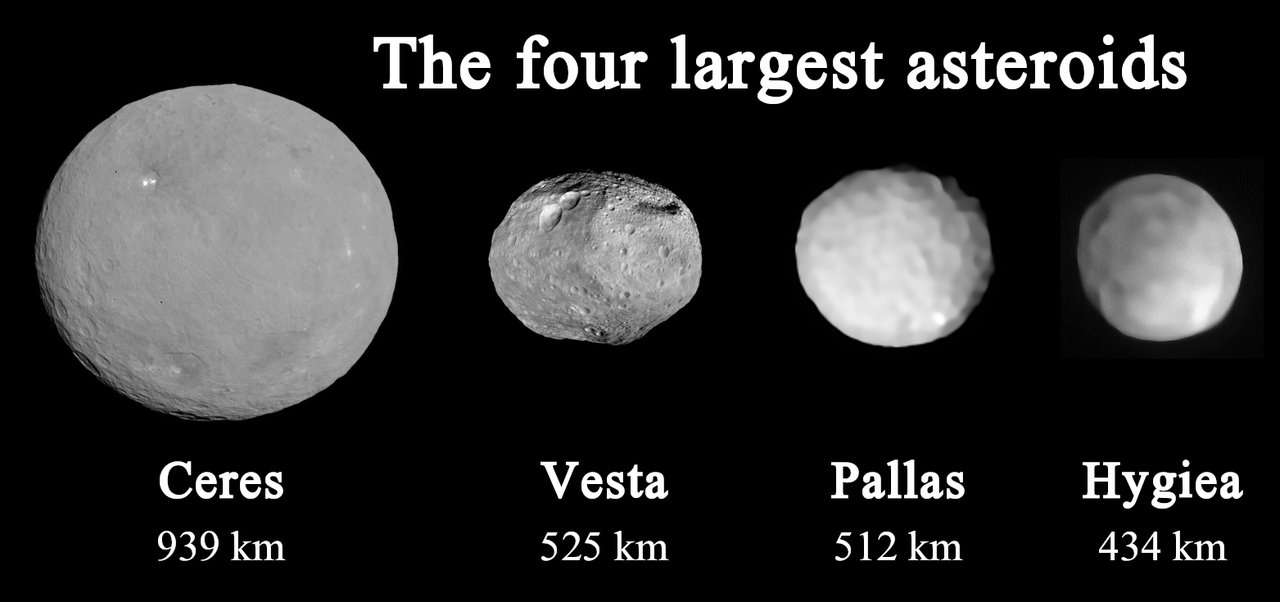
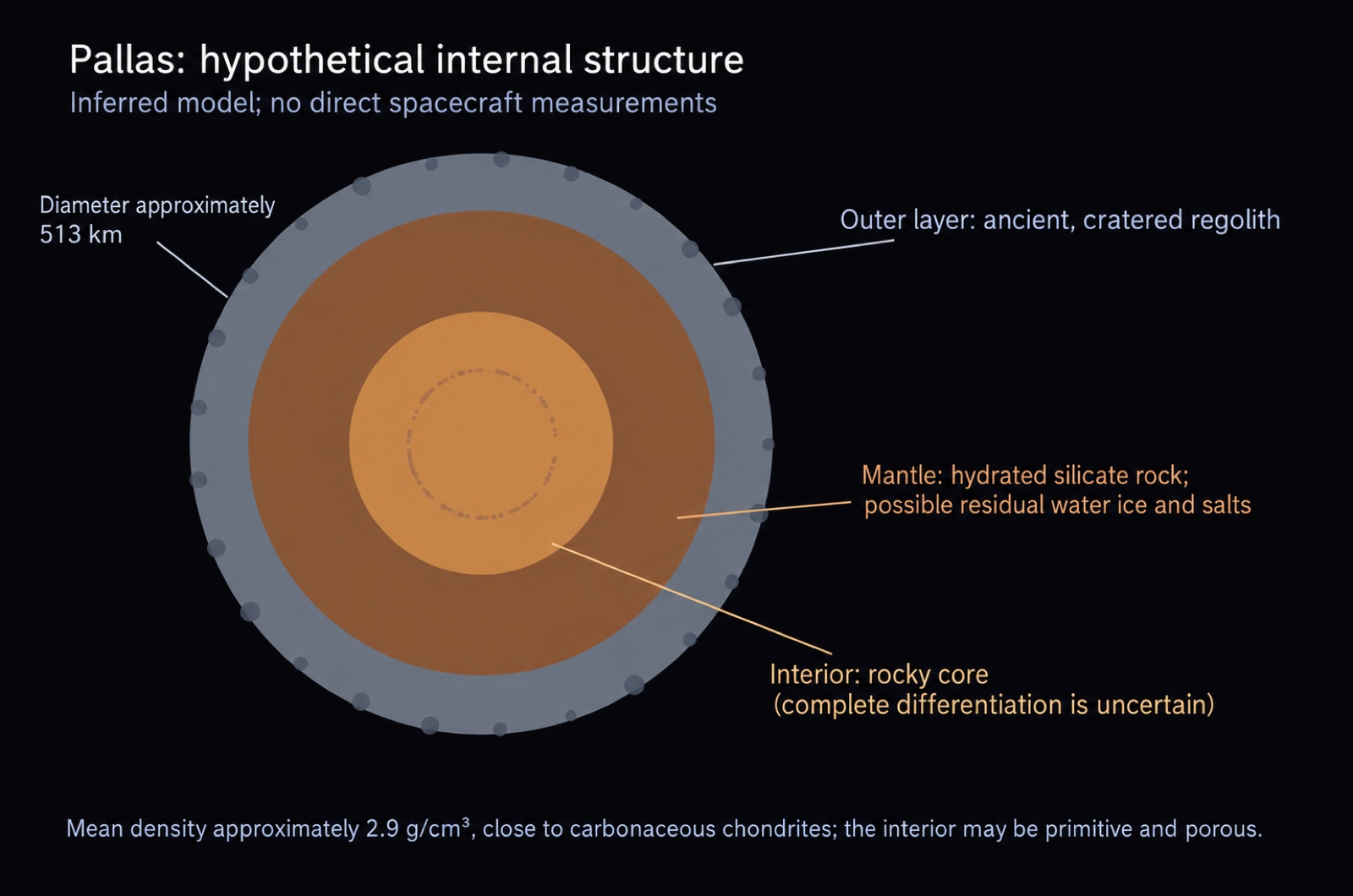
A representative B-type asteroid, Pallas has hydrated silicates, an albedo near 0.14, and a slightly bluish spectrum. Its diameter is about 513 km and density around 2.9 g/cm³. It may retain pores and may not have completely melted and differentiated. A rocky center, hydrated layers, and old regolith are inferred rather than directly measured.
A violent impact history
Pallas rotates every 7.8 hours with an axial tilt around 84°, producing extreme seasons. VLT/SPHERE observations published in 2020 resolved dense cratering; craters over 30 km wide cover at least 10% of the surface. A southern bright spot may be salt, hinting at past water-related activity. Repeated impacts also help explain its irregular shape.
Why has no spacecraft visited?
Changing orbital inclination costs considerable velocity and fuel, often more than reaching Ceres or Vesta. Gravity assists and efficient electric propulsion could help. Close gravity, composition, and shape measurements would distinguish a differentiated protoplanet from a porous primordial survivor.
One of the main belt’s big three
Ceres, Vesta, and Pallas together contain over half the belt’s mass; Pallas contributes about 7%. Dawn explored the first two, leaving Pallas an unvisited record of planetary formation.