Progress cargo spacecraft
This expendable Soviet/Russian cargo craft was derived from Soyuz. First flown in 1978, it supplied Salyut, Mir, and the ISS with cargo and propellant before burning up during controlled reentry.
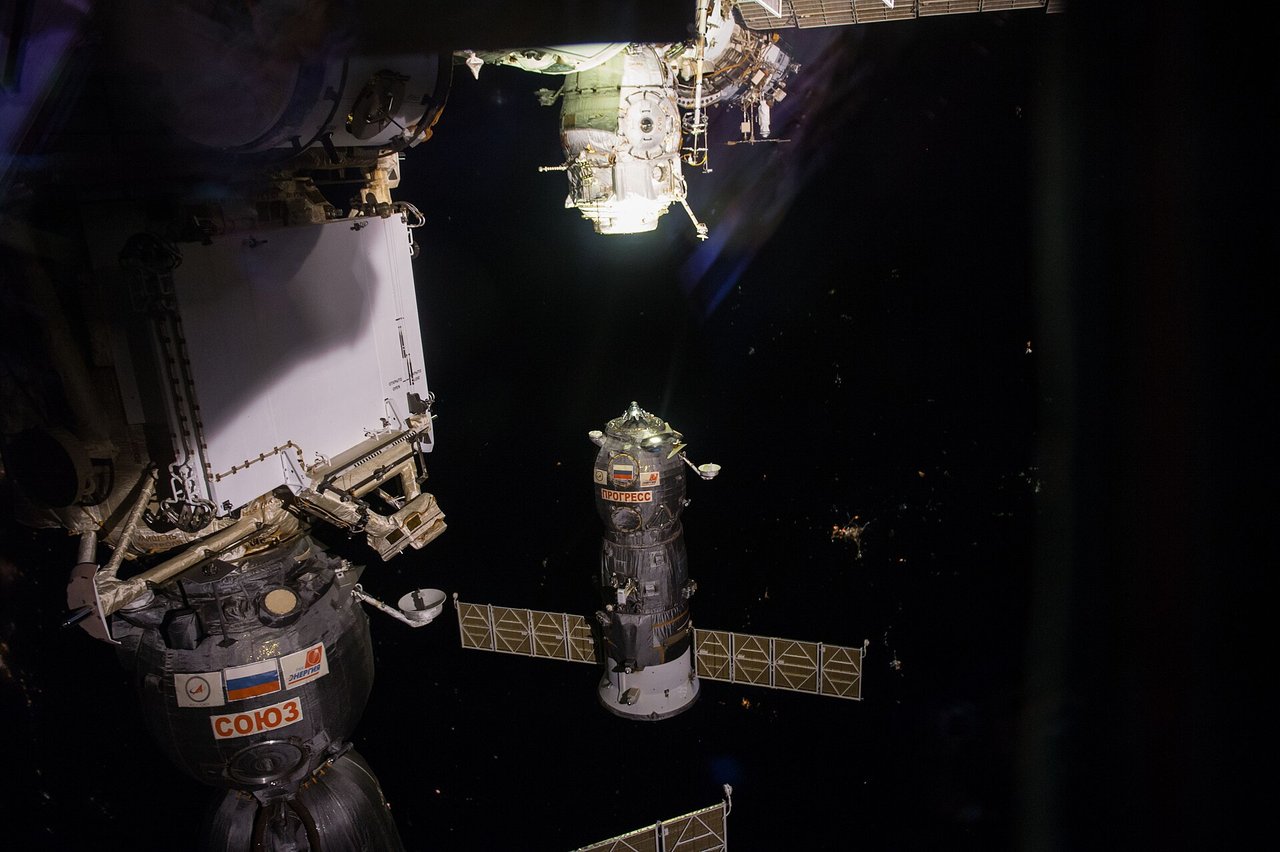
What happens when astronauts finish their last bag of fruit? A cargo spacecraft brings food, water, fuel, and experiments. Russia’s Progress has done this for decades.
Derived from Soyuz and first flown in 1978, Progress supplied Salyut, Mir, and the ISS. It carries no crew and has no full return capsule; after delivery, it takes waste into a controlled destructive reentry.
How does it differ from Soyuz?
Seats, life support, parachutes, and crew escape equipment are removed to make room for cargo. The front pressurized compartment is accessible to astronauts; the middle holds propellant, water, and gas; the rear module supplies power, attitude control, and automatic docking.
The first Progress launched from Baikonur on January 20, 1978. Its familiar Soyuz-like shape hides a different job: one brings people home, the other makes a one-way delivery.
More than boxes
A Progress typically carries around 2.5 metric tons, depending on model and mission. It transfers fuel, water, and gas through plumbing as well as delivering food, clothes, and equipment.
After docking, its engines can reboost the station, counteracting the drag of the very thin atmosphere.
Where does station waste go?
Astronauts cannot simply throw rubbish outside. Packaging, worn clothing, and unwanted equipment are secured in the cargo craft. After departure, most of it burns up along a planned reentry path.
Milestones
Progress has completed many supply flights. In July 2018, MS-09 reached the ISS in 3 hours 48 minutes, a rendezvous record at the time. The MS series uses digital flight-control and navigation equipment to improve communications and docking.
Did you know?
Progress can remain attached for months as storage. Some early Progress M flights used a small return capsule for limited samples, although the main spacecraft still burned up.